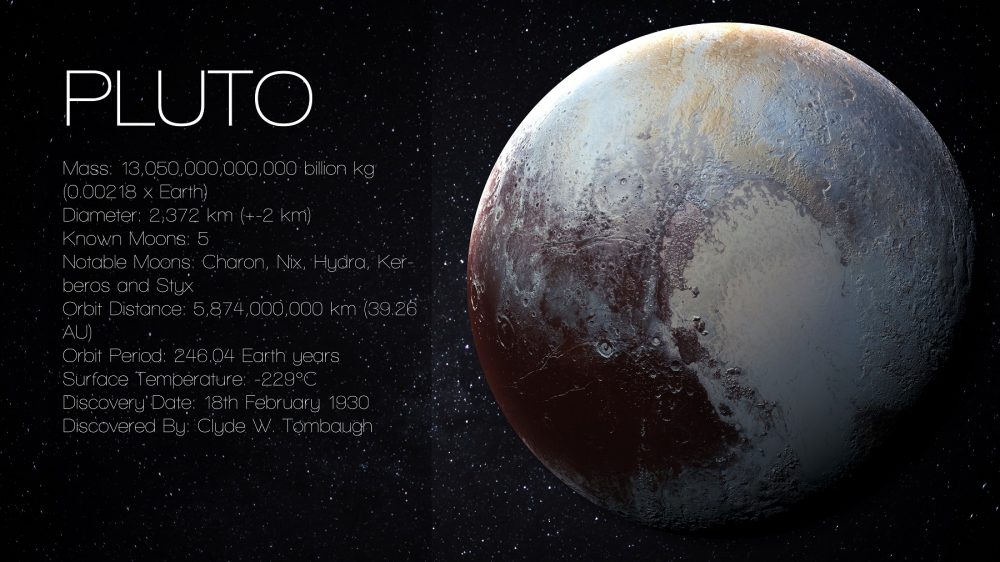
What did NASA’s New Horizons spacecraft reveal at Pluto? Before the 2015 flyby, Pluto was a distant world seen mostly as a changing point of light. New Horizons showed a complex landscape with nitrogen ice, water-ice mountains, layered haze, dark terrain and a heart-shaped basin larger than many countries.
The spacecraft passed Pluto at high speed, so it could not watch the surface through a full season. Its cameras and instruments collected a geological snapshot: enough detail to transform the science, but not enough to answer every question about how the surface changes over time.
Sputnik Planitia and Pluto’s famous heart
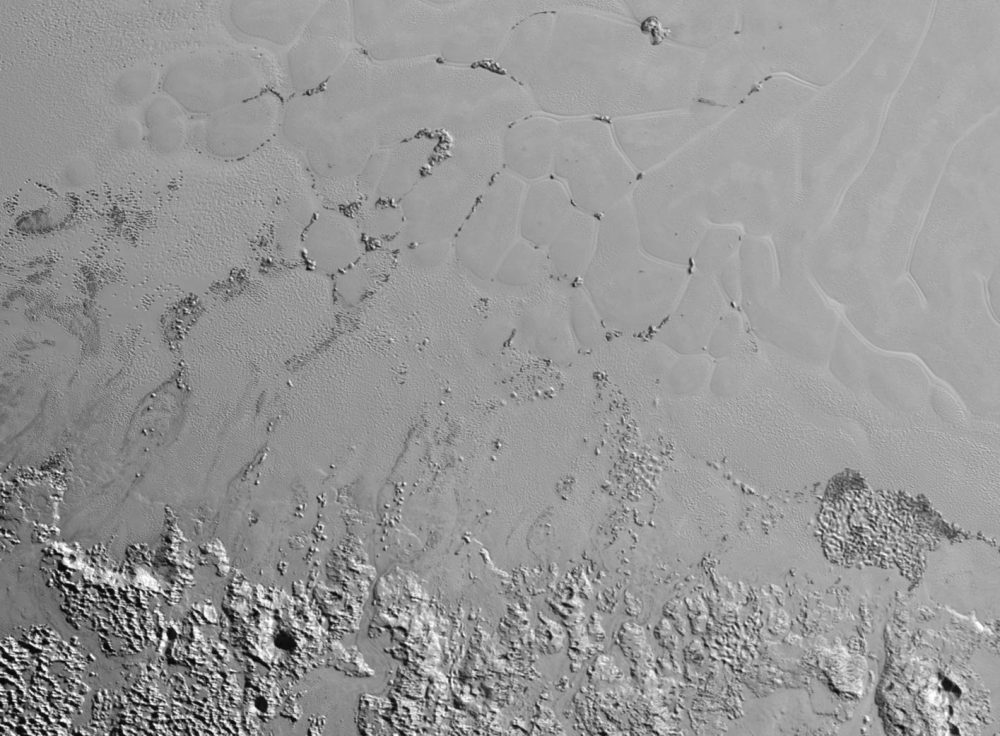
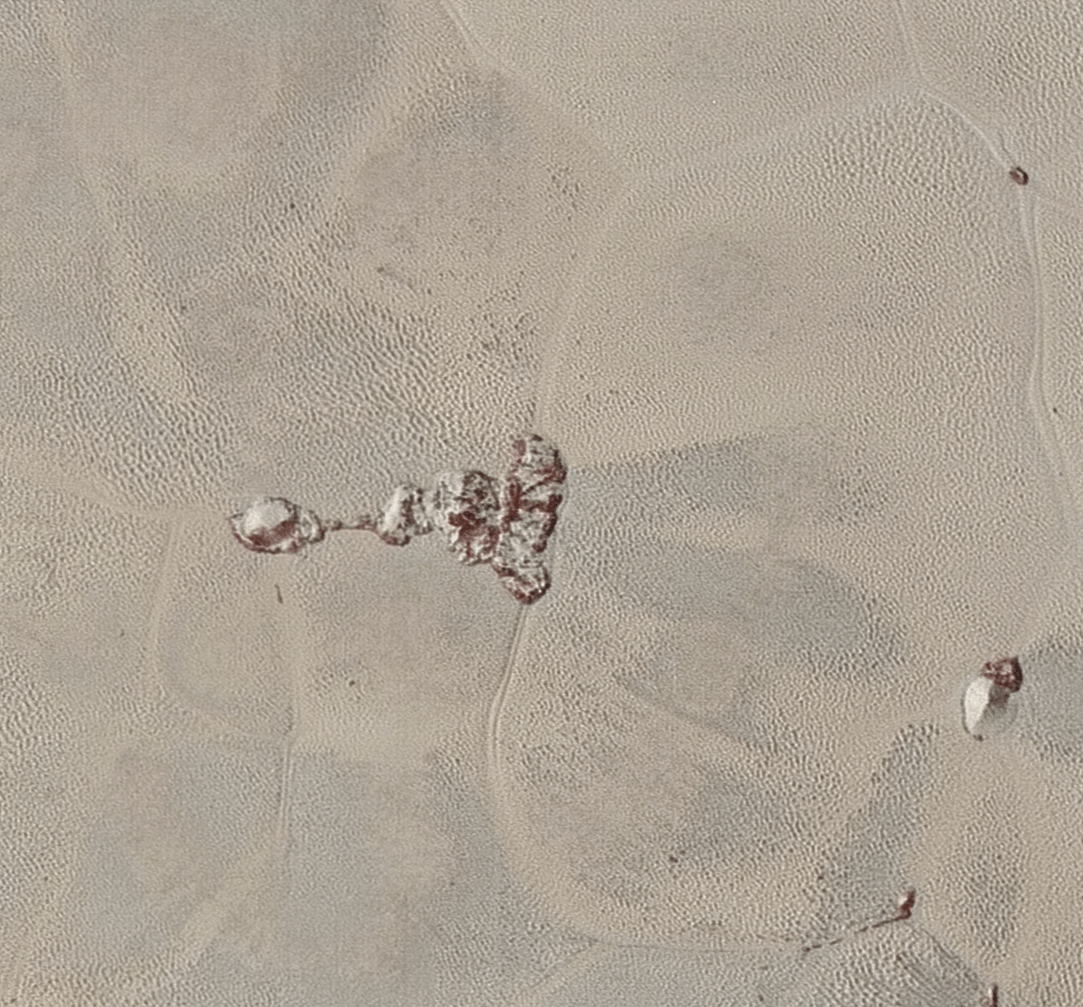
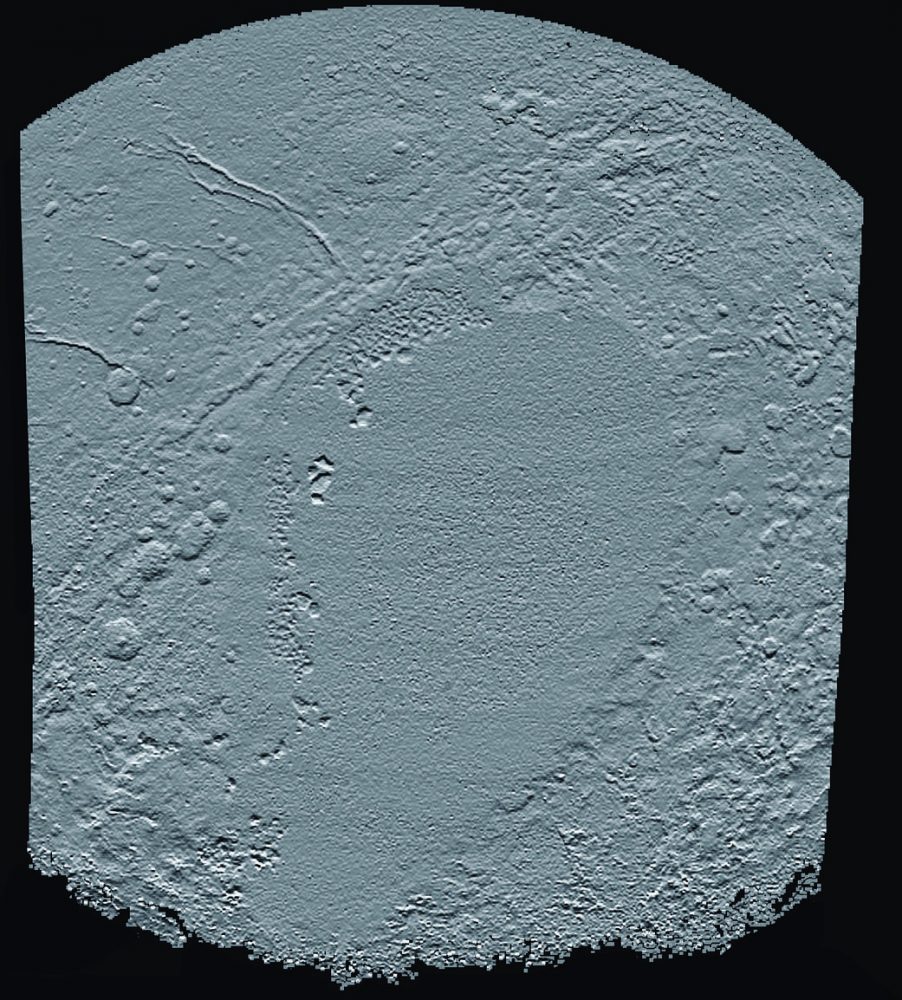
The western lobe of Pluto’s bright heart is Sputnik Planitia, a broad basin filled with nitrogen ice. Its surface is divided into polygon-shaped cells that appear to move slowly as the ice convects. This is not water ice behaving like a glacier on Earth. At Pluto’s temperatures, nitrogen can freeze, flow and sublimate while the harder water ice forms mountain-sized blocks around it.
Mountains made of water ice
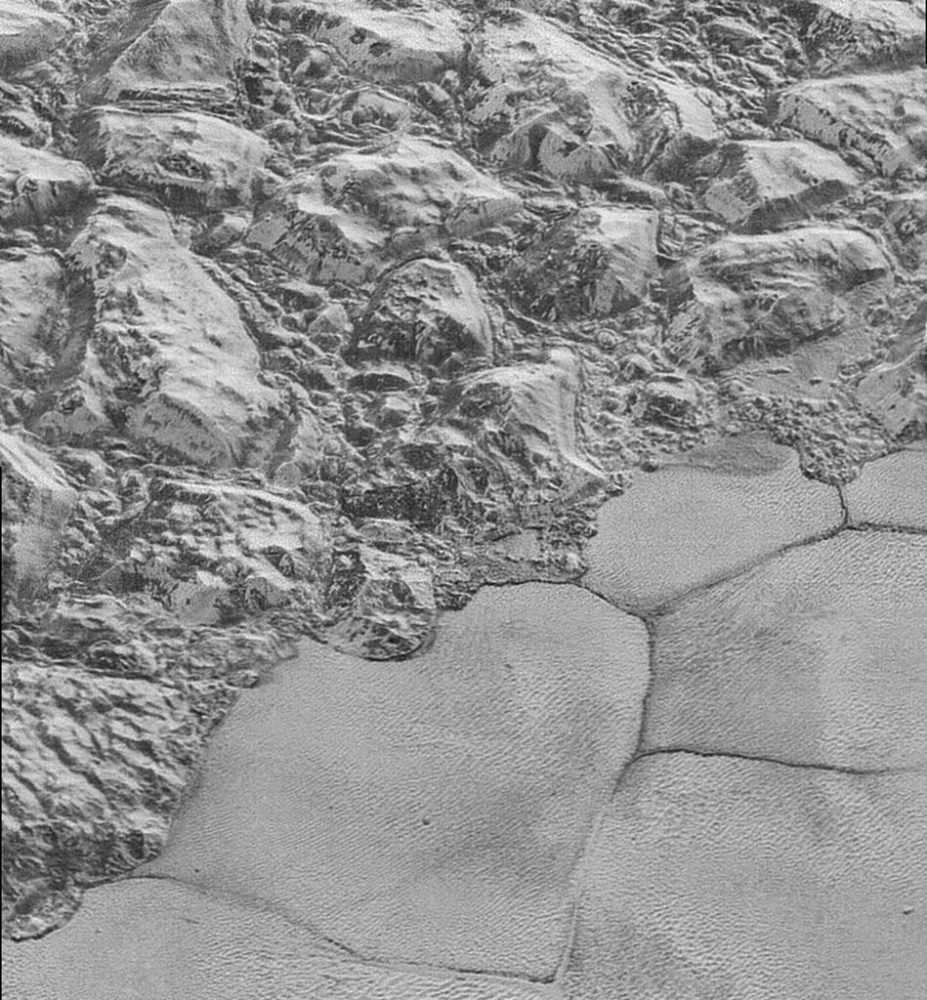
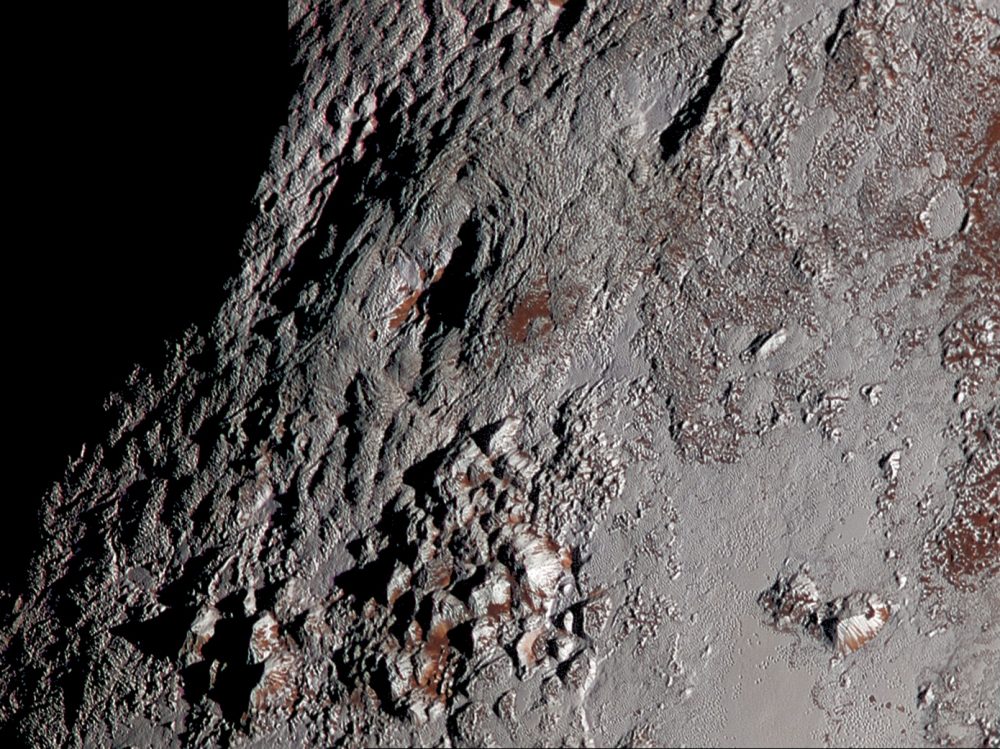
Pluto’s mountains rise several kilometres above the surrounding terrain. Water ice is strong enough at Pluto’s temperatures to act as bedrock, so the mountains can remain stable where they would not survive as ordinary water-ice hills on Earth. Some ridges and pits suggest that the surface has been shaped by freezing, evaporation and the slow movement of volatile ices.
A thin atmosphere and layered haze
New Horizons photographed blue atmospheric haze around Pluto. The haze forms high above the surface when sunlight drives chemical reactions in the atmosphere, producing complex organic particles that settle slowly downward. The colour is not proof that Pluto has an Earth-like sky; it is a clue to chemistry taking place in a very thin atmosphere.
Charon and the other moons
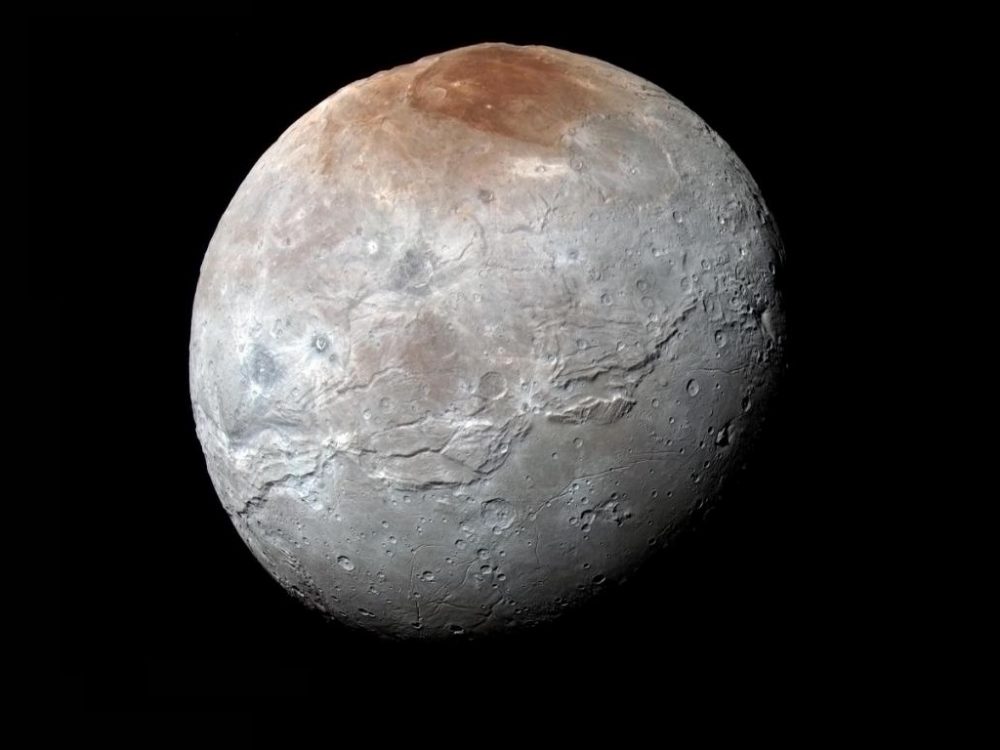
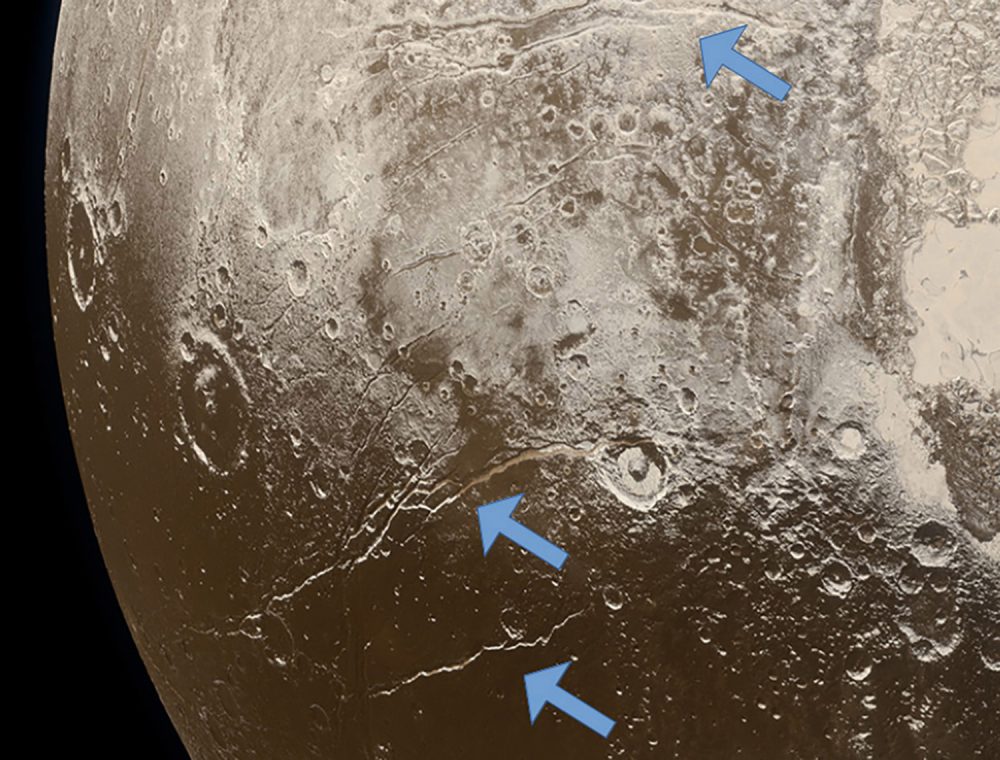
The encounter also revealed detail on Charon, Pluto’s largest moon, including a huge canyon system and a reddish polar region. The smaller moons were not just anonymous points. Their shapes, spins and surfaces added evidence that the Pluto system formed through a violent collision early in Solar System history.
Why the images still matter
The pictures are compelling because they show a world that is neither a frozen rock nor a miniature Earth. Pluto has weather, geology and a surface that changes as sunlight and internal heat work through different materials. NASA’s New Horizons archive remains the starting point for understanding those images, while new analyses continue to test how the terrain formed.
Further reading: NASA New Horizons mission; NASA Solar System Exploration, New Horizons in depth.
Images and surviving evidence