Stonehenge is often reduced to a postcard—a silent ring of prehistoric stones standing in an empty field. But the monument was never just a circle. It was built in stages over many centuries, aligned with the movements of the sky, and set within a vast ceremonial landscape. Generation after generation has struggled to explain how such a place came to be, layering it with stories that say as much about us as they do about the ancient past.
The writer Henry James once captured this feeling perfectly: “I can fancy sitting all a summer’s day watching its shadows shorten and lengthen again and drawing a delicious contrast between the world’s duration and the feeble span of individual experience. There is something in Stonehenge, almost reassuring… the immemorial gray pillars may serve to remind you of the enormous background of time.”
The modern distance
The first surprise for many visitors is that you cannot simply walk up and touch the stones. On a standard visit, you are kept at a distance, and even on special access days, the rules are absolute: no leaning, no climbing, and no touching. This caution isn’t for show. Stonehenge has spent five thousand years enduring the elements and human curiosity, including an old, destructive habit of visitors chipping off fragments as souvenirs. What remains today survives only under strict protection.
This necessary distance changes how we experience the site. Stonehenge looks fixed and untouchable now, almost like a museum exhibit sealed behind glass. But for most of its history, people moved freely among the pillars. The current boundaries are a quiet admission that even these massive stones are fragile. If the monument is to last another five millennia, we have to accept that we can no longer treat it as a climbing frame or a source of keepsakes.
Journeys across the landscape
Stripping away the myths of Merlin or extraterrestrial builders doesn’t make Stonehenge less impressive; it makes the human achievement stand out. The engineering alone is staggering. Many of the smaller bluestones were transported from the Preseli Hills in southwest Wales. The massive sarsens that form the outer ring likely came from West Woods in Wiltshire. Most recently, research has shown that the Altar Stone, once thought to be Welsh, actually originated in northeast Scotland. While we have narrowed down the quarries, the exact logistics and the sheer labor required for these journeys still command a sense of awe.
Time is the other factor that is hard to grasp. Stonehenge wasn’t built in a single, ambitious burst. The first earthwork enclosure was dug around 3000 BC. The iconic sarsen architecture didn’t follow until five centuries later, around 2500 BC, with rearrangements continuing long after that. To put that in perspective, while the Great Pyramid of Giza was rising in Egypt, communities in southern Britain were still refining the shape of Stonehenge. It belongs among the great construction projects of the ancient world, firmly rooted in human history rather than folklore.
The stories we tell ourselves
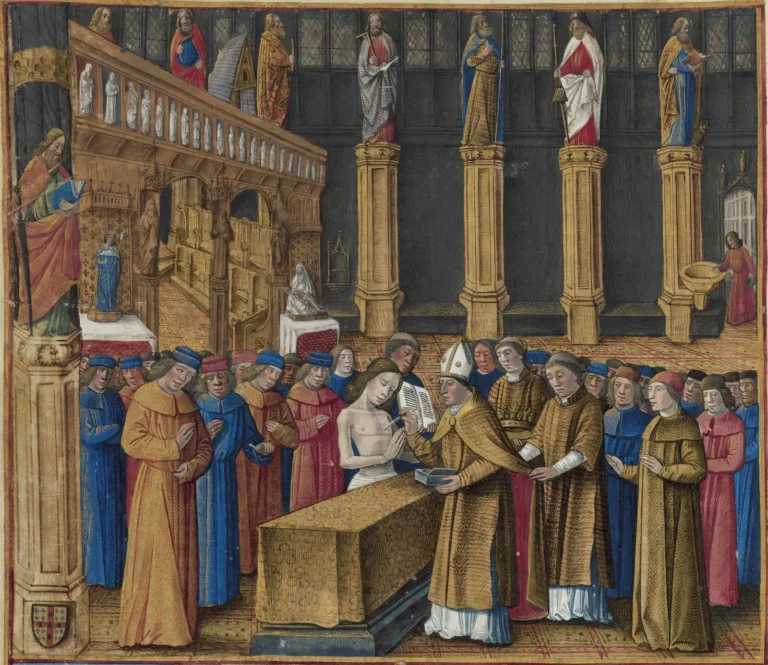
Long before we could trace quarries or carbon-date construction phases, people filled the silence of the stones with legends. In the 12th century, Geoffrey of Monmouth linked Stonehenge to the world of King Arthur, claiming Merlin the wizard brought the stones from Ireland as a memorial. Medieval readers accepted this because they had no other way to explain how such weights could be moved, and because the site already felt like a relic from a lost age of giants.
These inventions didn’t stop in the Middle Ages. In 1823, the first Stonehenge guidebook suggested the stones were survivors of Noah’s Flood. Today, that reads like a curiosity of its time, but it proves a larger point: every era tries to force Stonehenge into its own worldview, whether that is biblical, imperial, or even extraterrestrial. The persistence of “alien” theories says very little about prehistory, but a great deal about our own reluctance to believe that Neolithic people possessed the organizational power to pull off a project on this scale.
The Druid myth
The Druids are another part of this later layer of interpretation. Stonehenge was already two thousand years old by the time the historical Druids appeared in the written record. The idea that Celtic priests built the circle became popular because early antiquarians wanted to find a “native” priesthood to match Britain’s most impressive ruin. It was a compelling image that stuck for centuries, giving the site a cast of characters in white robes and sacred rites.
However, the connection hasn’t entirely vanished; it has simply evolved. Modern Druids and neo-pagan groups view Stonehenge as a sacred site, and during the solstices, the monument becomes a place of living ritual rather than just an archaeological park. While ancient Druids didn’t build the place, these modern spiritual communities have adopted it, making their presence a real part of the site’s ongoing history. A monument can be misattributed in one century and become genuinely meaningful to a new culture in the next.
A calendar of stone and sound
The idea that Stonehenge served as an astronomical tool is far more grounded than the myths. Its main axis aligns with the midsummer sunrise and the midwinter sunset, a relationship that clearly mattered to the builders. Interestingly, the focus has shifted recently from summer spectacles to the winter solstice. Evidence from nearby Durrington Walls suggests that midwinter may have been the primary event, with massive feasts drawing people together during the darkest part of the year. It wasn’t a telescope, but it was a structure built to stay in constant conversation with the sky.
There is also the matter of how the space felt to those inside it. Acoustic studies suggest that the original, complete monument would have shaped sound in unique ways, creating a sense of reverberation and isolating those inside from the noise of the outside world. This doesn’t mean it was a “concert venue” in the modern sense, but it does suggest that chanting or percussion would have behaved differently within the ring. The builders, who were so careful about stone type and orientation, likely understood that an enclosure of stone changes the way sound hits the body.
A landscape of many layers
The most important correction to the “postcard” view is that Stonehenge does not stand alone. It is the centerpiece of a World Heritage landscape that includes burial mounds, processional avenues, timber circles, and the massive henge at Avebury. Salisbury Plain was a significant place long before the stones arrived. Archaeology shows that people were returning to this ground for thousands of years to build, bury, and gather.
This history goes back even further than the first ditch at Stonehenge. Nearby, researchers have found Mesolithic pits that held large pine posts erected between 8500 and 7000 BC. This means that people were marking this specific landscape with striking monuments nearly five thousand years before the stone circle was even started. The land itself was “known” and significant in deep prehistory, long before the first sarsen was moved.
Stonehenge remains open to debate when it comes to the “why.” There are no inscriptions to explain the builders’ intent, and no single theory has closed the case for good. But the facts we do have are substantial. It was built in distinct phases, aligned to the sun, and assembled from stones moved across incredible distances by a people whose capabilities we once ignored. That human reality is far more compelling than any legend of wizards or aliens. It is the version of the story that makes the monument impossible to dismiss