Mass extinctions have shaped life on Earth for millions of years, erasing dominant species and paving the way for new life to thrive. From the asteroid that ended the reign of the dinosaurs to the current biodiversity crisis driven by human activity, each extinction reshapes the evolutionary landscape. As the climate changes and ecosystems degrade, researchers warn that humans could be steering the planet toward another mass extinction.
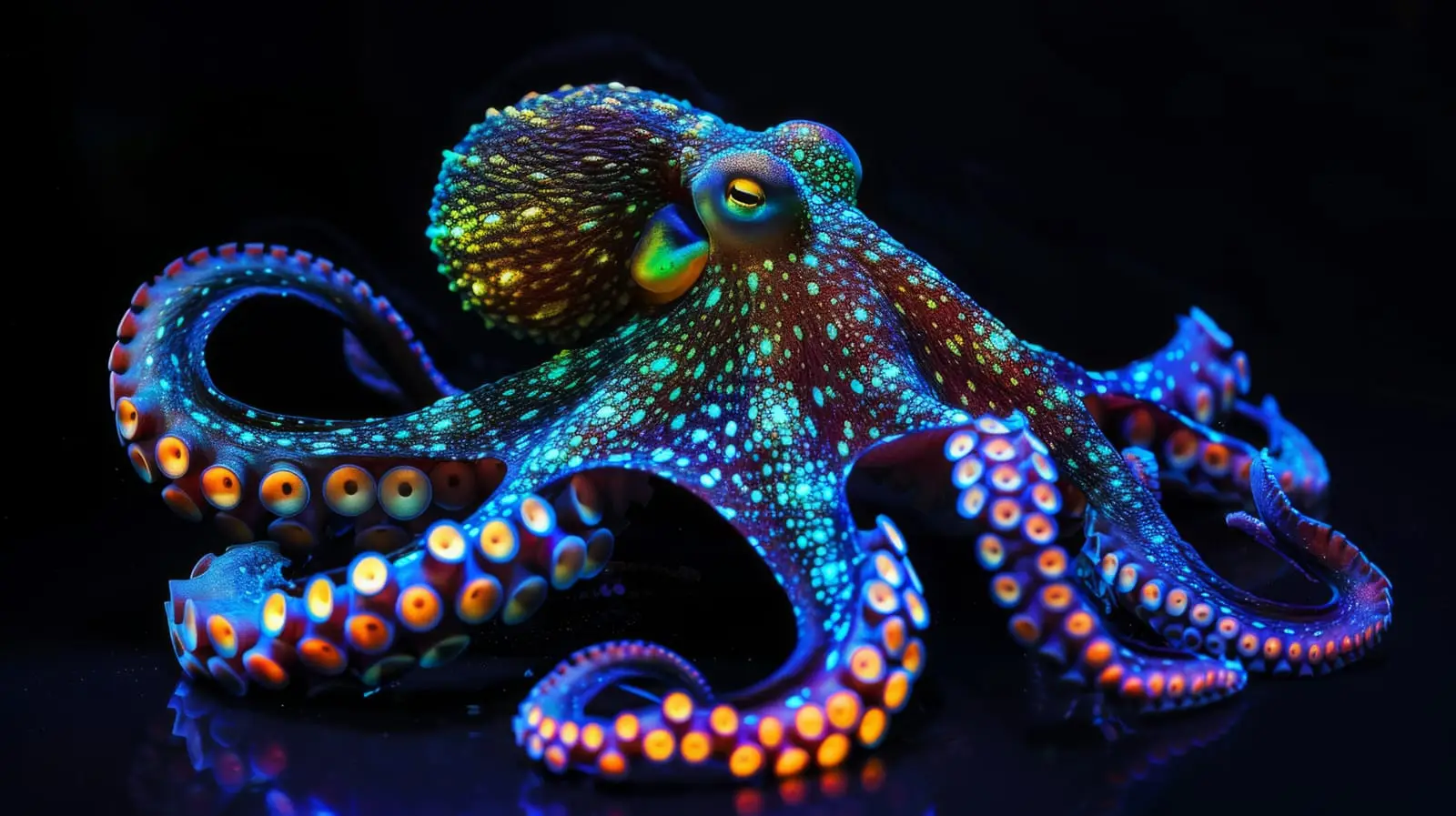
This sobering possibility raises a fascinating question: which species might inherit the Earth if humanity vanishes? Dr. Tim Coulson, an ecologist at the University of Oxford, suggests an unlikely candidate—octopuses.
Octopuses: Ocean’s Master Survivors
“Octopuses have a distinct advantage in the race for survival,” Coulson explains. Unlike humans, they exist in diverse habitats, from shallow coastal waters to the deep sea. Their adaptability could allow some species to endure even catastrophic changes. “If humans ceased hunting them, octopuses might have the opportunity to diversify and expand their habitats over time,” he adds.
While the notion of octopus civilizations may sound far-fetched, history shows that ocean-dwelling creatures can evolve rapidly after mass extinctions. Dr. Andrew Whiten, a zoologist at the University of St. Andrews, points out that mammals rose to prominence after dinosaurs vanished, paving the way for humans. Could octopuses follow a similar path?
The Tools and Intelligence of Octopuses
Octopuses already display remarkable problem-solving skills. From using coconut shells as makeshift shelters to escaping aquarium tanks, these marine animals show a level of intelligence rarely seen in other species. Some even use tools to solve puzzles, a trait often associated with advanced cognitive abilities.
“An octopus’s nervous system functions more like a distributed processing network than a central brain,” explains Dr. Andy Dobson from Princeton University. “Their intelligence comes from their ability to coordinate multiple limbs and process vast amounts of sensory data.”
Their dexterity also sets them apart. “Octopuses can manipulate objects with unparalleled precision,” says Coulson. “While crows and other birds exhibit tool use, they don’t match the fine motor skills of an octopus.”
Challenges to Octopus Civilizations
Despite their intelligence, octopuses face significant obstacles in evolving into complex societies. Dr. Peter Godfrey-Smith of the University of Sydney highlights their solitary nature. “Octopuses lack the social structure necessary to build a culture,” he explains. “For them to form communities, they’d need to develop stronger social bonds and nurture their young differently.”
These changes, however, may be a long shot. Octopuses have existed for over 100 million years without evolving significant social behavior. Still, recent studies suggest that some species show signs of communal living, offering a glimmer of hope for their societal potential.
Human Impact and Evolutionary Roadblocks
Ironically, human activity could hinder octopuses’ evolutionary journey before it even begins. Pollution, ocean warming, and overfishing threaten marine life globally. Microplastics, in particular, may harm octopuses in ways scientists are only beginning to uncover.
If not octopuses, who might inherit the Earth? Dobson speculates that nematodes—tiny, resilient worms—could dominate, while Godfrey-Smith places his bets on highly adaptable birds like cockatoos.
Whether or not octopuses ever build underwater cities, their unique traits make them one of nature’s most intriguing survivors. As humanity confronts its impact on the planet, understanding the resilience of other species could offer insights into the future of life on Earth.