The modern world runs on timestamps. Phones sync to network clocks; markets open and close to the second. Yet the basic units behind that precision, day, month and year, come from older observations that required no gears at all: the turning Earth, the Moon’s phases and the Sun’s shifting rise points across the seasons.
Archaeologists and historians now read many prehistoric and early historic sites as attempts to stabilize those rhythms into shared reference points. The evidence is uneven. Some alignments are clear and repeatable. Other claims, especially those involving very long astronomical cycles, rest on speculation and thin documentation. Still, across continents, a common pattern emerges: timekeeping began as careful watching and became, over centuries, architecture, inscription and administration.
The Moon as a portable month
The Moon offers a cycle that is visible, regular and hard to miss. The synodic month, the interval from one new moon to the next, averages about 29.5 days, close enough to a modern month to make it a natural scaffold for counting nights and organizing recurring events.
Keep exploring
Continue with Curiosmos
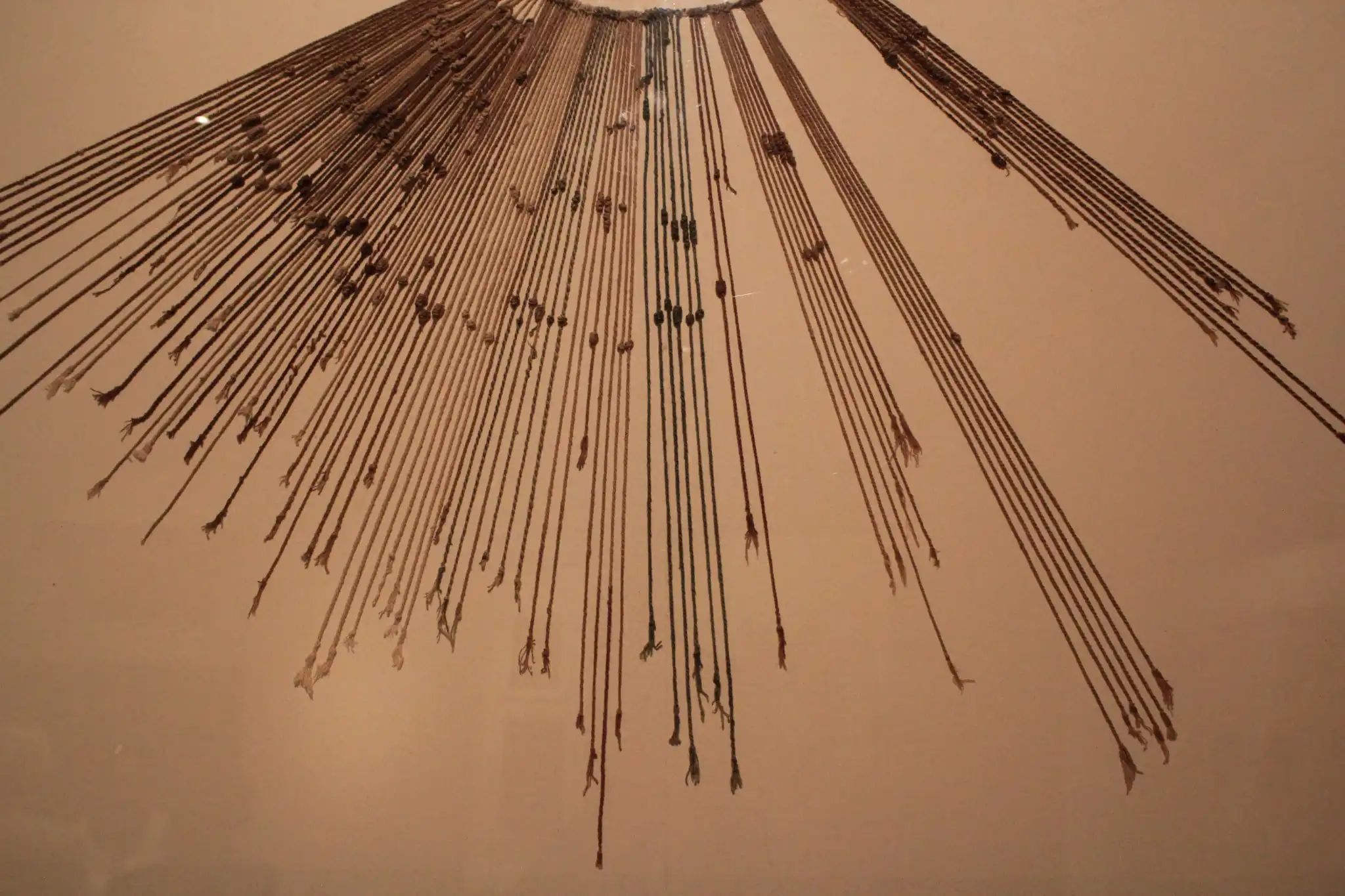
Claims that Ice Age objects record lunar time are plausible but rarely definitive. One frequently cited example is the Ishango bone, found near the Semliki River and often dated to about 20,000 years before present. Its grouped notches have been interpreted in several ways, including as arithmetic tallies and as a possible lunar record, but scholars do not treat any single reading as settled. The key point is more modest: long before writing, people were already making durable marks that look like counting systems.
The Sun as a fixed seasonal calendar
If the Moon helps count nights, the Sun sets the agricultural and ecological year. Across the annual cycle, sunrise and sunset points drift along the horizon, reaching extremes at the solstices and crossing midpoints at the equinoxes. Those changes can be tracked with simple horizon markers, a notch between hills, a doorway, a line of stones.
One of the best-known examples is Newgrange in Ireland, a Neolithic passage tomb built around 3200 BCE. Its winter-solstice illumination, delivered through a feature known as the roof-box, has been documented since the excavation work led by Michael J. O’Kelly and remains a central part of the site’s modern interpretation. A dedicated opening above the entrance admits a narrow beam of rising sunlight into the passage and chamber around the solstice period. The mechanism is straightforward, even if the original purpose is still debated. A scholarly discussion of the feature notes that the roof-box’s intent is not fully known even while the alignment itself is clear.
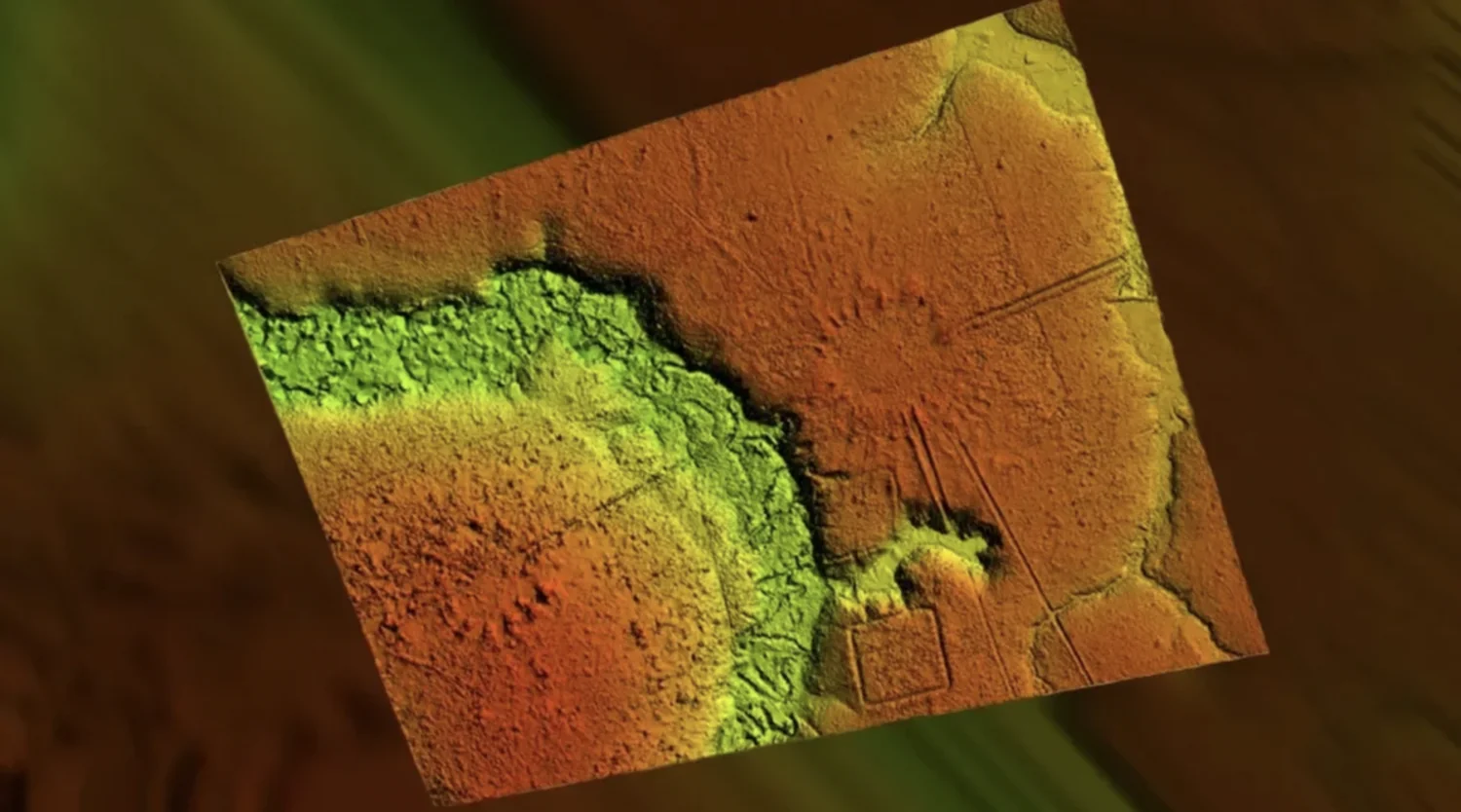
In Peru, the logic becomes even more explicit. The Chankillo Archaeoastronomical Complex, dated roughly 250–200 BCE, includes thirteen towers arranged so that the Sun’s rising position across the year can be read along the line of sight, turning a ridge into a functional solar calendar. UNESCO describes the complex as a “calendrical instrument” that uses the Sun to define dates through the seasonal year.
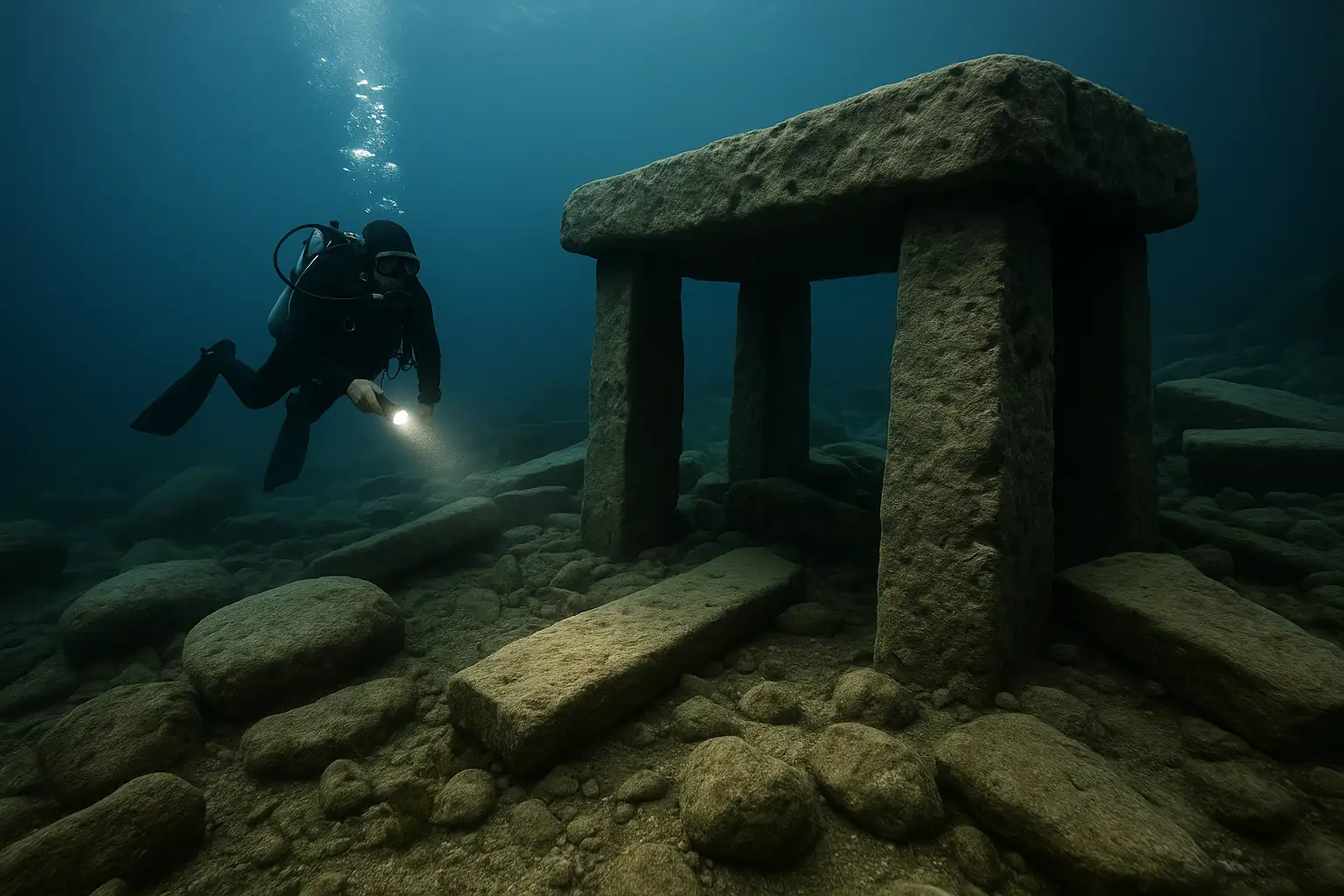
Earlier sites are harder to interpret with confidence, especially where preservation and excavation histories are uneven. In Egypt’s western desert, Nabta Playa is often cited for megalithic alignments that may relate to stellar risings and possibly the summer solstice, but specialist reviews treat parts of the astronomical case as suggestive rather than proven. Research on the site discusses a stone circle with sightlines that may point toward the June solstice sunrise.
Shadows, noon and the first “hours”
Seasonal tracking is one layer. Daily timekeeping is another. A vertical stick casts a shadow whose length and direction change predictably during the day. The concept is elementary; the social use can be sophisticated.
Britannica describes the gnomon as a likely earliest device for indicating time of day, using the shadow’s movement to divide daylight. National standards historians at the National Institute of Standards and Technology note that Egyptian obelisks and related shadow devices helped partition the day and could also mark the year’s longest and shortest days by the changing noon shadow.
This kind of timekeeping does not require a formal concept of “hours” in the modern sense. It requires agreement: a shared reference to coordinate work, ritual or gathering. Once societies begin to depend on those agreements, time becomes a civic tool as much as an observational one.
Deep cycles and the limits of the evidence
Beyond day, month and year lies a slower astronomical effect: the precession of Earth’s axis, which shifts the apparent positions of stars over millennia. Britannica puts the period of Earth’s axial precession at about 25,772 years. NASA’s educational material describes the same motion as roughly a full circle in about 26,000 years.
Some modern writers argue that prehistoric monuments encode awareness of precession or “zodiac ages.” Evidence for that claim is weak in most cases, because precession is difficult to detect without long records and careful methods of comparison. The safer historical statement is narrower: the phenomenon was identified in classical antiquity, commonly credited to Hipparchus in the second century BCE, and later embedded into formal astronomy.
Where myth and long cycles appear in texts, they often reflect philosophical or religious cosmologies rather than measured astronomy. That does not make them unimportant. It does mean they should not be presented as disguised technical knowledge without strong documentation.
From monuments to administration: Copán and the written calendar
As writing systems matured, timekeeping moved from alignments and shadows into durable records. In Mesoamerica, the Maya developed multiple interlocking calendars, including the Long Count, which assigns unique dates by counting days from a mythic starting point. The Smithsonian’s National Museum of the American Indian explains that a complete Long Count cycle is about 5,125 years and ties the system to an absolute chronology.
At Copán in western Honduras, a major Classic Maya site, inscriptions and monuments document dynastic history and calendrical ritual with unusual density. Encyclopaedia Britannica notes Copán’s famous Hieroglyphic Stairway, carved with roughly 1,260 hieroglyphs, and describes evidence that Copán astronomers calculated an especially accurate solar calendar for their time. The site’s World Heritage listing emphasizes the scale and refinement of its carved stelae and monumental program. UNESCO
Written timekeeping did not replace skywatching. It formalized it. It also turned time into authority: rulers who could proclaim dates, festivals and auspicious cycles gained leverage over labor, tribute and legitimacy.
Liangzhu, early states and a different kind of counting
In Neolithic China, the story is not a direct parallel but a useful comparison. The Archaeological Ruins of Liangzhu City, inscribed by UNESCO in 2019, represent an early urban center in the Yangtze River Basin, with massive earthworks, a water-management system and socially graded cemeteries. UNESCO’s description highlights the city site, peripheral water conservancy system and the prominence of jade artifacts, all markers of organized authority long before imperial China.
Direct evidence for formal written calendars arrives later, in the Bronze Age. The Chinese sexagenary cycle, built from the Heavenly Stems and Earthly Branches, appears in the earliest written sources, including Shang dynasty oracle bone inscriptions, as a system for recording days. The continuity here is cultural rather than mathematical: timekeeping becomes a standardized public language, enforced by institutions.
Similarities, “continuums,” and why contact is not required
Comparisons between distant civilizations can tempt grand narratives. The archaeologist K. C. Chang floated ideas about broad cultural continuities, including a speculative “China–Maya continuum” discussed in later academic commentary. Review reference That line of thought is not mainstream evidence for transoceanic contact. It is better read as a provocation about how societies independently solve similar problems.
Timekeeping is one of those problems. Any community that relies on coordinated labor, seasonal prediction, ritual scheduling or dynastic legitimation will feel pressure to standardize time. Similarities can arise through convergent development, shared human constraints and, in many regions, migration and local interaction networks rather than long-distance contact between unrelated continents. The safest interpretation keeps the mechanism plain: people counted what mattered, then built systems that made the counting portable, persuasive and durable.
Modern precision time is a triumph of engineering, but its foundations are still astronomical. The day is tied to Earth’s rotation; the year to Earth’s orbit; the month to a Moon that continues to ignore our calendars.
Prehistoric and early historic timekeeping did not begin with an abstract desire to measure “eternity.” It began with practical attention: to light, season, hunger, travel, ritual and power. The surviving stones and inscriptions do not prove that ancient people “lived inside time” in a mystical sense. They do show that long before digital clocks, communities learned to make the sky legible, and to turn that legibility into shared order.