A new report about alleged UAP recoveries near White Sands is circulating because it makes a testable promise. If fragments or intact objects were actually recovered, researchers could study the material rather than argue over a distant light in the sky.
The report is not yet established fact. In a recent essay, Avi Loeb quoted NewsNation journalist Ross Coulthart, who said sources told him that a covert operation had brought down mystery objects in the United States and near Juárez, Mexico. Coulthart also alleged that directed-energy systems were used over the White Sands area. Loeb was explicit about the status of the claim: it had not been corroborated by administration officials and could be true or false.
That caveat matters. White Sands Missile Range is a real testing area with restricted airspace, but the existence of a military range does not confirm a recovery operation. The claim needs documents, witnesses with direct knowledge, sensor records, and material that independent laboratories can examine.
Why a fragment would change the conversation
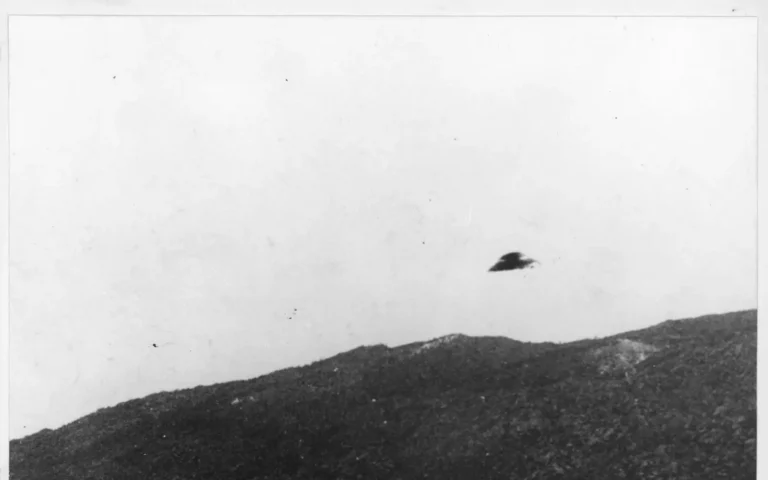
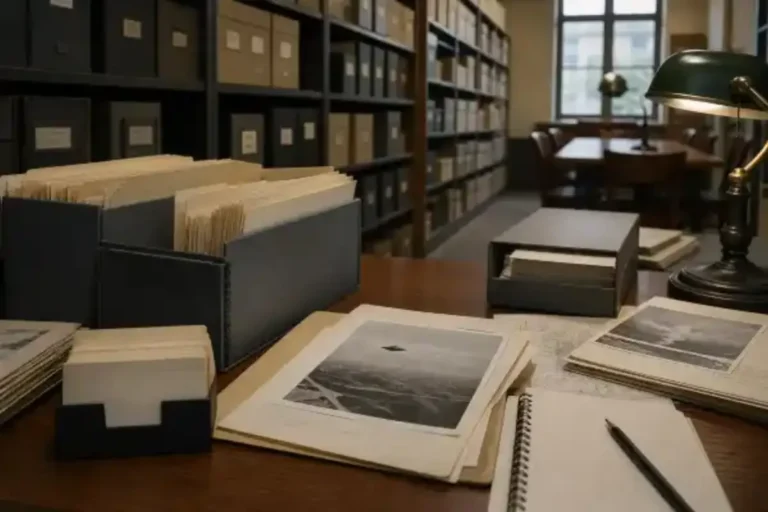
An image can show shape, brightness, or motion. A piece of material can answer different questions. Analysts could measure its crystal structure, elemental composition, isotope ratios, manufacturing marks, internal voids, and traces of heat or radiation. They could compare those results with aerospace alloys, meteorites, industrial ceramics, and known debris.
The chain of custody would be as important as the chemistry. Investigators would need to know exactly where each sample was found, who handled it, how it was stored, and whether the laboratory received a complete record. Independent teams should be able to repeat the measurements without being told which result the first team expects.
Loeb argues that material and digital evidence from a recent event could be more useful than decades-old records held by unknown legacy programmes. That is a reasonable research preference. New evidence can be logged, photographed, and tested from the beginning, while older files may be incomplete or inaccessible.
The directed-energy part of the story
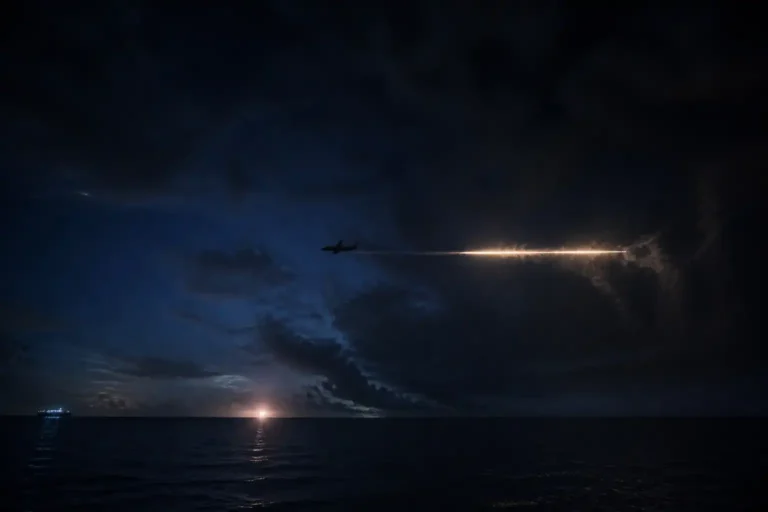
The report also refers to high-power microwave systems that might disable an aircraft’s electronics. Such systems exist as a class of technology, but their alleged use in this operation has not been independently documented. The same is true of the claim that the targets displayed instantaneous acceleration, hypersonic speed, low observability, or trans-medium travel.
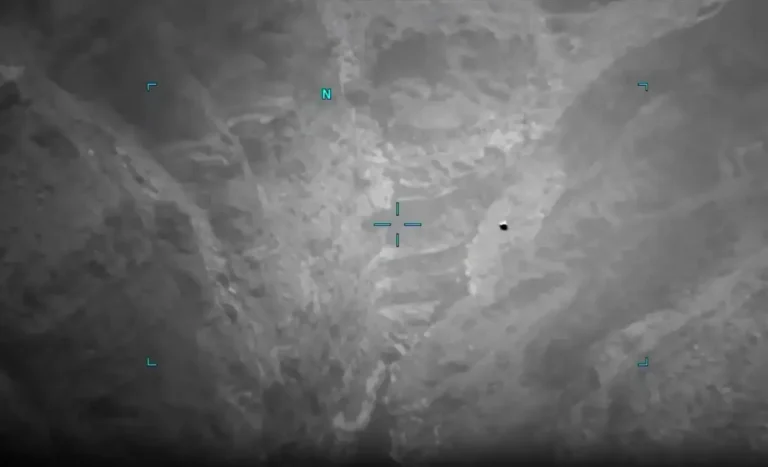
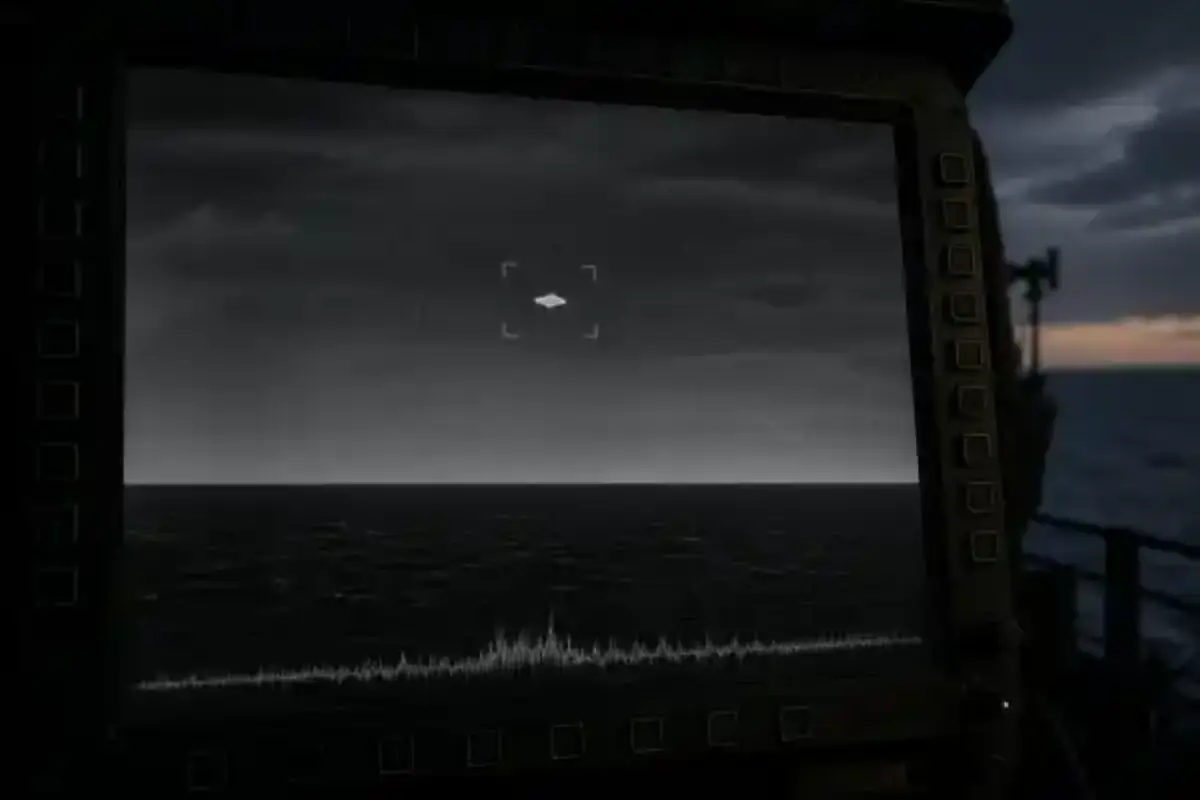
Those phrases describe reported properties, not laboratory findings. Before anyone uses them to argue for non-human technology, investigators would have to establish the target’s distance, speed, and identity with calibrated instruments. A sensor error or a close object seen from a moving aircraft can create a spectacular apparent manoeuvre.
What would count as convincing evidence?
The first step would be a public record of the event: date, coordinates, weather, flight paths, radar tracks, infrared files, and the original reports. The second would be a documented sample with an unbroken chain of custody. The third would be blind, repeatable analysis by laboratories that do not share the same financial or political interest.
If the results matched a known alloy or a fragment of a conventional vehicle, that would still be useful. It would narrow the case. If a sample contained a structure or isotopic pattern that could not be produced by known processes, the finding would deserve a much larger investigation—but only after other laboratories reproduced it.
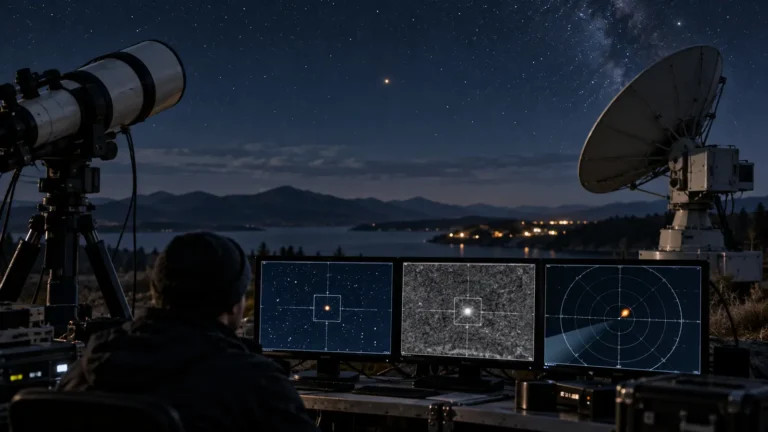
The UAP Science Advisory Council has offered one possible home for that work, while the Galileo Project has pursued new observations with dedicated instruments. Neither project can verify a material that has not been made available for testing.
For now, the White Sands story remains a report about a possible report. It is worth following because it points toward evidence that could settle a difficult question. The next useful development would not be another dramatic description. It would be a sample, a record of where it came from, and permission for independent scientists to test it.
For a closer look at how the Pentagon’s UAP files are being released, see our report on the fifth U.S. UAP release.