For most of the 20th century, official talk of unidentified flying objects was easy to dismiss as rumor, hoax, or tabloid fuel. That posture has weakened in recent years as governments have released more material, including military footage and archives that show how agencies tracked reports they could not immediately explain.
The modern term in the United States is “unidentified aerial phenomena,” or UAP, a label used to avoid the cultural baggage attached to “UFO.” Even with that shift, the core issue remains the same: objects or lights reported by credible observers, sometimes with sensor data, that were not identified at the time.
Declassified U.F.O. documents, with limits
Public statements have often emphasized that governments were not treating UFOs as evidence of extraterrestrial craft. Yet declassified collections show sustained bureaucratic attention to reports, especially when officials worried that sightings might reflect foreign technology, misidentified military activity, or gaps in air defense.


The CIA’s “UFOs: Fact or Fiction” collection summarizes the scope of what it has posted from its files, including the agency’s own historical review, “CIA’s Role in the Study of UFO’s, 1947–90”. The agency frames the material as an archive of what was collected, not a conclusion about what was seen.
In Britain, The National Archives’ UFO reports guide describes how sightings were received and handled over decades, again without endorsing extraordinary explanations.
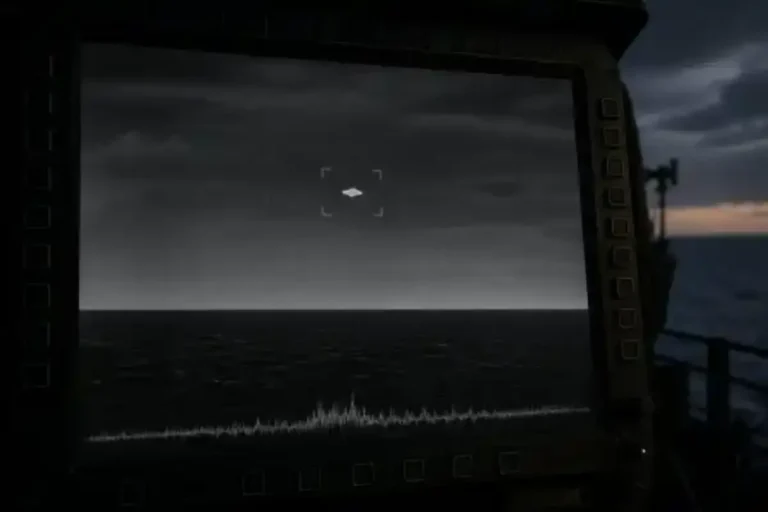
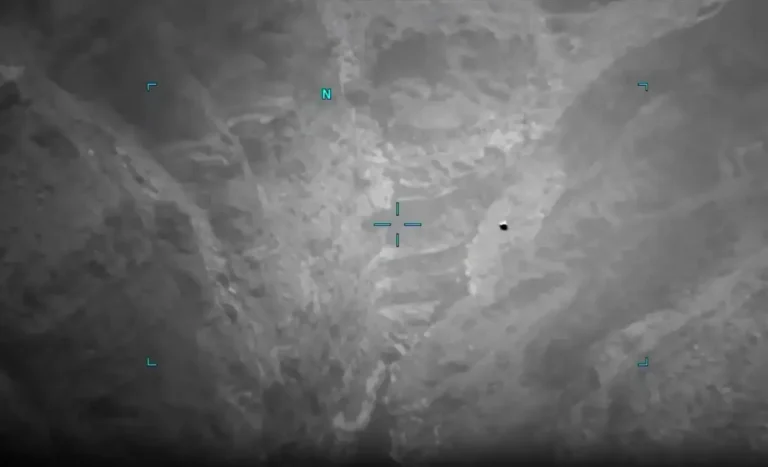
The Pentagon’s videos, formally released
In April 2020, the U.S. Department of Defense posted a statement confirming the release of three Navy videos that had already circulated widely. The department said it had authorized release of the “historical Navy videos” to “clear up any misconceptions by the public on whether or not the footage that has been circulating was real or whether or not there is more to the videos.” The statement is available from the Department of Defense release page.
The footage, recorded by Navy aircraft sensors, is often described as showing objects moving in unusual ways. The videos are evidence of what the sensors captured and what pilots discussed in the moment, not a definitive identification of what the objects were.
Not all high-profile cases come from defense files. One of the most argued-over examples is the STS-75 “tether” episode, tied to the STS-75 mission in 1996. During the flight, the mission’s tethered satellite system was disrupted, and video recorded bright points that some viewers describe as disc-like objects near the drifting tether.
The basic mission facts are straightforward, and NASA’s summary makes clear the tether was lost and the mission continued gathering data. What the bright points represent has been debated for years, with proposed explanations ranging from imaging artifacts and debris to more exotic claims. The underlying event is real; the interpretation is not settled by the video alone.
The Pentagon studied “exotic” technology concepts
Declassified documents also show how UAP discussions intersected with defense research culture, where unusual reports can be treated as potential intelligence problems. A key paper trail involves the Advanced Aerospace Threat Identification Program, commonly known as AATIP.
A 2009 Defense Intelligence Agency memo about Senator Harry Reid’s request to protect the program under special access procedures can be read in the DIA’s FOIA reading room as “Senator Harry Reid’s Request to Put the Advanced Aerospace Threat Identification Program (AAITP) under Special Access Protection”. The document anchors a core fact that often gets blurred in public debate: senior officials did support a structured effort to study unusual aerospace reports, and they discussed how to handle sensitive methods and findings.
That does not establish that any recovered “craft” existed, or that any material was reverse-engineered. It establishes that the topic reached high levels and was treated, at least by some officials, as worthy of protected research channels.
An Antarctic episode in the record

Among the most specific documents in the text is a 1965 letter describing unexplained lights witnessed at Antarctic research stations. Dated October 22, 1965, it includes this passage and must be read on its own terms, as a contemporaneous report:
“On the July 12 this year, the British Antarctic Survey Base on Deception Island (62° 59′ S, Long. 60° 34′ W) reported the following, which I quote as requested:
‘Argentine base (on Deception Island) observed a moving colored light on June 7th, 20th, and July 3. Chilean base (also on Deception) made similar observations on the latter two dates.
Flickering red-green-yellow light observed from British Base 2300 Z July 2 die north; it had moved in two waves quickly from the west then reversed along the course for a short distance before returning again to the north where it remained stationary for about 20 minutes.’
I should comment that our people in the Antarctic did not consider the important event enough to comment until asked. I requested information because of pressure from the B.B.C., N.B.C., and the Press, who acted on a news report put out from Argentina.
Yours sincerely,
V.E. Fuchs.”
The CIA archive, in the agency’s words
The CIA has posted thousands of pages tied to UFO-related reporting and internal handling of the issue. In its own description of the collection:
“This collection catalogs C.I.A. information on this subject from the 1940s through the early 1990s.”
That line appears on the agency’s UFOs: Fact or Fiction collection page. The volume reflects how often reports crossed analysts’ desks, even when many entries were unresolved, secondhand, or never validated.
Older reports, from broadsheets to colonial diaries
Long before jets and radar, strange sky events were recorded in language shaped by the times. One of the most cited examples is an illustrated broadsheet from 1561 describing what later writers recast as a UFO “battle” over Nuremberg. The event is commonly referred to as the 1561 celestial phenomenon over Nuremberg, and the woodcut is often attributed to Hans Glaser, a local artist and printer, as discussed by The Public Domain Review’s overview. The report quoted in the text reads:
“In the morning of April 14, 1561, at daybreak, between 4 and 5 a.m., a dreadful apparition occurred on the sun, and then this was seen in Nuremberg in the city, before the gates, and in the country – by many men and women.
At first, there appeared in the middle of the sun, two blood-red semi-circular arcs, just like the moon in its last quarter. And in the sun, above and below and on both sides, the color was blood, there stood a round ball of partly dull, partly black ferrous color. Likewise, there stood on both sides and as a torus about the sun such blood-red ones and other balls in large number, about three in a line and four in a square, also some alone.
In between these globes, there were visible a few blood-red crosses, between which there were blood-red strips, becoming thicker to the rear and in the front malleable like the rods of reed-grass, which were intermingled, among them two big rods, one on the right, the other to the left, and within the small and big rods there were three, also four and more globes.
These all started to fight among themselves so that the globes, which were first in the sun, flew out to the ones standing on both sides; thereafter, the globes standing outside the sun, in the small and large rods, flew into the sun.
Besides, the globes flew back and forth among themselves and fought vehemently with each other for over an hour. And when the conflict in and again out of the sun was most intense, they became fatigued to such an extent that they all, as said above, fell from the sun down upon the earth ‘as if they all burned’ and they then wasted away on the Earth with immense smoke. After all this, something like a black spear, very long and thick, sighted; the shaft pointed to the east, the point pointed west. Whatever such signs mean, God alone knows…”
(Source: Colman S. Von Kevicsky, “The Ufo Sighting Over Nuremberg in 1561” Official Ufo January 1976. Translation by Ilse Von Jacobi.)
In North America, a frequently cited early account comes from Massachusetts Bay Colony governor John Winthrop, discussed in History.com’s account of the 1639 episode. Such reports show continuity of human experience, not continuity of explanation: before modern astronomy and aviation, unusual atmospheric events were often described in religious or martial terms.
Hot spots, air-raid scares, and radar nights
Modern reporting is also shaped by simple geography and population: more people watching the sky tends to produce more reports. The National UFO Reporting Center’s California index illustrates the scale of self-reported sightings in one large state, though that database is not a verified catalog of confirmed events.
The text highlights several famous U.S. incidents from the mid-20th century. The “Battle of Los Angeles” in February 1942 is well documented as an air-raid alarm and anti-aircraft barrage. The California State Library’s historical note, “The Battle of Los Angeles,” summarizes the episode and the scale of the firing. Later official histories attributed the trigger to war nerves and a weather balloon.
In July 1952, radar operators and pilots reported targets over Washington. The National Archives’ Project Blue Book history explains how the Air Force organized its system for collecting and evaluating UFO data that same year, in part to address public concern and possible national security implications.
The Rendlesham Forest incident in December 1980 remains one of the most cited cases involving U.S. Air Force personnel in Britain. The UK’s National Archives summary notes the role of Lieutenant Colonel Charles Halt, and the underlying document is commonly known as the Halt memo, a short report that became the main official record of the episode.
Speculation, and what can be checked
A few claims in the text point to documents said to be written by major historical figures about “Relationship with Inhabitants of Celestial Bodies.” That is a serious allegation, and it is not supported by the major archival sources cited above. Without a reliable, primary archive reference, it should be treated as unverified.
Churchill’s interest in life beyond Earth, by contrast, is grounded in known material. The rediscovered essay “Are We Alone in the Universe?” and the quote included in the text have been reported and analyzed by outlets including Smithsonian Magazine, which places the line in context of Churchill’s broader engagement with science.
Taken together, the record shows something more modest than the folklore: a long paper trail of sightings, a smaller set of cases with military sensors and formal releases, and an enduring gap between “unidentified” and “identified as extraordinary.” The sky can produce real data and real confusion at the same time