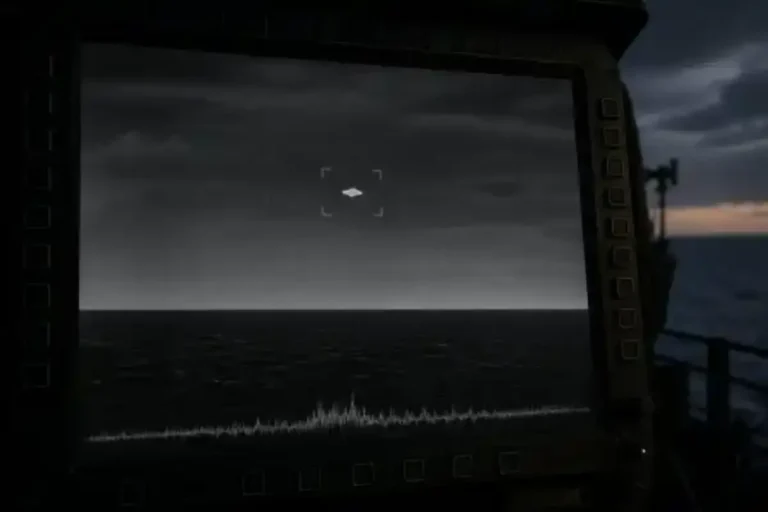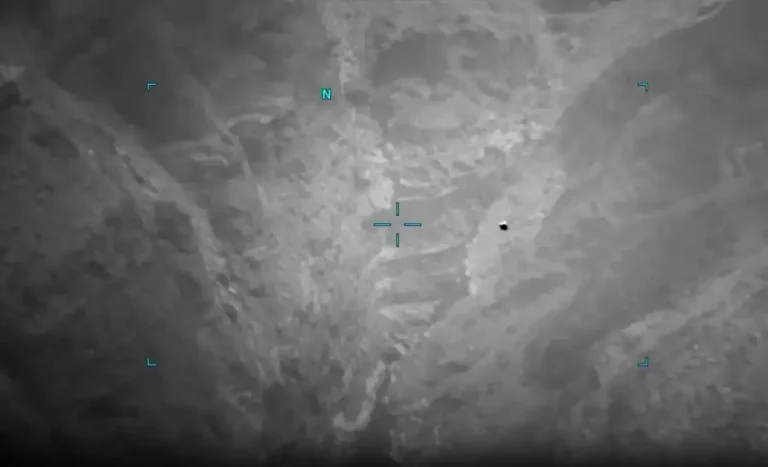
A hovering light that seems to breathe poses a different question from an unfamiliar aircraft. Could something luminous appear alive—and what would let us investigate that impression?
UFO researcher Robert Hastings has been gathering accounts of that kind. In a June 20, 2026 article, he described witnesses who told him about plasma-like orbs they believed were conscious. He also invited similar accounts for a book he was preparing. These are claims about personal encounters, not a scientific announcement that living plasma has been discovered.
The encounter that made an orb seem alive
Hastings recounts testimony from a woman he calls Amanda, who contacted him in 2022 about an experience she dated to autumn 1992. She described a reddish-orange object hovering near a neighbour’s yard, roughly the size of a melon. Its flickering, undulating appearance reminded her of breathing.
She also reported hearing a reassuring message in her mind and losing awareness of the passage of time. In her account, the light disappeared as her husband came outside. Her name is withheld, and Curiosmos has not interviewed her or independently verified the event.
The interesting question is why she understood the encounter as involving a living presence. Her description combines an observed appearance with a private experience of communication. Those two parts would require different kinds of investigation. Another observer might record the light’s movement; a recording could not by itself establish the source of a thought.
Plasma already behaves in unfamiliar ways
There is a physical reason the word plasma attracts attention. Plasma is ionised gas, containing free electrons and charged ions. It responds to electric and magnetic fields and can form complex structures. NASA’s glossary describes these spontaneous, intermittent structures across different scales.
A pattern that changes shape can consequently have an organised appearance without being a biological organism. That leaves room for a worthwhile question: how far can physical self-organisation go, and which observations would reveal something beyond it?
Calling an unidentified light a plasmoid does not answer that question. First, investigators would need to establish that plasma is actually present. Colour, glow and movement alone cannot identify a substance’s composition or the process supplying its energy.
Measurements make the term more specific. In a 2021 investigation using NASA’s Magnetospheric Multiscale spacecraft, instruments measured particles and fields closely enough to test how plasma responds collectively to electromagnetic forces. That research concerned near-Earth space, not Hastings’ encounters. It illustrates the difference between an evocative visual description and a measured plasma process.
How a future encounter could be documented
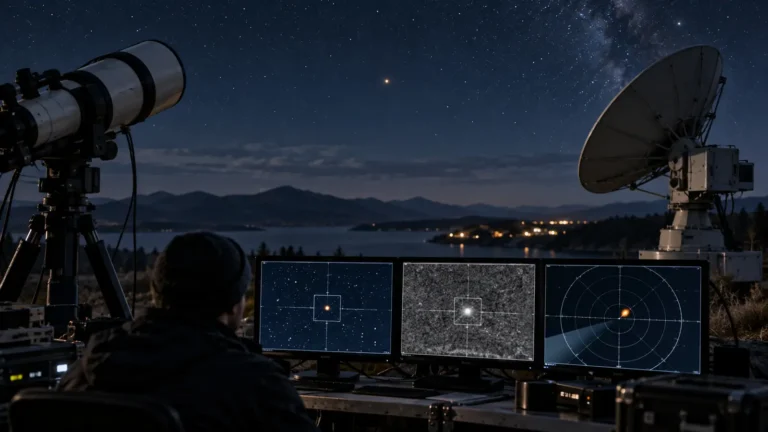
A repeat sighting would offer opportunities unavailable in a decades-old recollection. Observers could preserve the original recording, note the time and weather, identify the camera settings and document their positions. Separate observations from known locations could help estimate distance.
Distance is particularly valuable. A light moving across a camera frame supplies an angular motion, not a speed through space. Without knowing whether it was metres or kilometres away, an apparent burst of acceleration is difficult to translate into physical movement.
The NASA UAP study team’s 2023 report recommends calibrated observations and contextual information for this reason. Better records would also allow investigators to compare an orb’s apparent response with changes in the surroundings. Did it move after an observer approached? Did several people see the same response? Did it recur under comparable conditions?
Such questions leave the possibility of unusual behaviour open while giving it something concrete to rest on. A flicker interpreted as breathing, a measured physical cycle and a response that consistently tracks an outside action would be three different findings.
A witness account worth preserving accurately
Curiosmos has covered orb reports from pilots. Hastings’ account explores another part of the subject: the impression that a light has a presence or awareness. It should retain that human dimension without turning the witness’s interpretation into an established property of the object.
For someone reporting an encounter, careful listening and careful documentation can belong together. Preserve what was seen, what was felt and what remains uncertain. If another encounter produces records that several independent investigators can examine, the question could advance beyond the memory that first brought it to our attention.