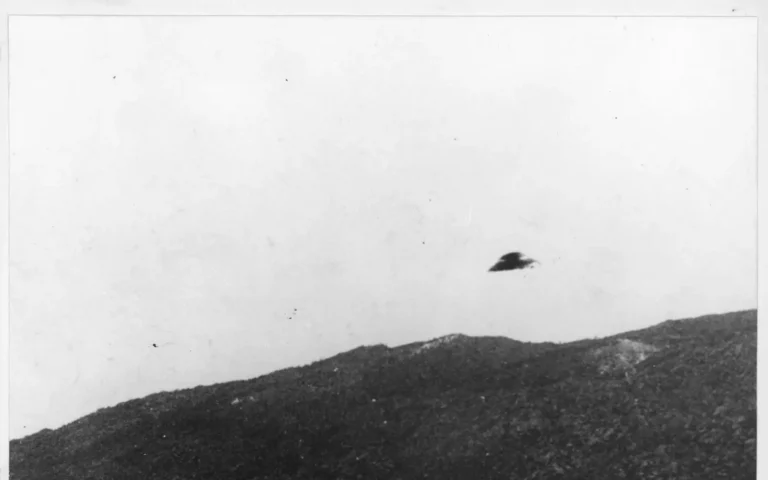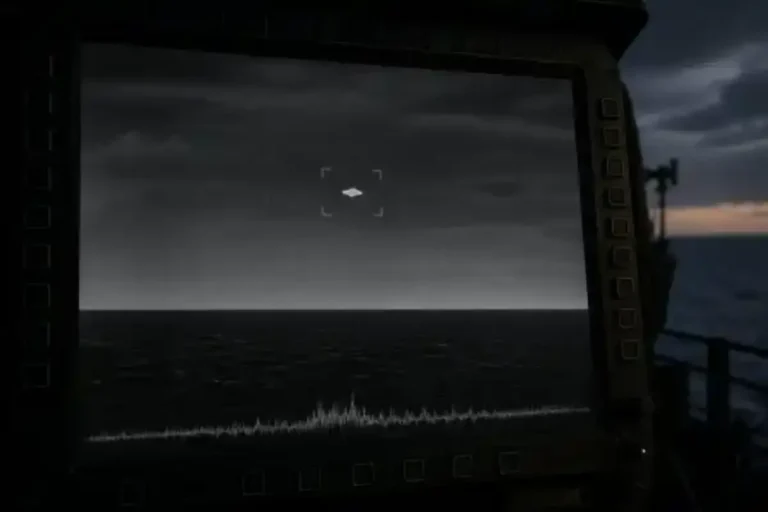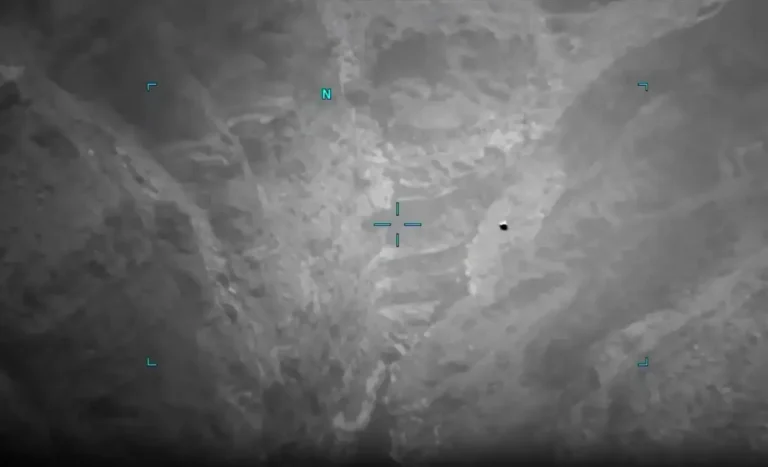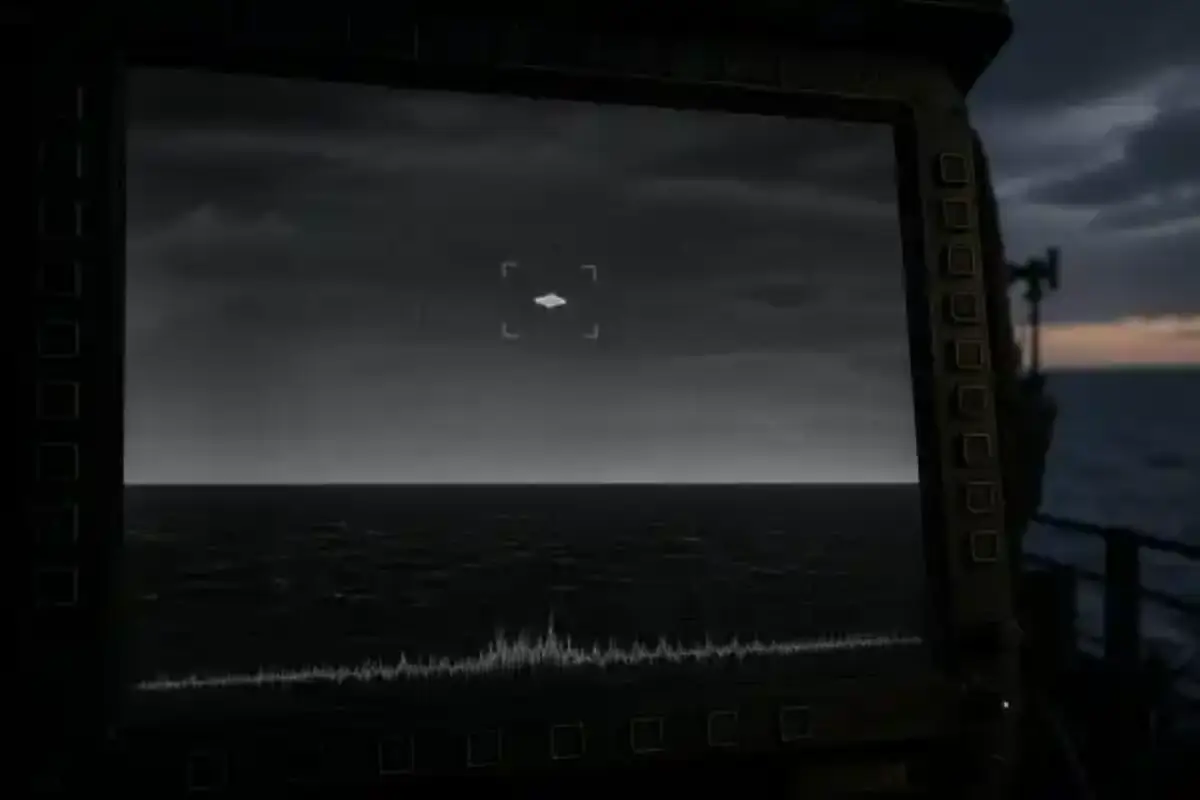
Most UAP videos show brightness and apparent motion, but very few establish how far the object was from the camera. That missing measurement is why a dramatic clip can suggest extraordinary speed while telling us almost nothing about an object’s actual size or trajectory. The same documentary chain is mapped in our guide to the U.S. UAP archive.
Avi Loeb argues that synchronized observations from separated sensors could turn that ambiguity into a testable distance measurement. The question sits beside Curiosmos coverage of the fifth U.S. UAP release and the 1996 infrared video, where the absence of range data limits what the record can prove.
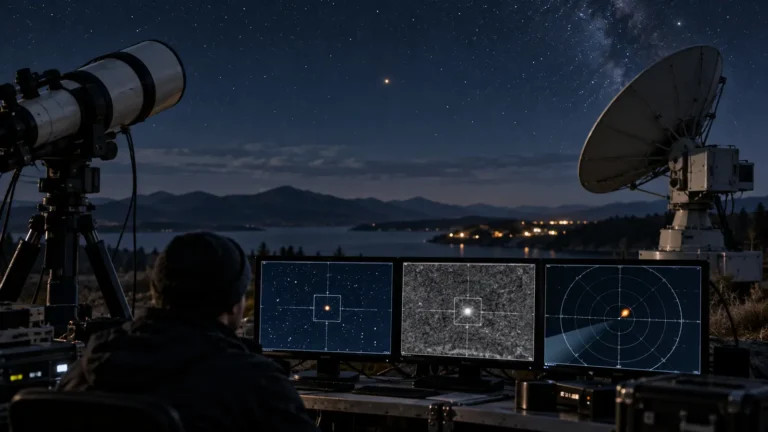
In a recent essay, Loeb described a Galileo Project observatory in Las Vegas that watches the sky from three separated sensor units. The units form a triangle roughly ten kilometres across. If the same target is seen from different positions at the same time, the team can use the difference in viewing angles to calculate a three-dimensional location.
The idea is simple; the work is not
Triangulation is familiar from surveying and mapping. Two or more observing points look toward the same target. The intersection of their sight lines provides a position, while repeated measurements provide a path and a speed.
The practical difficulties are substantial. The sensors must be synchronized. Their pointing directions need to be calibrated. The system has to distinguish one object from a reflection, a compression artefact, an insect close to a lens, or a distant aircraft. The team also needs a way to compare the calculated track with independent information.
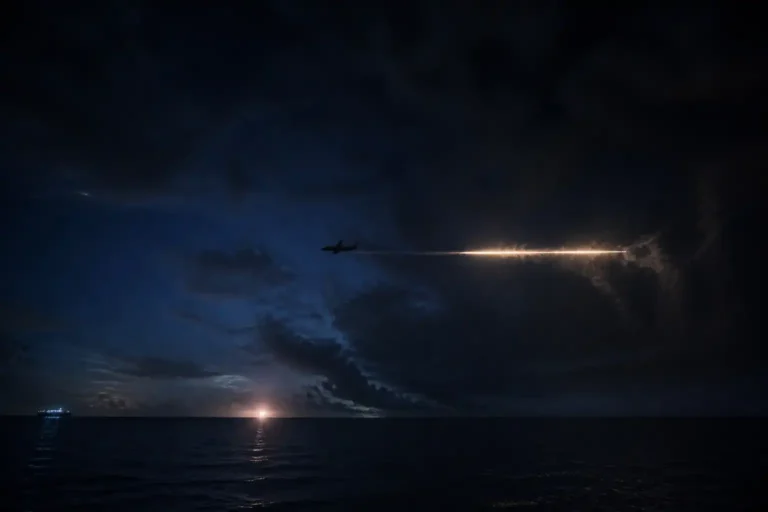
Loeb’s example is useful precisely because it had that independent check. The Galileo sensors observed an object on May 30, 2026 at a triangulated distance of roughly 20–30 kilometres. Automatic Dependent Surveillance–Broadcast data identified it as an aircraft. Loeb says the calculated distance agreed with the known separation to within a few hundred metres.
That is a calibration case, not evidence of an exotic object. It shows that the measurement system can be tested against something whose identity and position are already known.
Why apparent speed can mislead
The same problem appears in government UAP analyses. AARO’s public report on the “Go Fast” video used sensor angles, range estimates, aircraft motion, and wind conditions to examine the object’s apparent speed. The report placed the object at about 3,962 metres and concluded that parallax could make its motion look far faster than its actual movement through the air.
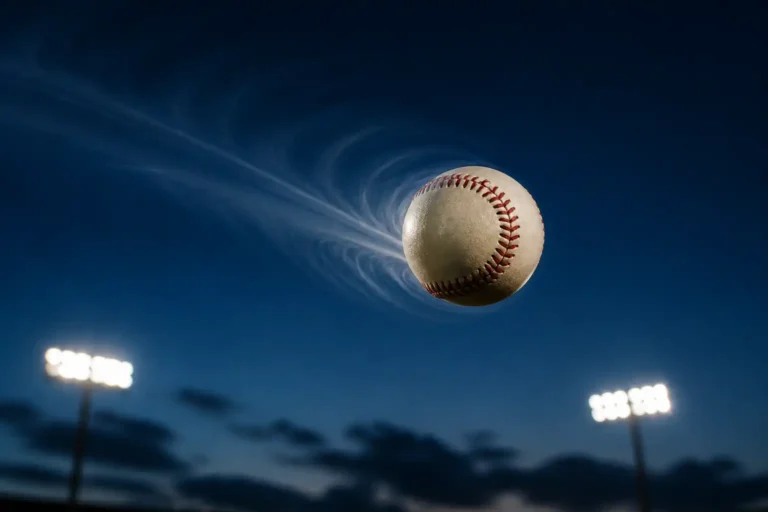
Parallax is the shift in an object’s apparent position when the observer moves. Hold a finger in front of your face and move your head from side to side: the finger appears to jump against the background. A camera mounted on a moving aircraft sees the same geometry at a much larger scale.
This does not make every UAP case ordinary. It does show why a video alone cannot settle the question. A claim about extraordinary performance needs a measured range, a time base, the observer’s own track, and enough information to reproduce the calculation.
What a distance measurement would tell us
With a reliable range, investigators can estimate an object’s size, speed, acceleration, and distance from nearby terrain or aircraft. They can ask whether a bright point is a tiny object close to the lens or a large object beyond the horizon. They can compare its movement with wind, known aircraft tracks, satellites, and astronomical sources.
Distance does not reveal an object’s origin by itself. A precise track can still describe a balloon, a drone, a bird, or a piece of debris. It simply removes one of the largest sources of ambiguity.
The best UAP case is therefore not the one with the most dramatic headline. It is the one with synchronized sensors, raw data, a known geometry, and a result another team can check. That standard may sound demanding. It is also the shortest route from an unexplained sighting to real knowledge.
What an independent check would require
A convincing case would include more than a plotted line. Other analysts would need the sensor timestamps, calibration details, viewing geometry, and enough of the raw signal to test whether the same track can be recovered. If the object was seen by an aircraft, investigators should compare the result with flight data, weather, satellite positions, and nearby launches.
The identity of the object matters too. A triangulated light with no independent identification remains an unknown light. That is still useful, but it does not tell us whether the object was a machine, an atmospheric effect, or a biological source close to the camera. Range is the beginning of the analysis, not the verdict.
This is why the most valuable UAP data may look less exciting than a short clip on social media. A quiet, well-calibrated observation can answer questions that a spectacular video leaves open. Once distance and motion are measured, the discussion can move from impressions to models that other people can try to break.