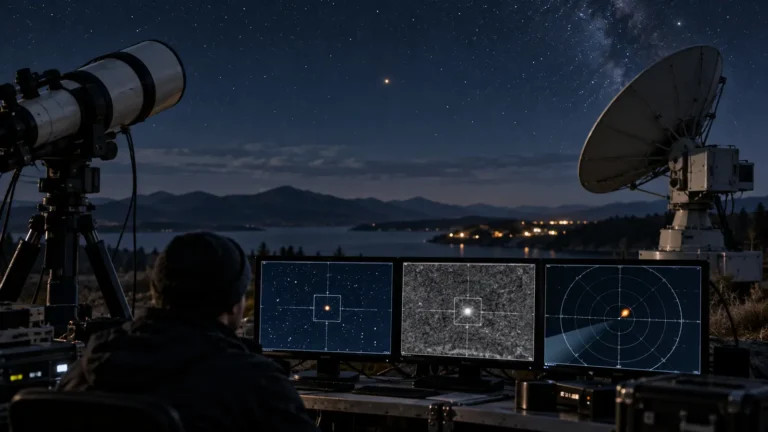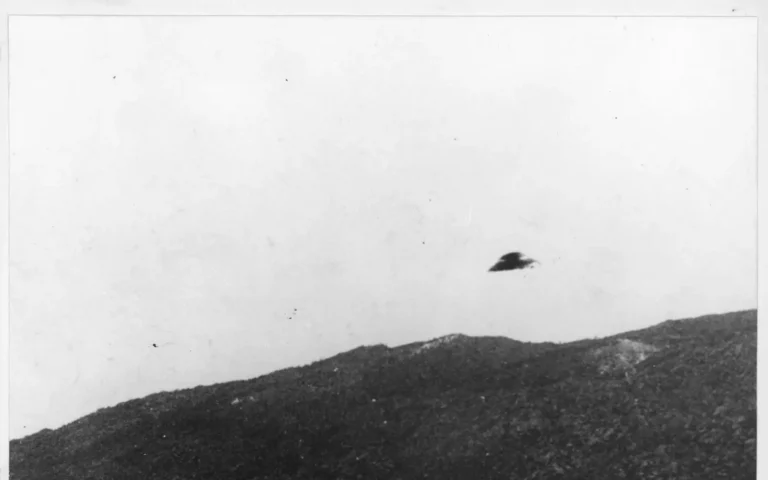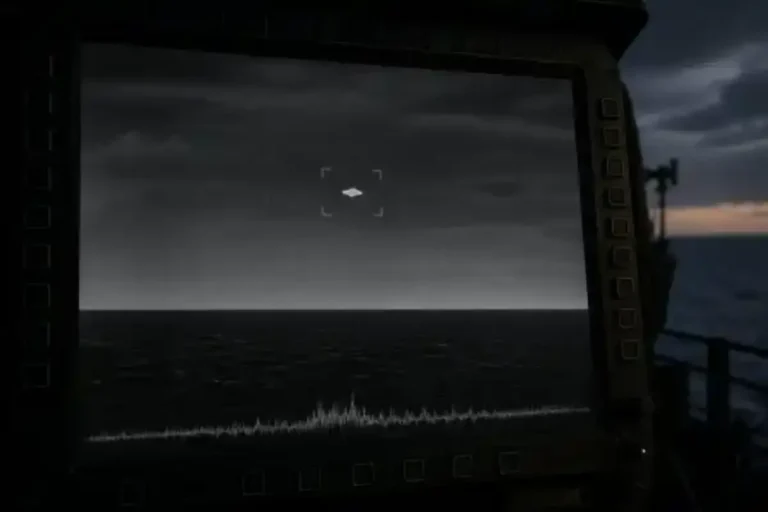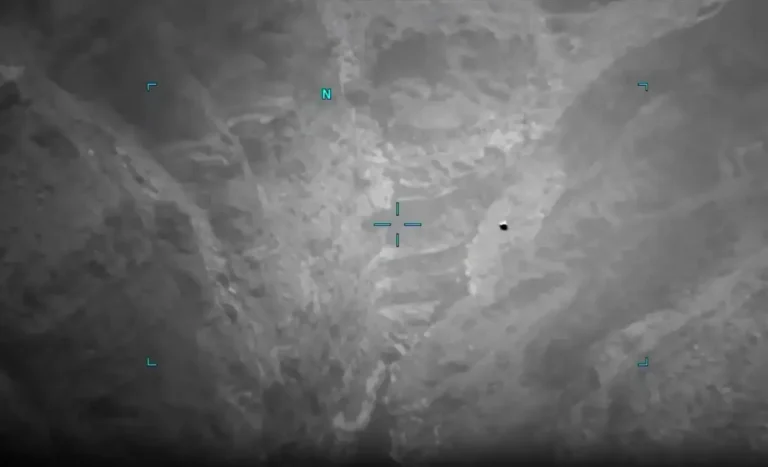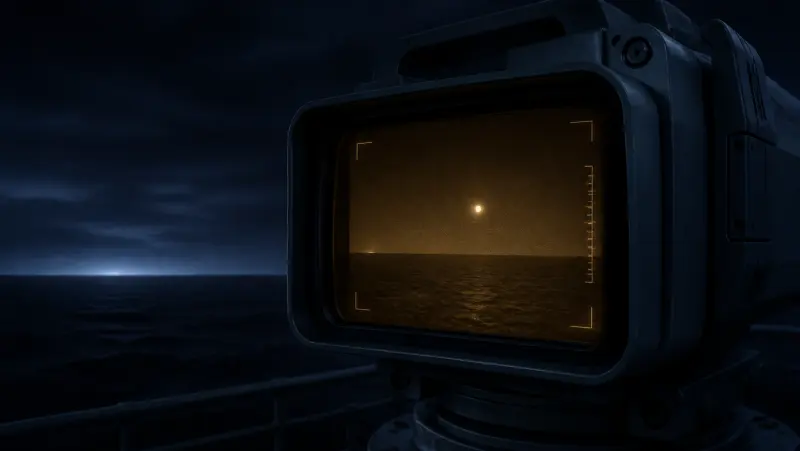
The fourth U.S. UAP release includes a 2-minute-57-second infrared video recorded by a military platform in 1996. The clip is attention-grabbing, but the archive record is the more important part: it identifies what was released while leaving distance, identity, and a complete flight profile unresolved.
That makes the file a useful companion to Curiosmos reporting on the FBI-linked UAP reports and the fifth U.S. UAP release. In each case, the documents preserve what was reported without supplying enough measurements to identify the object.
The entry, listed as DOW-UAP-PR113 in the official archive, runs for 2 minutes and 57 seconds. It was probably recorded in an infrared mode, which means the image represents heat or emitted energy rather than ordinary colour. The file does not identify a vehicle, give a measured distance, or provide a complete flight profile for the object.
Those details do not make the video worthless. They change the question we can ask of it. A file with a known chain of edits can still show what a crew saw or what a sensor recorded. It cannot, by itself, settle the object’s identity or reproduce the conditions of the original observation with laboratory precision.
Why infrared footage is easy to misread
Infrared images flatten many of the cues people use to judge distance and shape. A small hot source can bloom into a large patch of light. A reflective surface can appear bright without producing its own heat. Atmospheric conditions, camera focus and the angle of the sensor all affect the result.
Playback adds another problem. If a clip is slowed or a frame is repeated, the movement can look more deliberate than it was in the original recording. A held frame can also create the impression that a light paused in the sky. The official note does not tell us that any particular explanation is correct; it tells us that the copy in the archive is not a pristine, untouched original.
The missing measurements matter
The record does not provide a reliable range to the object, its altitude, the sensor’s exact field of view, or a complete set of speed calculations. Without at least some of those measurements, an apparent acceleration remains an impression on a two-dimensional screen. The same is true of shape. A bright point distorted by the optics may appear round, oval or elongated depending on the frame.
That is not a verdict against the witness or the recording. It is a reminder that observation and interpretation are different parts of the case. The crew may have seen something they could not identify. The public file still does not tell us what that something was.
Why release it now?
The fourth release is part of a larger effort to make old UAP material searchable. Putting the 1996 file online allows researchers to compare it with later records and to ask whether the same weaknesses appear repeatedly: missing metadata, copied video, unclear sensor settings and undocumented edits.
That comparison may prove more valuable than a single sensational interpretation. A pattern in the paperwork can show where future reporting standards need to improve. It can also help separate cases with recoverable data from cases that survive only as anecdotes and generations of compressed video.
The 1996 infrared clip is therefore best treated as an official historical record with a documented warning attached. It deserves to be examined, not promoted as proof. The archive gives us a starting point; the missing measurements are still missing.