Curiosmos
  • Home
  • Unsolved Mysteries
  • Ancient Civilizations
  • Cosmic Phenomena
  • Alien Theories
  • Curious Lists
No Result
View All Result
Like us on Facebook
Curiosmos
  • Home
  • Unsolved Mysteries
  • Ancient Civilizations
  • Cosmic Phenomena
  • Alien Theories
  • Curious Lists
No Result
View All Result
Curiosmos
No Result
View All Result

The Konark Sun Temple: A Wonder of Ancient Engineering

Justin GurkinicbyJustin Gurkinic
April 2, 2019 - Updated on May 7, 2019
in Editor's Picks
Share on FacebookShare on Twitter

The Konark Sun Temple (believed to have been built during the 13th-century CE) is a massive stone-built temple in the shape of a giant chariot, dedicated to the Hindu Sun God. Its architectural and design elements are out of this world.

There are many ancient temples scattered around the globe that challenge our very understanding of ancient civilizations and their architectural and engineering capacities.

In the past, we wrote about a few of them. See here, here and here.

Located about 35 kilometers northeast from Puri on the coastline of Odisha, India is the Konark Sun Temple, an ancient engineering wonder attributed to king Narasingha Deva I of the Eastern Ganga Dynasty about 1250 CE.

Related Posts

An artistic impression of a spinning black hole with its surrounding accretion disc. What if we send a transmitting camera into a black hole? Credit: ESA/Hubble, ESO, M. Kornmesser

So, What Would A Camera Show If It Fell Into A Black Hole?

November 30, 2020 - Updated on January 21, 2024
A solar eclipse.

How ancient people predicted eclipses without modern science

April 25, 2025
Partial view of Konarak Sun Temple in Orissa, India. Image Credit: Wikimedia Commons.

Its name, Konark, derives from the Sanskrit words Kona, which means corner or angle and Arka, which in translation means the Sun.

The temple was built in honor to the Hindu Sun God Surya, and the massive structure was built in the form of a 100-foot (30 m) high chariot with immense wheels and horses, all carved from stone.

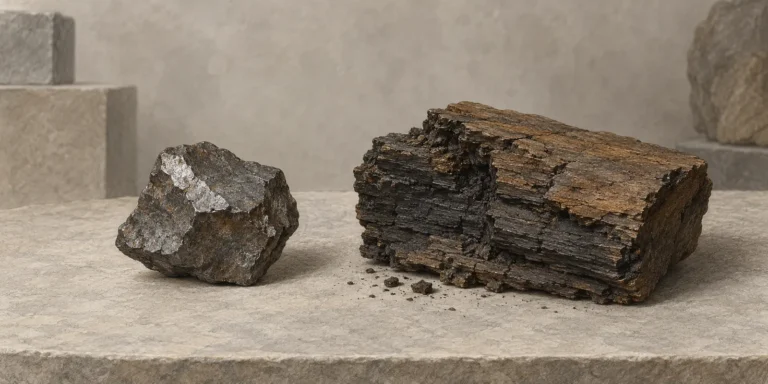
The builders of the temple used three different types of stone.

According to surviving ancient texts, Chlorite was used for the door lintel and frames as well as some sculptures.

Some of the reliefs and sculptures at the Konark Sun Temple. Image Credit: Wikimedia Commons.

The ancient builders made us of Laterite for the cone of the temple’s platform as well as the staircases located near its foundation.

Khondalite was also used for different parts of the temple.

Interestingly, none of the stones used in the building process originated from quarries located in the vicinity.

Design elements of the Konark Sun Temple. Image Credit: Wikimedia Commons.

Experts estimate that the builders obtained the materials from distant quarries and then transported the massive stones using the rivers and water channels near the site.

At its prime, the temple stood over 200 feet (61 m) high.

Today, much of the temple remains in ruins, especially the massive shikara tower over the sanctuary.

The exact reason why the temple was partially destroyed remains an enigma to experts.

Another view of the stunning design at the Konark Sun Temple. Image Credit: Wikimedia Commons.

There are several theories ranging from natural disaster, to deliberate destruction due to being sacked in ancient times by various invading armies.

Some scholars argue that the temple was never actually completed, or that it collapsed during initial construction phases.

The temple is famous for its intricate artwork, iconography, and themes, including erotic kama and mithuna scenes.

A kama scene on the walls of the Konark Sun Temple. Image Credit: Wikimedia Commons.

One of the most amazing design elements of the temple, which by itself is already mind-bending, is a massive stone wheel engraved into the walls of the temple.

A stone wheel engraved in the walls of the temple. The temple is designed as a chariot consisting of 24 such wheels. Each wheel has a diameter of 9 feet, 9 inches, with 8 spokes. Image Credit: Wikimedia Commons.

As the temple was designed as a massive chariot, it features 24 such wheels. Each of the wheel at the Konark Sun Temple has a diameter of 9 feet, 9 inches, s and 8 spokes.

The Kanark Sun temple was declared a UNESCO world heritage site in 1984. It remains an active, major pilgrimage site for Hindus, who gather here every year for the Chandrabhaga Mela around the month of February.
Share1765Tweet98Share27ShareSend
Justin Gurkinic

Justin Gurkinic

Hey, my name is Justin, and my friends call me Gurk. Why? Becuase of my last name. It sounds like a vegetable. Kind of. I love sleeping and writing. History is my thing.

Related Posts

An artists's rendering of a Nuclear explosion on the Moon.
Editor's Picks

Here’s How the US Government Planned To Nuke the Moon in 1959

June 27, 2020 - Updated on January 21, 2024
Here Are 5 of the Most Bizarre Elongated Skulls Ever Found
Editor's Picks

Here Are 5 of the Most Bizarre Elongated Skulls Ever Found

May 18, 2019 - Updated on May 2, 2023
Why are pyramids everywhere? This is a beautiful photo of the Great Pyramid at sunset.
Editor's Picks

Why are pyramids everywhere? A global pattern or universal logic

May 23, 2025
An edge of young, star-forming regions called NGC 3324 in the Carina Nebula can be seen in front of these "mountains" and "valleys," speckled with glittering stars. For the first time, NASA's new James Webb Space Telescope is capturing infrared images to reveal previously invisible star birth areas. Image Credits: NASA, ESA, CSA, and STScI
Editor's Picks

What Happens in the Universe in One Second?

December 7, 2022 - Updated on June 19, 2023
Image of the Chang'e 4 lander on the far side of the moon. Image taken by the Yutu-2 rover. Image Credit: CLEP/Doug Ellison, Twitter.
Editor's Picks

5 Amazing Close-Up Images of the Moon’s Far Side Taken by Chinese Lunar Mission

January 27, 2020 - Updated on January 21, 2024
Charles Darwin's theory of evolution is the staple of science as we know it today. Credit: Wikimedia Commons
Editor's Picks

Darwin’s Life, Lessons, and Thoughts Resumed in 10 Key Facts

April 19, 2022 - Updated on January 21, 2024
  • About
  • Privacy Policy
  • Fair Use Notice
  • DMCA / Removal
  • Impressum
  • Contact
  • Fact-Checking Policy
  • Ethics Policy
  • Ownership and Funding Information
  • Impressum
CURIOSMOS.COM

Welcome Back!

Login to your account below

Forgotten Password?

Retrieve your password

Please enter your username or email address to reset your password.

Log In
No Result
View All Result
  • Home
  • Unsolved Mysteries
  • Ancient Civilizations
  • Cosmic Phenomena
  • Alien Theories
  • Curious Lists