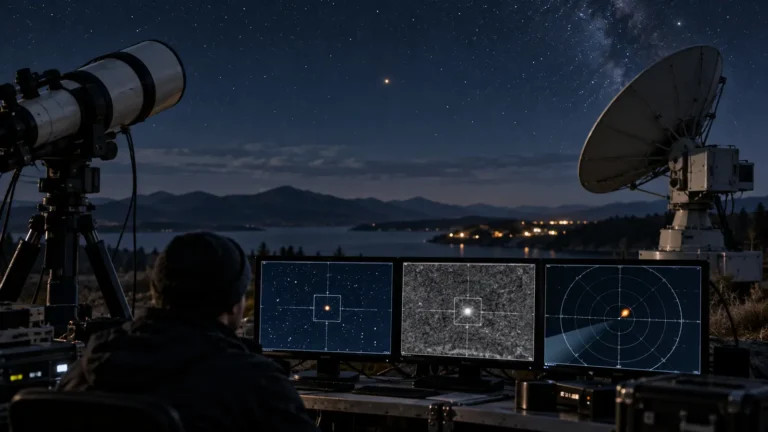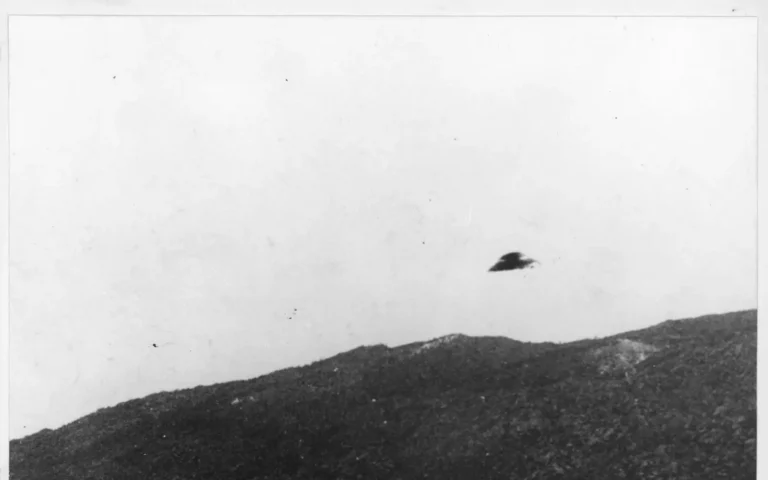
What is in the fifth U.S. UAP release? The pages do not settle what was in the sky, but they show what government agencies were told, what their files retained, and where the evidence ends. That is the value of the fifth tranche of records released on 7 August through the U.S. government’s UAP portal. The fifth release makes more sense alongside the National Archives’ broader Record Group 615, where the documentary trail continues.
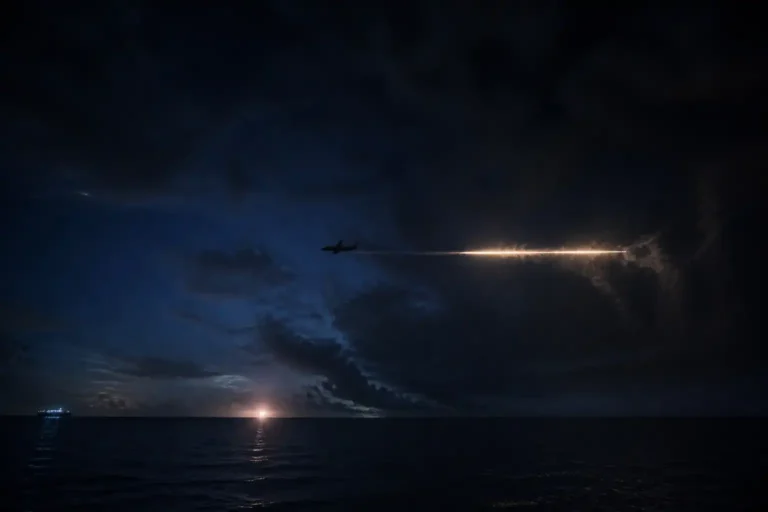
Three cases have drawn particular attention. One records an AC-130 crew’s account of luminous orbs above the Gulf of Oman during a live-fire exercise. Another preserves a report of an analogue clock that was said to have gained 20 minutes. A third contains a pilot’s description of a dark triangle crossing the sky near Bagram, Afghanistan, in 2002.
Avi Loeb has called the cases remarkable anomalies. They are certainly worth close reading. These are records of reports made to government agencies, not anonymous stories circulating online. Yet a record of a report is not a finding about the object or event described. The files themselves show why that boundary matters.
What “unresolved” means in this release
The release portal describes the material as unresolved. It says that many files have no final determination because the available information is incomplete. That word leaves several explanations open: an object may not have been identified at the time; a sensor track may lack the data needed for analysis; a witness may have seen something real without having the reference points needed to judge its size or distance.
The Gulf of Oman case, DOW-UAP-D101, makes the distinction unusually clear. It is an Intelligence Information Report, labelled in the document as information that has not been finally evaluated as intelligence. Such reports preserve what a source said and what a collector recorded. Later analysts can use them; the report itself is not their final assessment. The government’s public summary adds that its descriptive language and estimates reflect the observer’s interpretation and do not establish an object’s intrinsic characteristics.
This is not legalistic fine print. It tells us what the public file can support. The relevant questions are straightforward: what did the crew see directly, what did the sensors register, which figures were calculated afterwards, and what information is missing?
The Gulf of Oman report
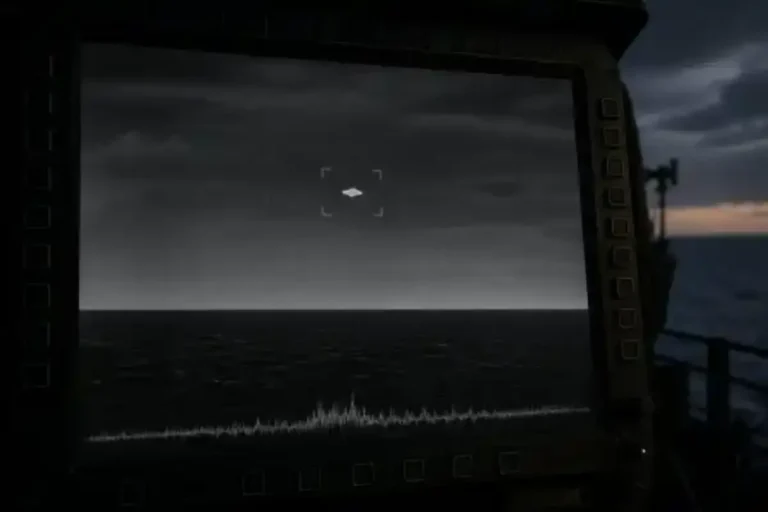
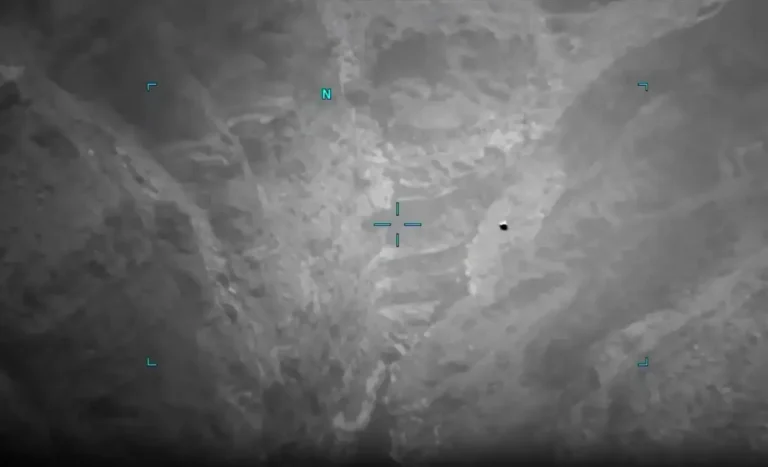
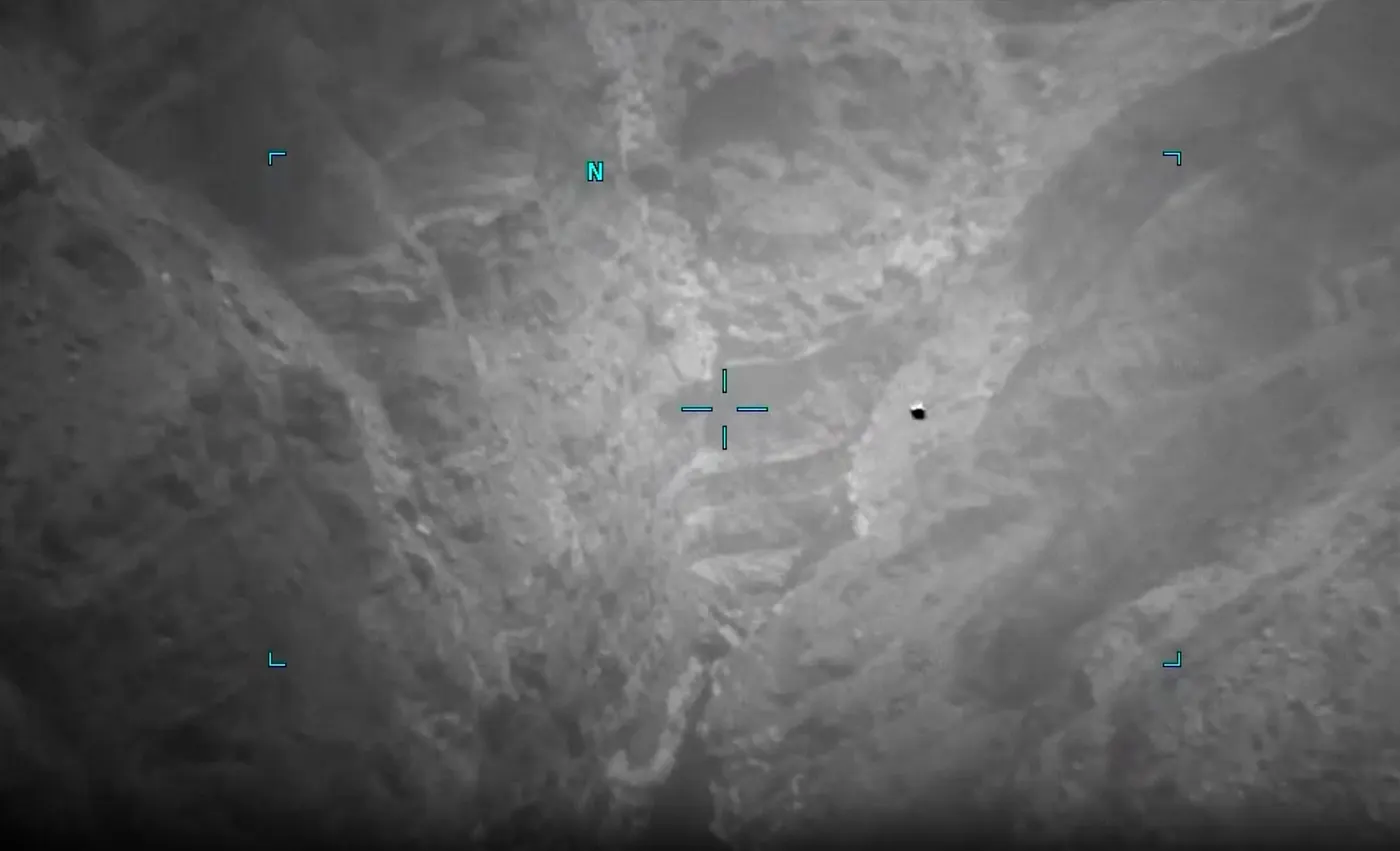
According to D101, an AC-130 crew was on a live-fire training mission over the Gulf of Oman on 8 September 2021. The report describes two objects near the water, roughly four feet across and hovering close to the surface. It then describes about 25 “cold orbs” in infrared imagery. Some appeared to fly in a loose formation. The crew also reported that the objects moved after the aircraft fired its 105 mm cannon.
Those are strong observations to have on the record. The source is described as having direct access through official duties and as someone who could be contacted again. The report also gives apparent speeds ranging from 250 to 1,300 mph, calculated with the aircraft’s TACTOOL system. The question is how far those figures can take us without the underlying measurements.
A speed calculated from a sensor track depends on range, viewing geometry, sensor mode, timing, tracking quality and uncertainty. A small nearby object and a larger distant one can create very different physical solutions in the same narrow field of view. The word “cold” has a similar limit. In this report it describes an infrared signature. It does not give the public a calibrated temperature for the object.
The video record is also incomplete. D101 says the aircraft’s DVR failed and the footage from the UAP observations became corrupted. It refers to associated material, but the public file does not provide a full, calibrated data stream from which an outside researcher can reconstruct the encounter. The report preserves testimony from the crew. It does not give us the raw material for a conclusive reconstruction.
Loeb notes that a coordinated drone swarm is one possible explanation for the formation behaviour. The report cannot rule that out. It also cannot show, from the public material alone, whether the apparent response to cannon fire was causation or timing. The episode remains striking. It also remains open.
A clock discrepancy is a claim that needs a measurement trail
The clock case is the easiest to inflate. Loeb draws attention to an FBI FD-302 interview record in which an observer said that an analogue clock was 20 minutes ahead of two digital clocks after a reported UAP encounter. That deserves to be recorded accurately. It does not establish that time changed around the witness.
An FD-302 is an interview record. It is not an instrument log or a laboratory test. To examine the claim, investigators would need a basic chain of measurement: when the clocks were last checked against a reliable standard; whether they were exposed to the same conditions; what kind of analogue clock was involved; whether the readings were documented at the time; and whether other equipment recorded an electrical or electromagnetic disturbance.
The public record does not contain that trail. A puzzling observation can remain a genuine report without being treated as evidence for a theory of time, gravity or exotic technology. The honest position is simple: the discrepancy was reported, and the available public information cannot tell us why it happened.
The Bagram triangle and the problem of scale
Another FBI record contains two separate sets of observations. The most memorable dates to 2002, when a pilot flying near Bagram said he and another pilot watched stars disappear behind a large triangular object moving silently overhead. He estimated it at around 500 feet across, travelling at about 150 knots, with no visible lights.
It is a vivid account, and the presence of a second witness matters. Yet the same record says the pilot could not fully see the shape. There is no published range or altitude measurement. At night, that makes scale extremely difficult to establish. An angular shape in the sky can look huge when it is close or small when it is far away. A quoted size without a measured distance is an estimate, not a physical measurement.
The file also contains reports of white lights seen by commercial pilots at high altitude in 2023 and 2024. The interviewee did not believe they were conventional aircraft, satellites, Starlink flares or meteors. That is the witness’s considered view, which should be reported as such. It is not a technical elimination of every alternative. The lights were seen across long distances and under changing viewing conditions—the precise circumstances in which a second sensor or well-documented flight data can matter most.
Making the Bagram triangle and the later lights into a single story would add drama and lose precision. They are separate observations recorded in the same interview. The shared problem is the absence of enough common, calibrated data to identify what was seen.
The data gap is the story
Requests for better data are sometimes treated as an attempt to wave UAP reports away. That turns the argument inside out. If some of these events involve an unfamiliar technology, a national-security issue or a poorly understood natural phenomenon, careful measurement is the only route to a credible answer.
NASA’s independent UAP study reached the same conclusion in 2023. It found too few high-quality observations to draw firm scientific conclusions and called for systematic calibration, multiple measurements and thorough sensor metadata. AARO’s public guidance makes a related point: apparent speed can be shaped by the motion of the observer or the sensor’s field of view, while drones and other familiar objects may resist immediate classification. Those statements do not close the door on an extraordinary case. They describe what a serious investigation needs to distinguish one.
For a case such as the Gulf of Oman report, the most valuable package would include synchronized raw sensor data, sensor settings, position and orientation information, range or elevation estimates with uncertainty, weather and astronomical context, radio-frequency data where available, and an independent observation from a second platform. A single video may attract attention. Two calibrated sensor records can start to answer a physical question.
Why the release still matters
The fifth tranche does not tell us that the Gulf of Oman objects were non-human technology. It does not establish that the Bagram triangle was a craft beyond known aviation, and it does not demonstrate a physical anomaly in the clock case. It does show that government agencies received and preserved reports which remain difficult to classify from the information now public.
That gives researchers a document trail. Readers can examine the wording, separate observation from inference and identify the information that is absent. It also provides a practical lesson for future incidents. The next unusual event will be easier to investigate if the data are preserved early, with enough context to test size, speed, direction and environment.
Unresolved cases have value even before they are explained. They reveal where reporting systems are thin, where sensors do not give investigators what they need and which questions should be asked while witnesses can still answer them. That is where this release earns its attention.
For context on the longer history of official U.S. interest in unexplained aerial reports, read Curiosmos’s review of declassified Pentagon research records.
For context, Curiosmos has also examined claims about a 2027 UAP revelation, while keeping that claim separate from the records examined here.
\n
Sources and further reading
U.S. government UAP records portal: Release 05; Avi Loeb, “Remarkable Anomalies in the Fifth Tranche of UAP Data”; NASA’s UAP independent-study update; AARO: Frequently Asked Questions.