The fifth U.S. UAP release adds witness testimony to the public record. The documents do not identify what produced the sightings, but they show what was reported, what details can be checked and where the evidence ends. The evidentiary limit is the same one explained in our guide to how investigators decide whether a UAP is truly unidentified.
That puts the files in the same documentary conversation as the UAP Council’s memo and the National Archives record group. The value is in comparing the reports, their provenance, and the measurements that are still missing.
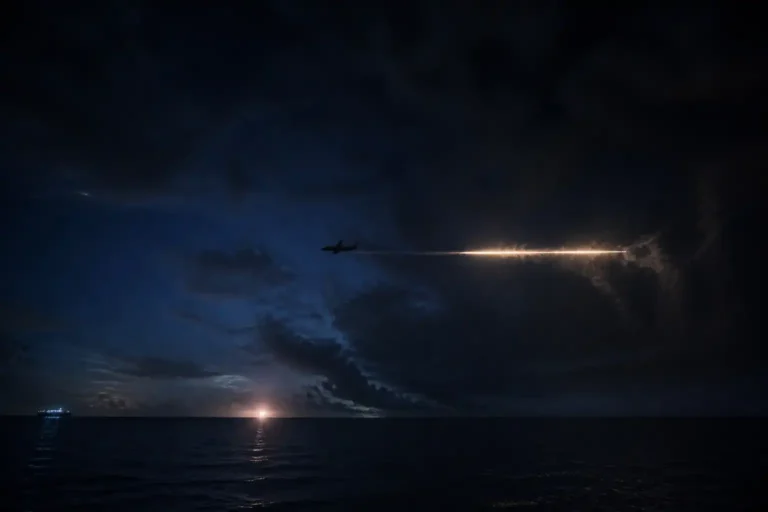
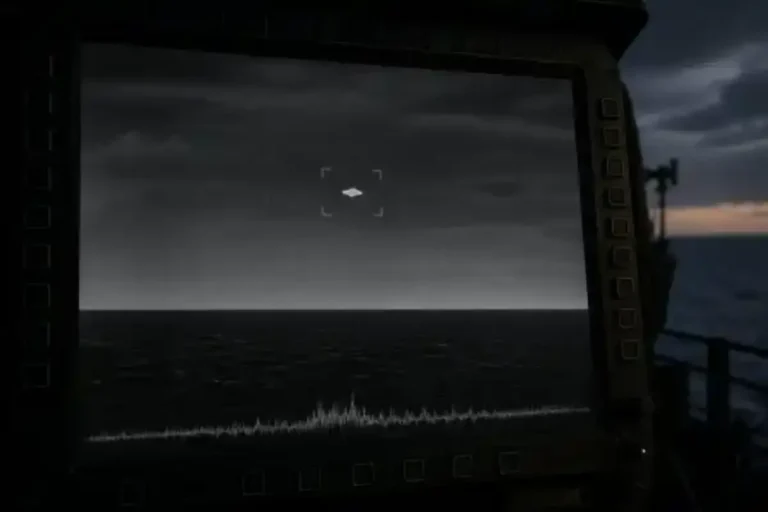
According to the testimony summarized by Loeb, an AC-130 crew saw roughly 25 objects during a live-fire exercise in September 2021. The objects were described as cold orbs. Two reportedly appeared beside a flare dropped into the water, and the crew said they moved when the aircraft opened fire. Later, the crew reported the objects flying in formation at speeds of up to about 1,300 miles per hour.
Those details are the reason the account has attracted attention. A group that changes position after a weapon is fired sounds as if it is reacting to the aircraft. A formation moving at high speed sounds unlike a loose collection of balloons or stars.
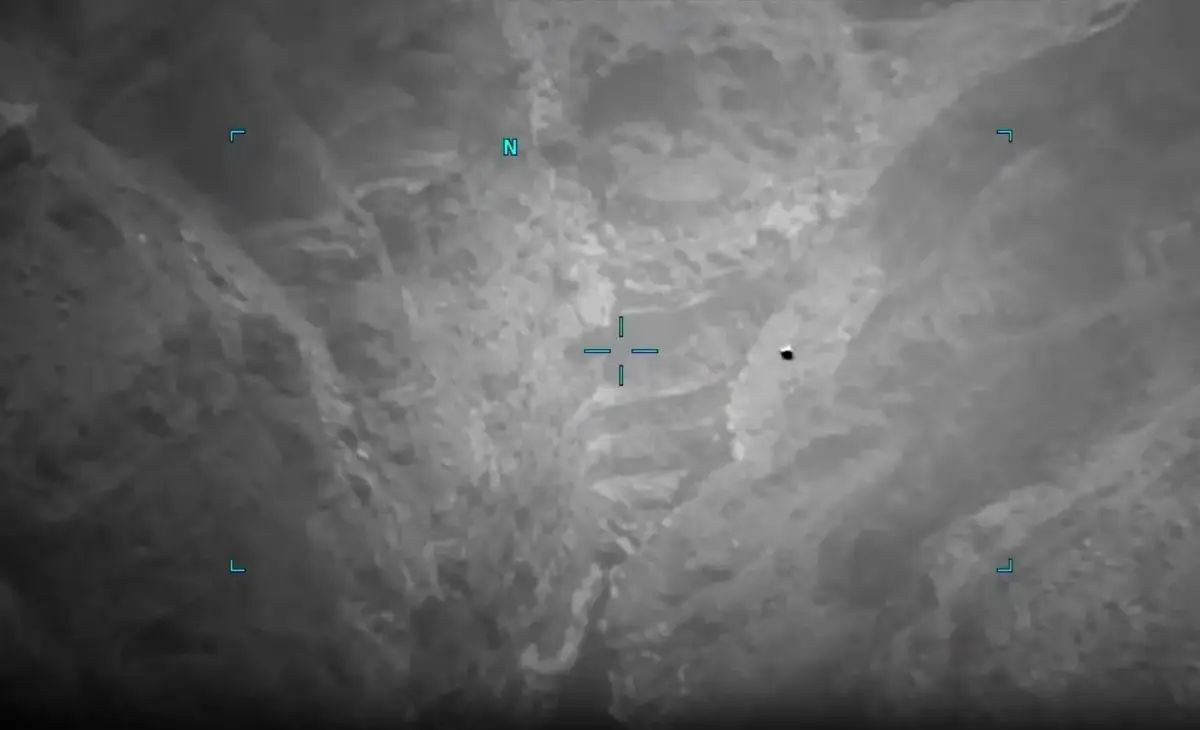
There is still a large gap between a report and a measurement. The release, as discussed in Loeb’s essay, does not provide the kind of synchronized radar, infrared, range, and weapons-system data that would allow an outside analyst to reconstruct the event. A coordinated drone swarm is a possible human explanation, although the available testimony does not settle that question either.
Curiosmos has previously explained why a UAP label does not identify an object. This case shows the same principle in practice: an unusual description tells investigators where to look next.
The clock that lost twenty minutes
Another FBI interview describes an analog clock that was twenty minutes ahead of two digital clocks after a reported UAP encounter. Loeb notes that ordinary gravitational time dilation cannot explain such a difference without effects that would have been obvious to everyone nearby.
That does not make the clock a time machine. A damaged clock, an electrical disturbance, a recording error, or a mistaken recollection would all have to be checked. The useful question is whether the clocks were synchronized beforehand, whether their power supplies were independent, and whether any other instruments recorded an electromagnetic event.
Without those checks, the clock story is an anomaly in a witness account, not a measurement of altered time.
A very large triangle over Afghanistan
Two pilots described a silent, unlit, equilateral triangle about 500 feet (roughly 150 metres) across, travelling at about 150 knots. The claimed size is larger than the wingspan of the Stratolaunch Roc, the largest aircraft currently listed by Loeb for comparison.
Size estimates made from an aircraft are vulnerable to the same problem that affects many UAP reports: distance. A distant object can look enormous if its range is guessed incorrectly. The report would become much stronger if investigators could pair the pilots’ sightline with radar returns, a known altitude, and a second observation point.
The same interview includes repeated reports of lights appearing between midnight and 3 a.m. Some were said to brighten slowly, remain in place, or change direction. Long, recurring observations deserve attention, but satellites, aircraft, atmospheric effects, and viewing geometry still need to be eliminated one by one.
What the release can and cannot do
The fifth tranche adds testimony to the public record. It does not provide enough raw data to close the cases. That is not a dismissal of the witnesses. It is the reason the next request should be specific: release the sensor files, timestamps, flight tracks, weather conditions, and any material records associated with the encounters.
The PURSUE archive is useful because it lets researchers see what has been released and what has not. Curiosmos will keep the distinction clear as the documents are examined: a testimony can point toward a valuable investigation without deciding the answer in advance.