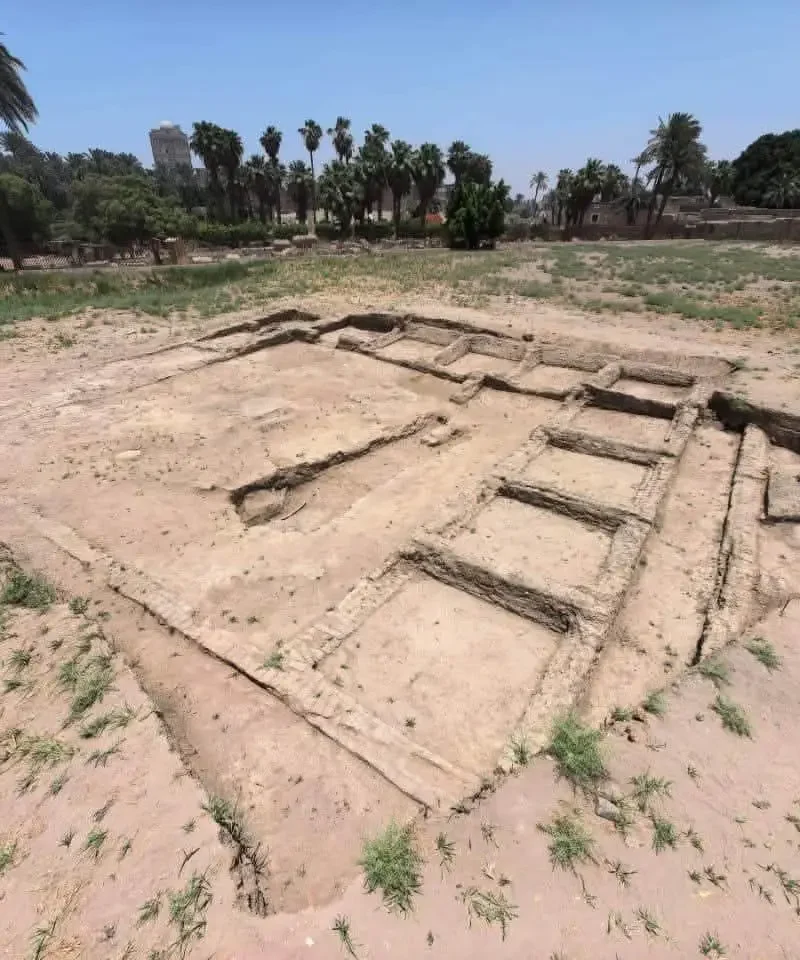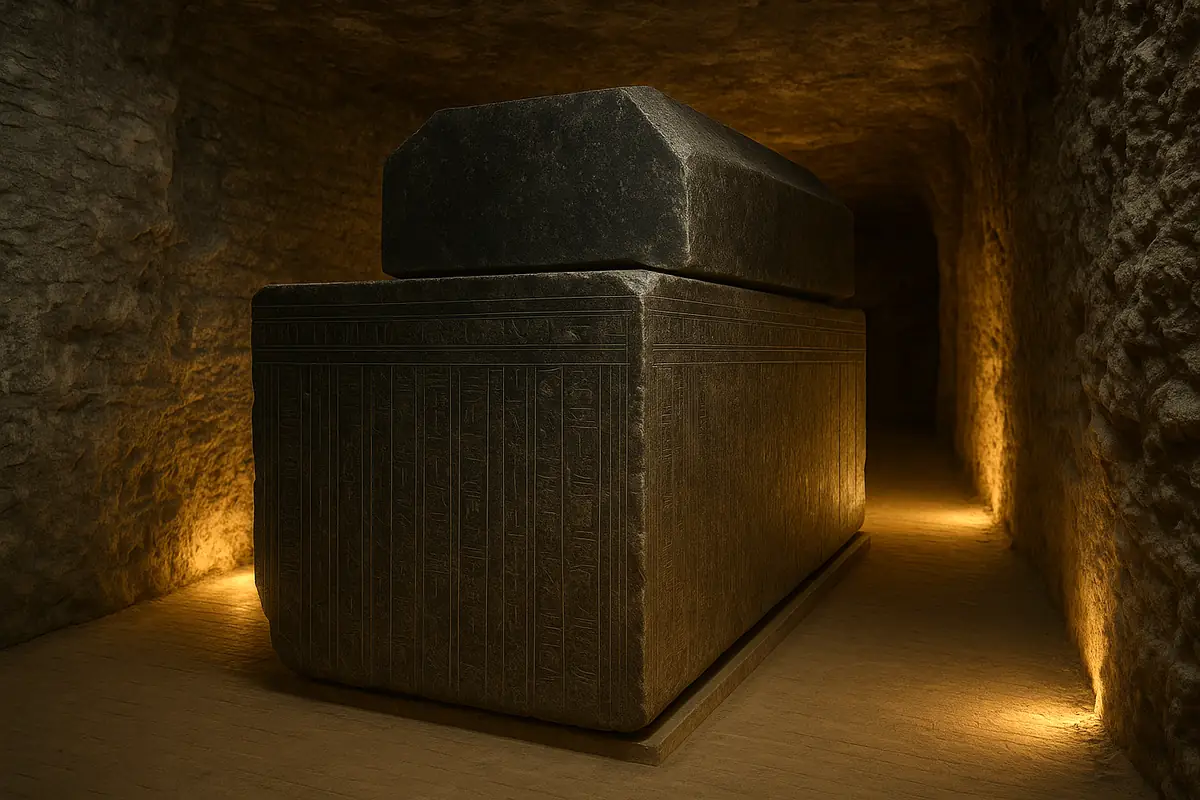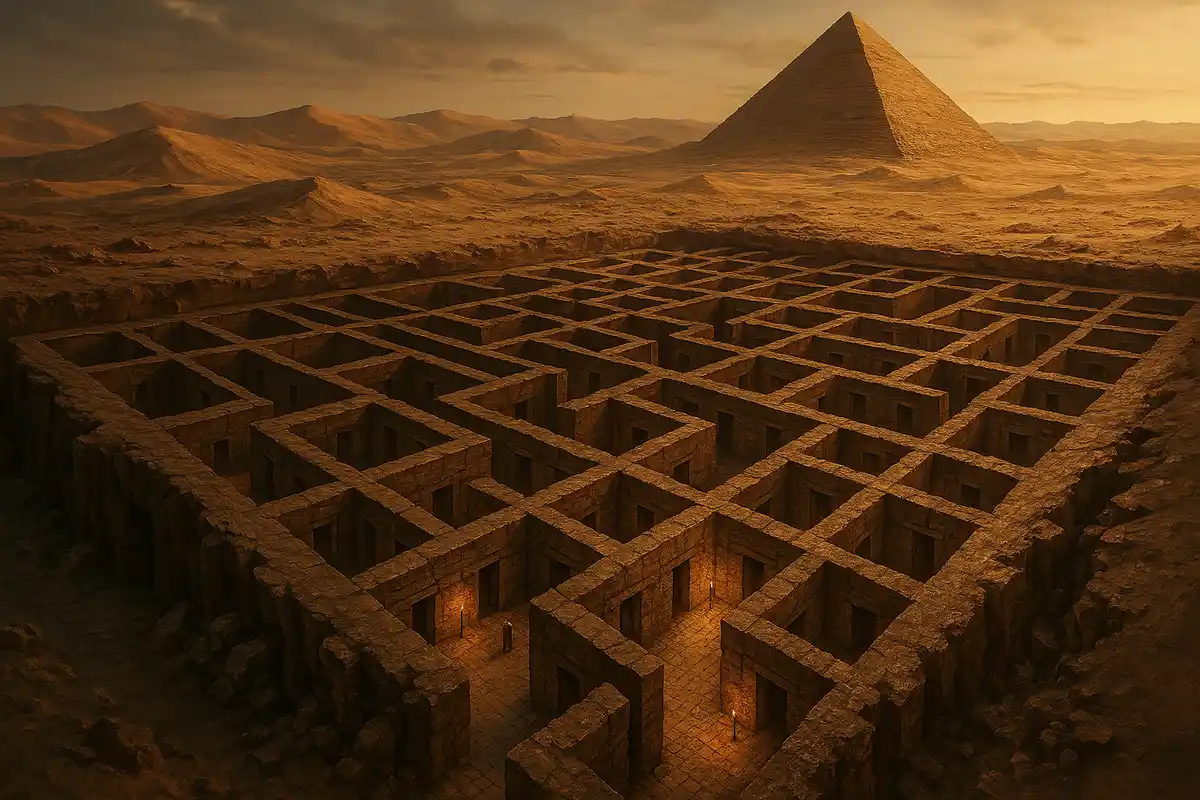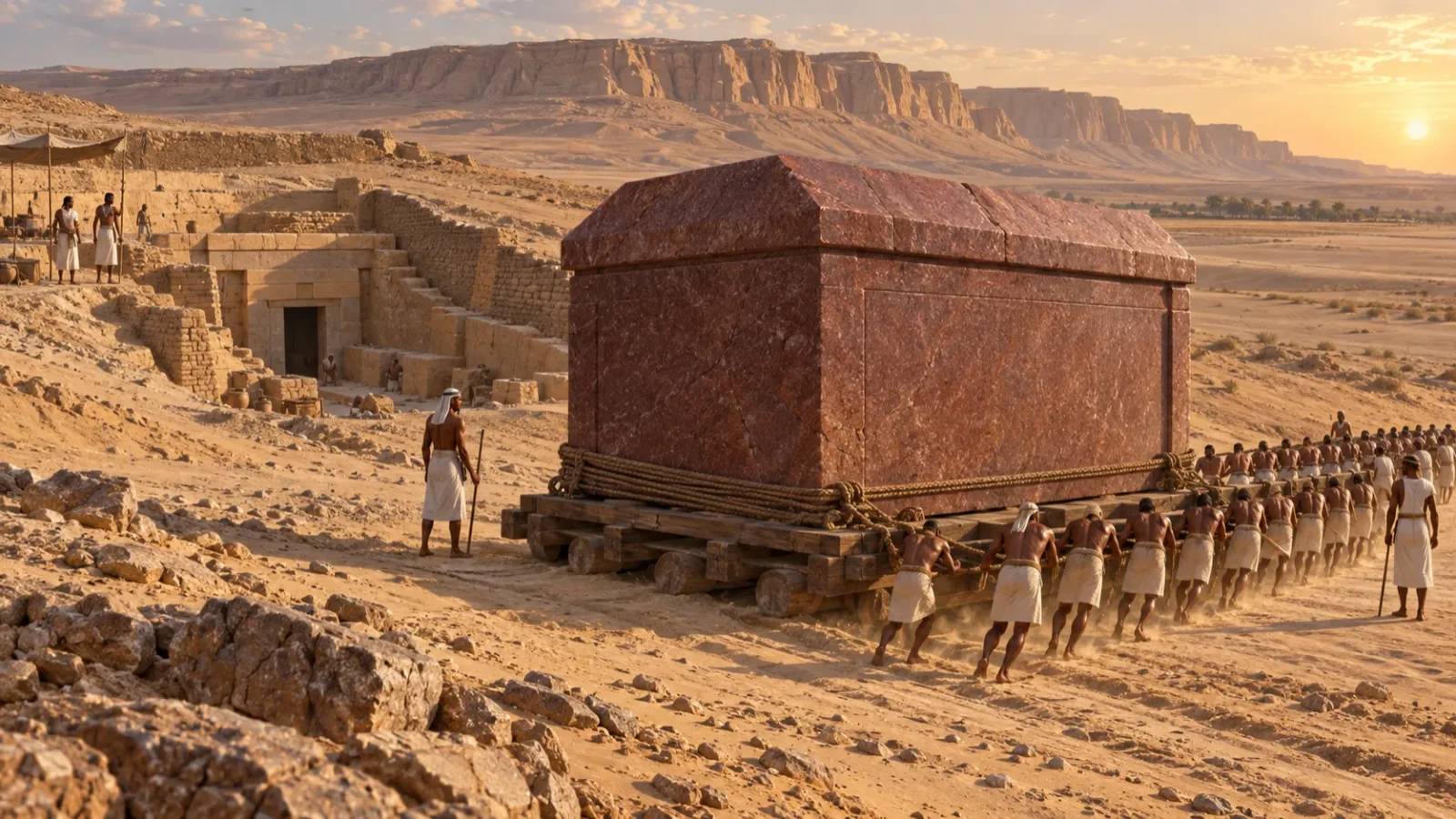
At South Abydos, archaeologists uncovered a red-quartzite burial chamber weighing about 60 tons. It had travelled roughly 300 miles from its quarry near modern Cairo, then was taken from its first tomb and reused in a later burial.
The stone was impressive on its own. Its history became more revealing when the same excavation uncovered the tomb of a previously unknown pharaoh, Woseribre Senebkay. Nearby, a canopic chest made for another king had also been reused. Together, the objects trace how later rulers built their burials from the remains of an older royal landscape.
A royal chamber moved to South Abydos
The chamber was carved from red quartzite quarried at Gebel el-Ahmar, near Cairo. Penn Museum archaeologists found it during work at South Abydos, an area long connected with royal burials and the cult of Osiris.
Keep exploring
Continue with Curiosmos
The stonework dates to Egypt’s late Middle Kingdom. The chamber had been removed from its original tomb before it was used again. The first excavation season did not identify its owner, leaving researchers with a monumental piece of royal equipment separated from the burial it was made for.
The following season brought a new clue. The team uncovered the tomb of Senebkay, who ruled around 1650 BC. His painted limestone burial chamber preserved his name and titles.
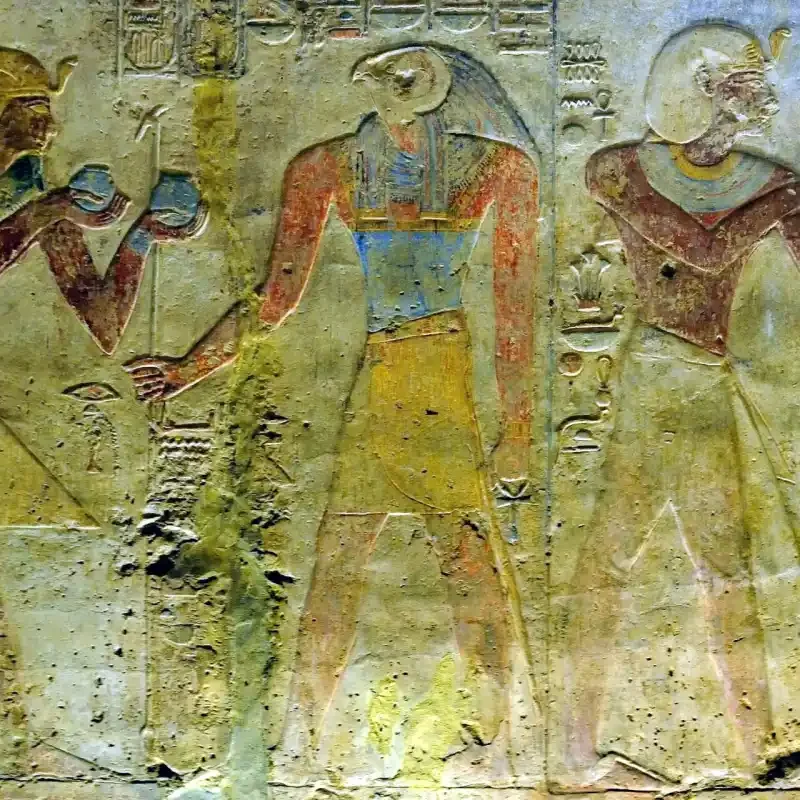
Old names on reused objects
Near Senebkay’s tomb, excavators found a cedar canopic chest that had originally belonged to another ruler. Once later gilding was removed, the name Sobekhotep could be seen on the wood.
The quartzite chamber has also been linked to a large robbed tomb associated with Sobekhotep, probably Sobekhotep I, an early ruler of Egypt’s 13th Dynasty around 1780 BC. A funerary stela fragment bearing the king’s name was found nearby. The identification rests on the tomb’s location, date and design, alongside associated objects; the sarcophagus itself does not carry an intact name.
Research has also discussed whether tomb S10 at South Abydos may belong to Sobekhotep IV, a different king of the same dynasty. The debate concerns which ruler belongs with which tomb and equipment. The reused objects show how the site’s history is layered, even where a firm identification remains elusive.
Abydos during a divided kingdom
Senebkay’s burial dates to Egypt’s Second Intermediate Period, when power was divided among northern and southern centres. The Penn team has proposed that a smaller independent Abydos Dynasty ruled between the better-known Hyksos and Theban realms.
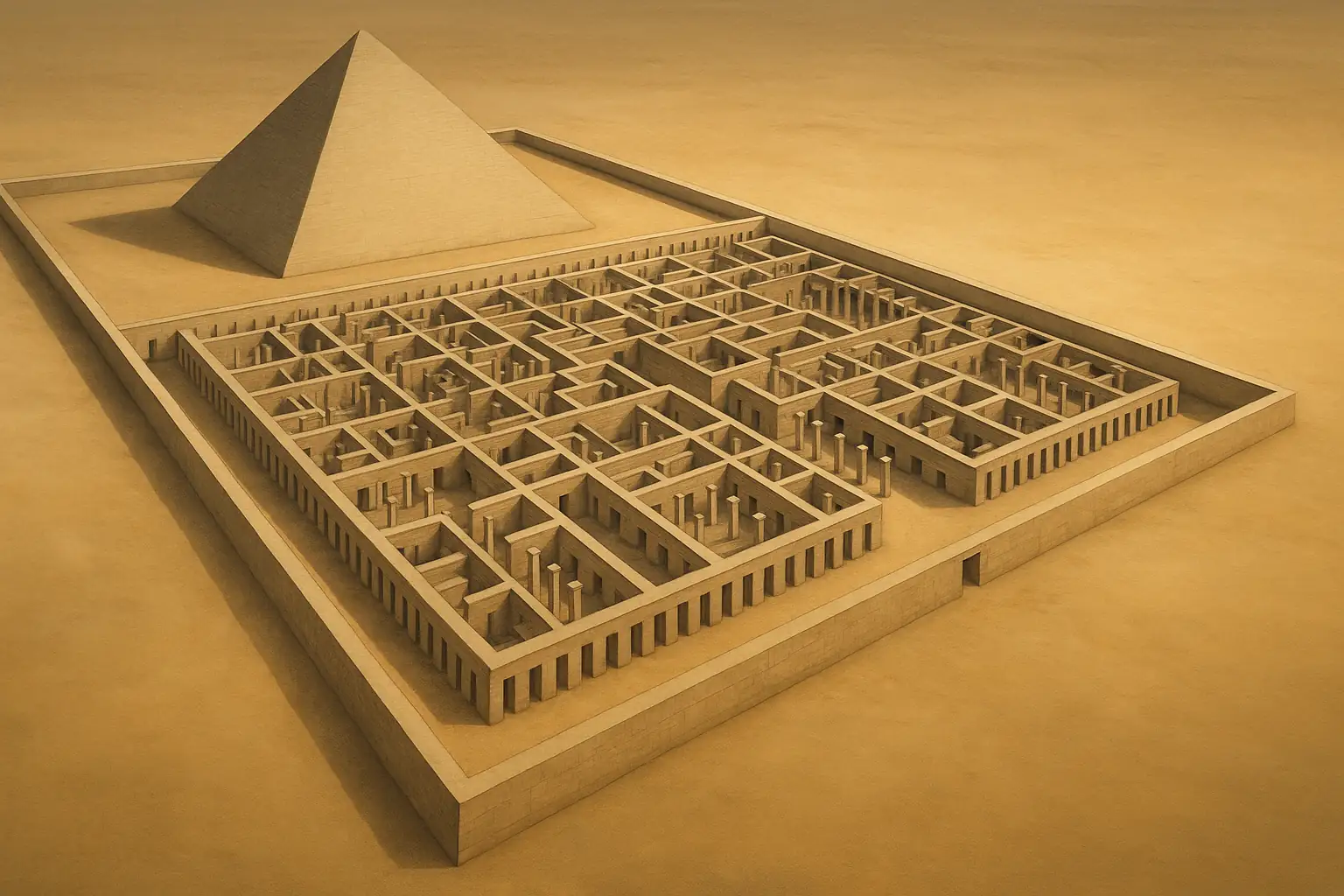
At South Abydos, new royal tombs appeared beside older Middle Kingdom monuments. Reusing stone and wood may have saved work, but the objects also carried royal associations. A later king buried among earlier rulers could claim a place in a landscape already tied to Egypt’s past.
Moving a 60-ton chamber required planning and a substantial workforce. Its reuse tells us the stone remained valuable enough to haul and set again. Whether that choice was mainly practical or also political is harder to prove; the evidence establishes the reuse and the setting, not the intentions behind each decision.
Why the stone matters
Abydos was already one of Egypt’s most important burial landscapes. The reused chamber adds a view of how that landscape changed: tombs were robbed, royal names disappeared, and material from earlier burials entered new ones.
Senebkay’s tomb supplied more than a pharaoh’s name. His remains showed multiple battle wounds, while the reused canopic chest connected his burial with an earlier royal complex. Those clues helped researchers identify a group of rulers that had left a faint trace in the conventional king lists.
The quartzite chamber is part of that history. Its quarry source points to long-distance transport; its second use shows that royal equipment could outlast the burial it was built for. At Abydos, the past was not only remembered. It was also moved, reused and built into new tombs.
Curiosmos has also covered the ancient boats buried at Abydos, another glimpse of the many ways Egyptians connected this landscape with royal life and death.
Sources
- Penn Museum, “Giant Sarcophagus Leads Team to the Tomb of a Previously Unknown Pharaoh.”
- Penn Museum, Abydos Archaeological Project.
- Penn Today, “Penn Researchers Help Unearth Forgotten Egyptian Pharaoh.”
- Wegner and Cahail, “Royal Funerary Equipment of a King Sobekhotep at South Abydos,” Journal of the American Research Center in Egypt.