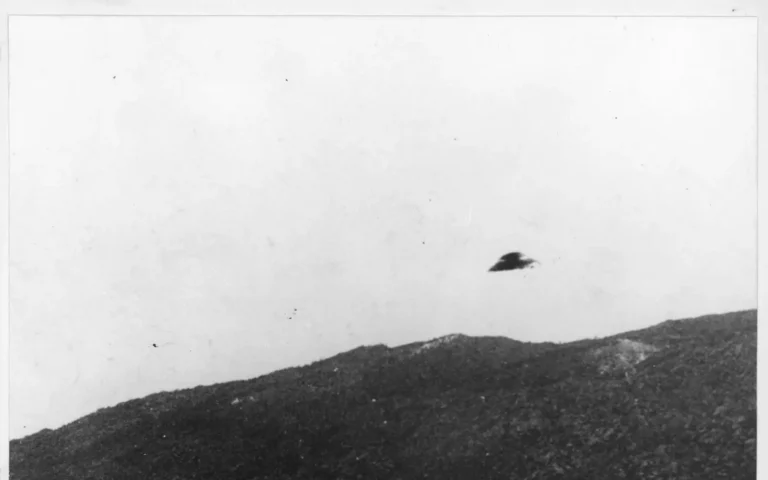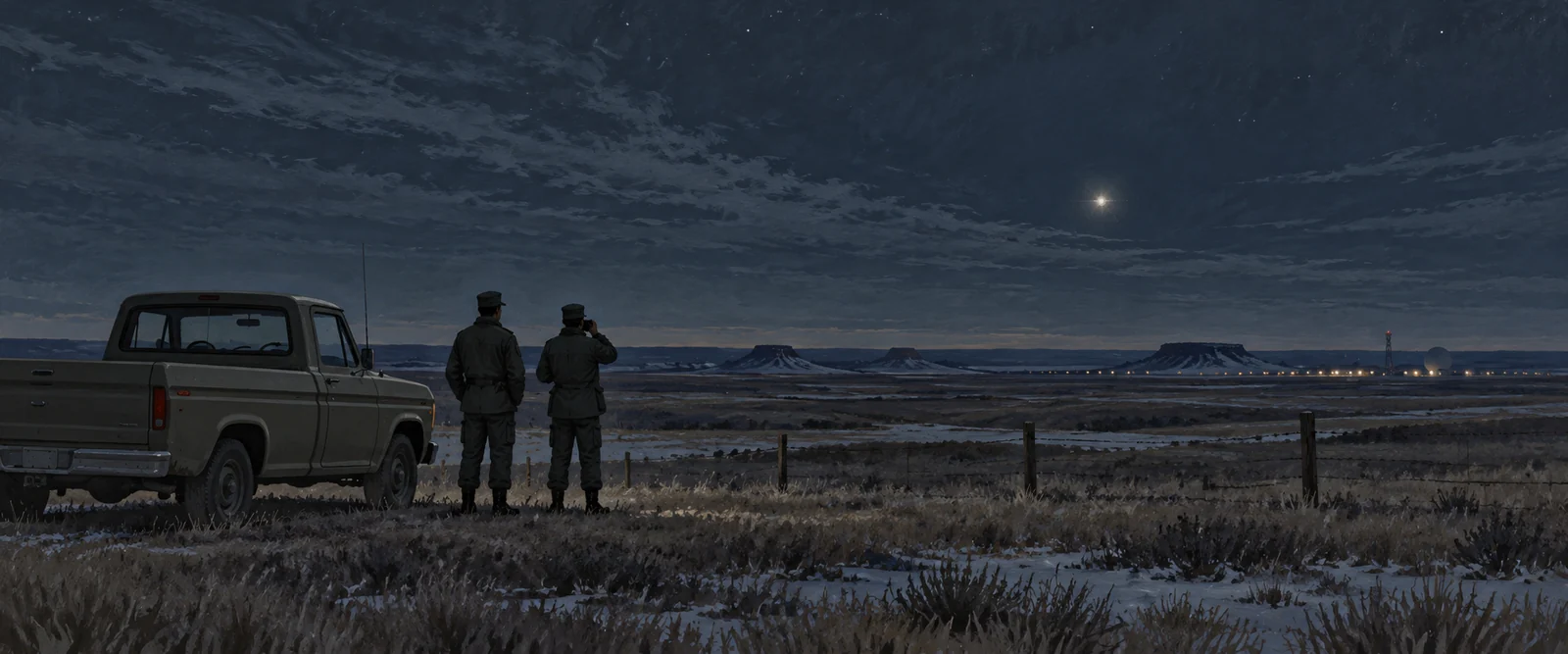
Two men who say they shared an extraordinary night near Ellsworth Air Force Base have finally sat down together to describe it. Mario Woods and Michael Johnson recall a bright object, figures they could not explain and a gap in their memories while guarding a missile installation in 1977.
Their reunion, filmed for a September 2026 interview, brings a second voice into an account often associated with Woods. Nearly half a century after the alleged encounter, the men are trying to piece together what each remembers.
Two recollections of the same night
In the American Alchemy interview, the veterans describe an alarm response followed by an encounter with an unusual object. Their accounts include a dark sphere and later finding themselves near a reservoir. They also allege questioning and medical attention after the incident.
The accompanying automated transcript records both men discussing memories and gaps. It also includes material associated with hypnotic regression. Those are different kinds of recollection, and an accurate account needs to identify which detail came from which conversation.
The reunion is moving because each man recognises parts of the other’s story. But agreement heard today does not tell us when that agreement first emerged. Were the matching details recorded separately in 1977, recalled independently years later or discussed before this meeting? The answer would help establish the history of the account.
The records that could reconnect the story
A missile-security assignment should leave a more ordinary trail than the encounter itself. As with other UAP investigations, a timeline gives researchers something concrete to compare: duty rosters, shift logs, alarm reports and records of personnel returning from an assignment. Medical records could help establish whether a reported injury was examined at the time.
Such documents would not automatically identify an object or explain missing time. They could, however, fix the sequence. A contemporary note saying where a patrol was found would carry a different weight from a location reconstructed decades later.
Keeping early memories separate from later ones
Hypnotic regression features in many encounter accounts because people hope to recover a missing stretch of time. The experience can feel vivid. Whether the recovered detail accurately describes an earlier event is a separate question.
Psychologist John Kihlstrom’s review of hypnosis and memory discusses how suggestion can affect recollection and confidence. It does not establish what happened to Woods or Johnson. It does explain why an investigation should preserve statements made before regression and compare them with later accounts.
That comparison need not treat the men as interchangeable witnesses. One might remember a detail that the other never reported. Differences can be informative: they may reveal separate viewpoints, uncertainty or a detail introduced much later. Editing every discrepancy out would make the story smoother while making the record less useful.
The reunion offers a chance to build that record carefully. A dated timeline of each man’s statements, with surviving service documents alongside it, would allow readers to follow the encounter as it was remembered over time. The extraordinary part of their account deserves attention; so does the quieter work of finding what was written down before anyone knew the story would reach a large audience.