
From Baalbek to Sacsayhuamán and Aswan, ancient monuments still show that moving colossal stone was less a miracle than a brutally precise art of planning, labor, friction, and force.
At Baalbek in Lebanon, at Sacsayhuamán above Cusco, and in the granite quarries of Aswan, ancient builders left behind stones so large that modern instinct still resists them. Some were dragged into temple terraces, some were fitted into walls built for a restless seismic landscape, and some never made it out of the bedrock at all, yet each of them keeps the same question alive: how did preindustrial societies move masses that still trouble modern engineering?
The strongest work on this question in recent years has made the problem feel more concrete, not less. Experiments on friction, new analysis of quarrying marks, and structural studies of ancient masonry all point in the same direction. These builders understood slope, leverage, sequencing, surface preparation, and failure with a seriousness that the monuments still record.
Where mass becomes the message
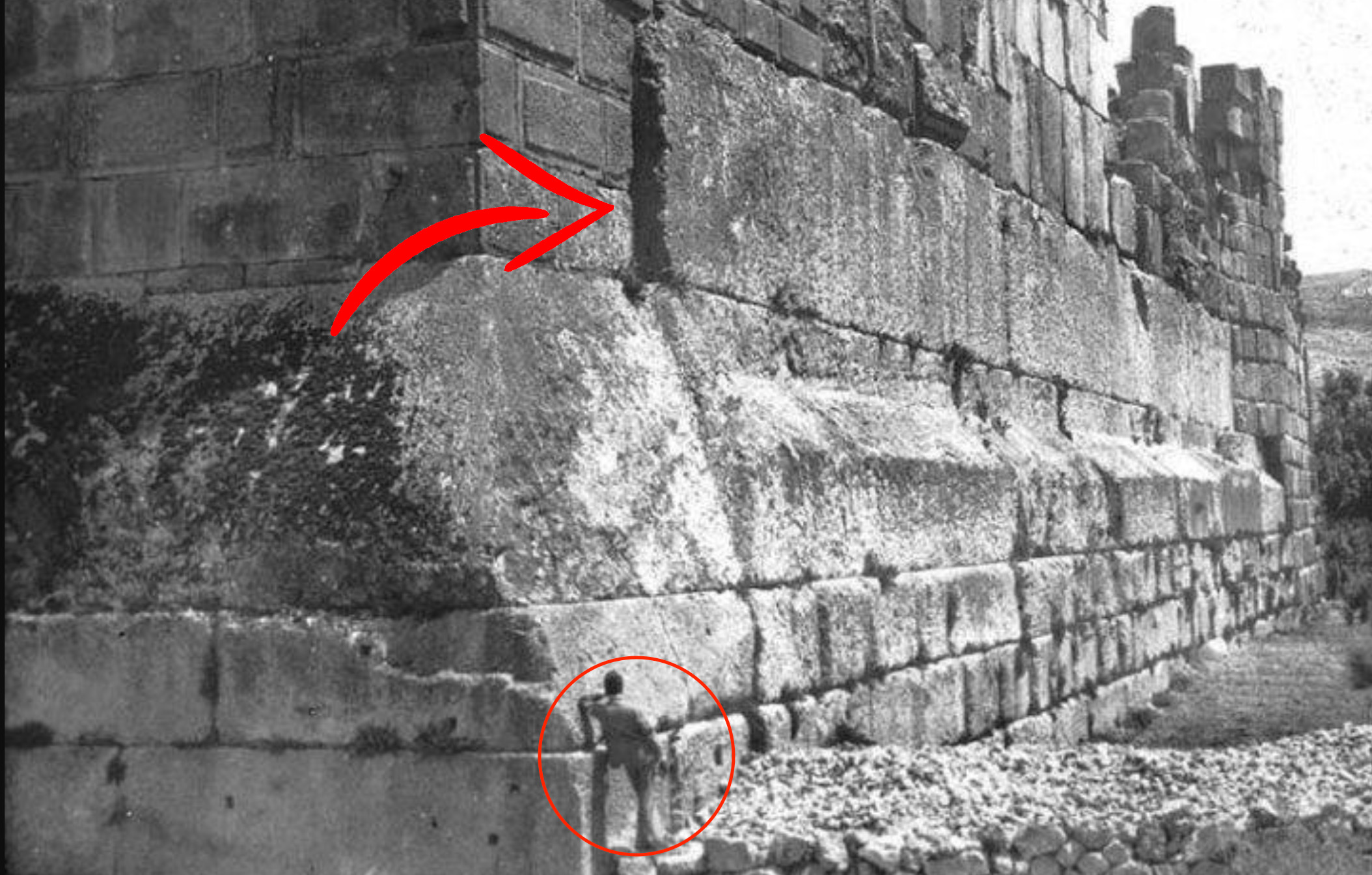
The Roman sanctuary (the heavy stones predate the Roman era) at Baalbek remains the clearest place to feel how quickly scale can outrun intuition. Its great terrace is famous for the Trilithon, three blocks often estimated at roughly 800 tons each, and the nearby quarry still holds the “Stone of the Pregnant Woman,” a monolith of about 1,000 tons. In 2014, archaeologists working in the same quarry exposed an even larger partially buried block, measured at roughly 19.6 metres by 6 metres by at least 5.5 metres, with an estimated weight of about 1,650 tons. These are not decorative curiosities. They were cut for construction.
That does not mean the builders had some vanished machine that solved the whole problem in a single stroke. Baalbek suggests something more disciplined. The stone could be dressed close to the quarry, its route prepared in advance, its movement controlled rather than improvised. Earthen embankments, sledges, rollers in some stages, ropes, teams working in rhythm, and relentless attention to gradients all fit the evidence better than fantasies about a single master device. The scale still startles, but the logic is plain enough. Mass can be managed when every part of the route is engineered before the stone begins to move.
The physics of that process now looks less mysterious than it did a generation ago. A Physical Review Letters study and related experiments showed that the right amount of water in sand can sharply reduce drag by stiffening the surface and preventing a mound from building up in front of a sledge. That does not explain Baalbek by itself, but it does explain why lubrication mattered and why a prepared path could turn impossible-looking haulage into a problem of coordination, traction, and patience.
Stone cut for a shaking world
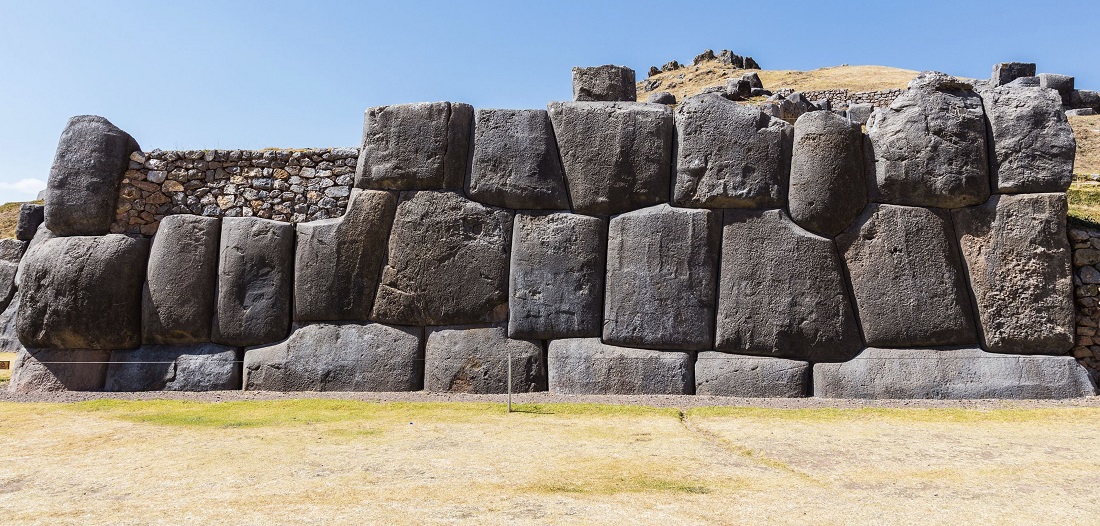
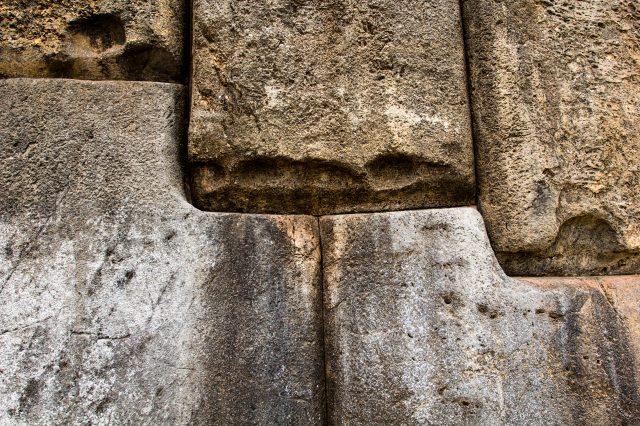
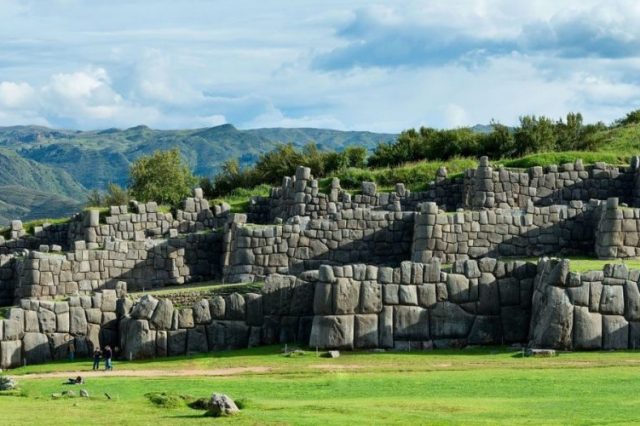
High above Cusco, the walls of Sacsayhuamán answer the same engineering challenge in a different language. Here the marvel is not a single giant monolith but an arrangement of huge irregular limestone blocks, some weighing well over a hundred tons, cut to meet one another in tight polygonal seams without mortar. The walls rise in great zigzags, and the fit is so exact that the structure still feels deliberate at the level of the smallest contact points. In a city long marked by earthquakes, that precision mattered.
Sacsayhuamán also strips away the lazy idea that the ancient world needed wheels or engines before it could move serious weight. The Inka worked with roads, gradients, rope, manpower, and a state capable of organizing labor at immense scale. The broader archaeological record of Inka transport of building stones shows that large finished blocks could travel extraordinary distances inside the empire. Sacsayhuamán fits that world. The challenge lay in controlling movement over rough Andean ground and then setting each block into a wall whose geometry demanded adjustment after adjustment, not broad approximation.
Modern engineering has added another layer to the story. A 2024 structural study of a wall at Sacsayhuamán treated the masonry as a system of interacting rigid bodies in a seismic zone. The results did not turn the site into a magic trick. They showed something more interesting. The walls have real mechanical behaviour, real strengths, and real failure limits. Their longevity does not come from legend. It comes from stone geometry, contact surfaces, mass distribution, and a construction method that gave the masonry unusual stability in a place where the ground does not stay still.
The quarry that stopped mid-stroke
Nowhere does the work itself lie more nakedly in view than at the Unfinished Obelisk in Aswan. It is still attached to the granite bedrock where ancient workers began to free it, and that fact changes the whole tone of the problem. Instead of a finished monument asking to be reverse-engineered, here the process is caught halfway through. Had it been completed, Egypt’s Ministry of Tourism and Antiquities says, the obelisk would have stood around 42 metres high and weighed about 1,168 tonnes, making it larger than any obelisk ever raised in ancient Egypt.
The quarry floor also preserves the labour that cut it. Pounding marks, trenches, and the very shape of the detached channels show how much could be done with repeated impact and careful layout. A 2023 experiment on dolerite pounders tested granite quarrying beside the Aswan obelisk and found that hammering with dolerite alone was slower than many older estimates assumed. That matters because it pushes the discussion away from simple formulas. Ancient Egyptian quarrying probably depended on a combination of techniques, with dolerite as one part of a broader toolkit rather than the whole answer.
Then came the harder stage. Detaching a monolith was only the beginning. It had to be moved from quarry to river, loaded, transported, unloaded, and raised. Ancient Egyptian reliefs do show obelisks on barges, and tomb paintings show sledges pulled over prepared ground while water is poured in front of the runners. Those scenes now sit beside experimental work on wet sand with far more force than they once did. Even so, the full engineering sequence for the very largest loads is still incomplete. The pictures tell us that river transport was central. They do not hand us a finished manual for how each stage was executed at the outer limits of scale.
Where the evidence narrows
This is the point where the subject often gets flattened into two bad choices. One version reaches for a mythical super-technology. The other shrinks the monuments into dull inevitabilities. The evidence supports neither mood. What it supports is a world in which engineers solved different stone problems with different local systems. Baalbek dealt in colossal quarry blocks and short-range control near a Roman sanctuary. Sacsayhuamán dealt in mountain terrain, shaped masonry, and a wall built for a seismic landscape. Aswan exposes the extraction stage in granite with unusual clarity and leaves the transport stage partly open.
That partial openness matters. Archaeology rarely gives a complete sequence for feats of heavy movement. Wood rots, ropes vanish, ramps are dismantled, waterways shift, and work yards disappear under later building. What survives are the stones, the cuts, the routes, the scars, the settings, and the occasional image. From those pieces, the broad outline is now strong. Ancient builders did not need engines to move immense stone. They needed workable surfaces, disciplined labor, intelligent staging, and a culture willing to spend enormous resources on getting one difficult thing done correctly.
The clearest picture now is demanding rather than mystical. These monuments point to quarry-side planning, shaped transport corridors, sledges, ropes, wet surfaces, leverage, river movement where available, and teams capable of repeating hard actions with very little error. They also point to builders who understood that the real danger was not only weight. It was breakage, instability, and loss of control at any point between bedrock and final placement.
That is why the question still holds. The ancient world has shown us the endpoints, and in a few rare places it has shown us part of the method. What it has not yielded is a single universal recipe. Site by site, archaeologists can recover pieces of the process, enough to see human brilliance very clearly, but no monument has yet surrendered a complete manual for how its heaviest stones traveled from quarry to finished structure.