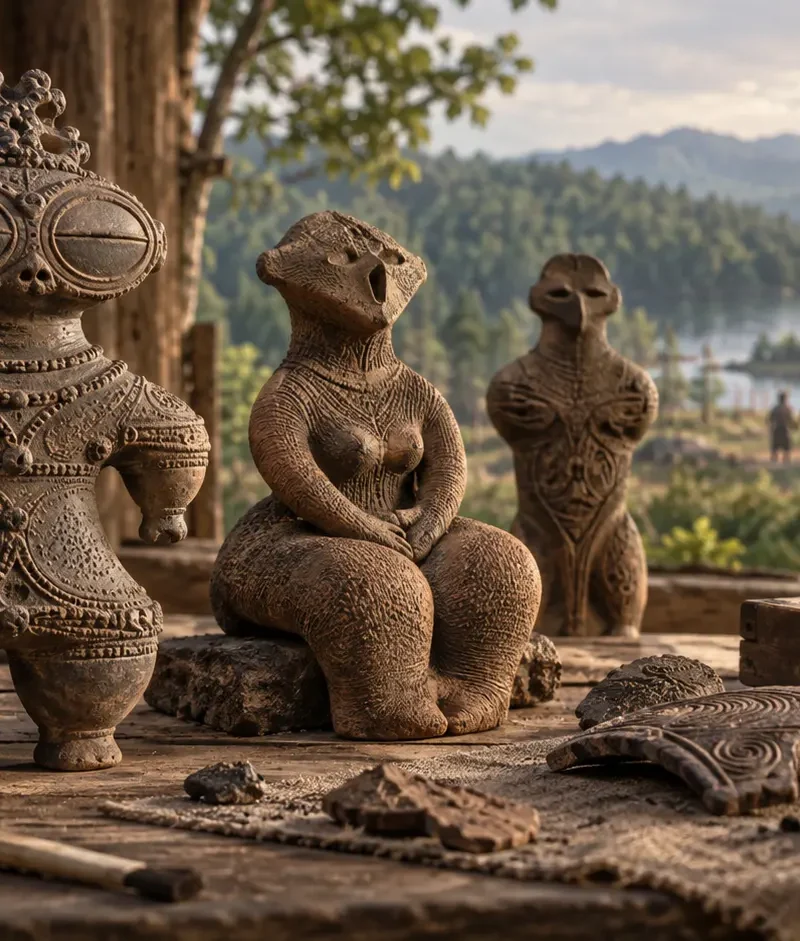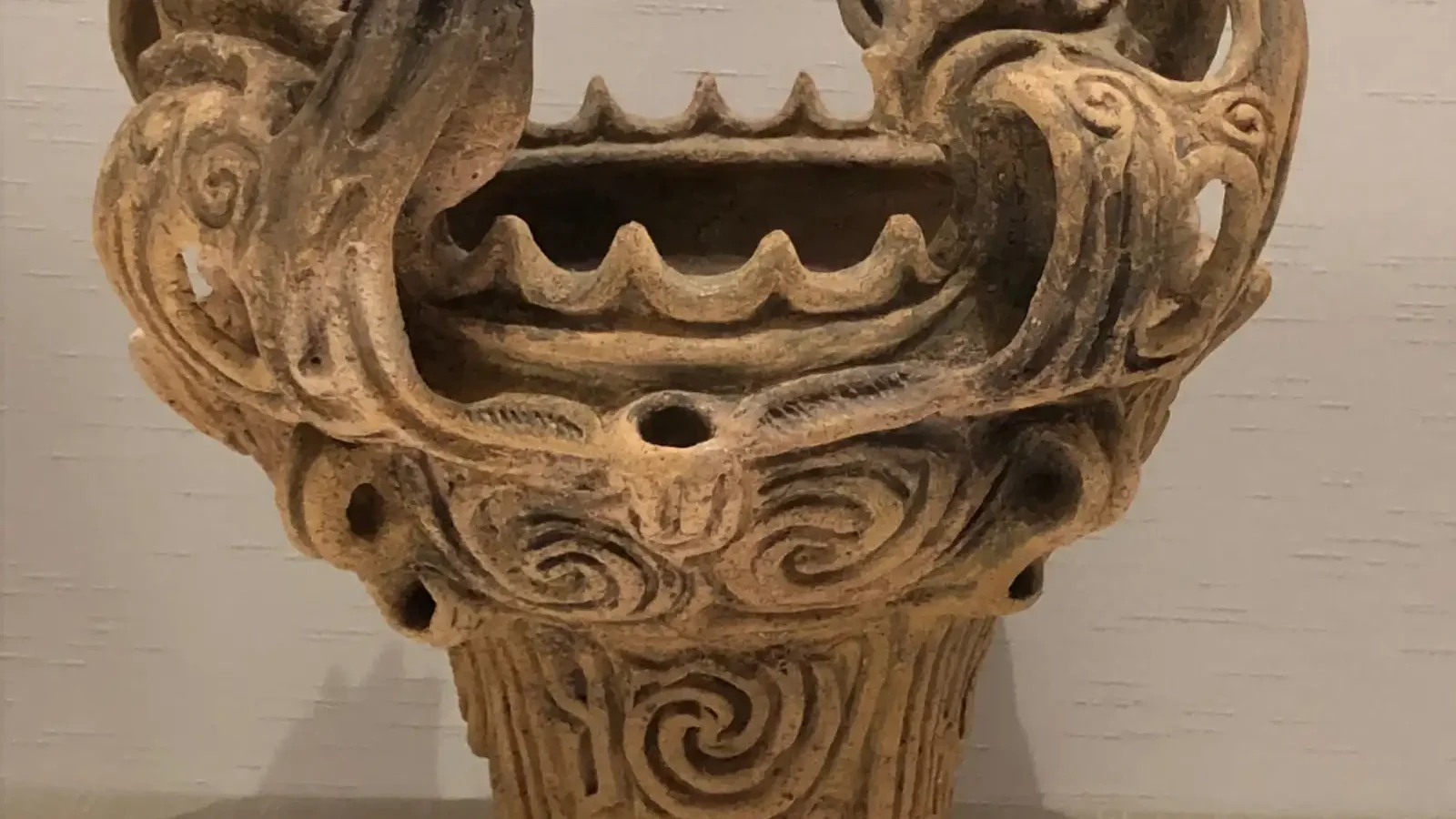
An 8,300-year-old woman from prehistoric Japan has become one of the clearest genetic windows yet into the Jōmon world.
Researchers have reconstructed a high-coverage genome from her remains, along with another from a man who lived during the Yayoi period roughly 2,300 years ago. That may sound like a technical achievement, but it changes the questions archaeologists can ask. Instead of working from faint genetic traces, they can begin to examine two individual lives with far more precision: their ancestry, population history and even some hints about diet.
The new paper, published in Proceedings of the National Academy of Sciences, does not reduce the deep history of Japan to a simple migration story. It makes that story more complicated—and more human.
Keep exploring
Continue with Curiosmos
Why genome coverage matters
Ancient DNA is difficult work. Time, moisture and heat break genetic material into short, damaged fragments. Researchers often recover only a thin signal from a skeleton, enough to suggest broad ancestry but not enough to examine many details with confidence.
The new study is different. The Initial Jōmon genome was sequenced at more than 67-fold coverage, while the Middle Yayoi genome reached more than 46-fold coverage. In plain language, the researchers were able to read the same stretches of DNA again and again, reducing uncertainty and allowing them to distinguish the two copies of many genes an individual inherited from their parents.
That kind of resolution opens up questions that low-coverage data cannot answer well. It lets scientists model past population size more carefully and investigate genetic variation that may relate to diet.
The Jōmon woman, known in the study as IY1, lived around 8,300 years ago. The Yayoi man, DO, lived about 2,300 years ago, long after rice cultivation had become central to parts of the archipelago. They do not represent every community in prehistoric Japan. Two people never could. But their genomes provide unusually detailed points in a much larger archaeological map.
Two populations, two different histories
Both genetic lineages show signs of population contraction during the Last Glacial Maximum, when much of the northern world was colder and drier. After that, their histories diverge.
The Jōmon lineage appears to have remained comparatively stable after the ice age rather than expanding rapidly. The Yayoi-related lineage shows a more sustained pattern of growth. That difference fits the broader transformation archaeologists have long studied: communities practising hunting, fishing, gathering and local plant use were eventually joined by incoming farming populations and new systems of food production.
But it is important not to turn that into a cartoon in which one population simply replaced another. Earlier genetic work has already shown that the formation of later Japanese populations involved deep Jōmon roots, movements from the continent and later changes associated with the Kofun period. This new paper adds detail to that picture. It finds a close genetic continuity between the Middle Yayoi individual and present-day mainland Japanese, while also showing that the Yayoi individual had a complex ancestral background before arriving in the archipelago.
That is what better ancient DNA can do at its best. It does not erase archaeology. It gives archaeologists another way to test the stories told by pottery, settlements, burial practices and food remains.
A clue in a gene linked to starch digestion
One finding has attracted particular attention. The Initial Jōmon woman had a relatively high number of copies of the AMY1 gene, which is connected with salivary amylase, an enzyme that begins breaking down starch in the mouth.
It would be wrong to read that as proof that she ate one specific food or that the Jōmon were already farmers. Genes do not supply a menu. But it does suggest that genetic variation linked to starchy foods was present in Japan before the large-scale spread of rice agriculture.
That matters because it complicates an old temptation: to treat food history as a clean divide between hunter-gatherers before farming and rice farmers after it. People have always used landscapes in more varied ways than tidy labels allow. The Jōmon world included fishing, hunting, gathering and local plant foods across a long span of time and geography. A high AMY1 copy number does not settle every debate about that world, but it is a useful reminder that diets and adaptations have deeper histories.
The person behind the sequence
Ancient-genome reporting can become abstract very quickly. It is worth pausing over what the study actually holds in view: a woman who lived more than eight millennia ago and a man who lived six thousand years after her. Their bones were excavated from particular places. They belonged to communities with their own customs, relationships and memories. The genome is not the whole person. It is one remarkable record that survived.
This is also why the research deserves restraint. The paper does not tell us what language either person spoke, what they believed, or how they understood their identity. DNA can illuminate kinship and population history; it cannot replace the cultural evidence that makes a past society recognisable on its own terms.
For Curiosmos readers interested in how this field works, our guide to what ancient DNA can tell us about lost populations explains the methods and their limits. For a wider look at the material traces through which archaeologists rebuild daily life, read how archaeologists reconstruct an ancient diet.
The new genomes will not be the final word on prehistoric Japan. They are valuable precisely because they make the next questions better: how representative were these individuals, where did their ancestors come from, and how did food, movement and community change across thousands of years? Those questions are now a little clearer than they were before.
Sources and further reading
- Koji Ishiya et al., “High-coverage ancient genomes reveal divergent population histories and prehistoric starch-related genetic variation in Japan,” PNAS 123(30), 2026. DOI: 10.1073/pnas.2606162123.
- PubMed record and abstract
- Kanazawa University summary via Phys.org