Scientists have found evidence of what exactly may have destroyed the dinosaurs 66 million years ago.
The cause of the mass extinction of the dinosaurs, which occurred in the Late Cretaceous and Early Paleolithic, remains one of the greatest scientific mysteries. Several hypotheses are trying to explain it, but none of them have had the necessary substantiation so far.
Recently, however, in North Dakota, scientists found a unique “death field” full of animal and fish fossils dating from the same period, which may provide an answer not only to the question of what caused the extinction but also to how it happened.
Keep exploring
Continue with Curiosmos
A Mind-Boggling Discovery
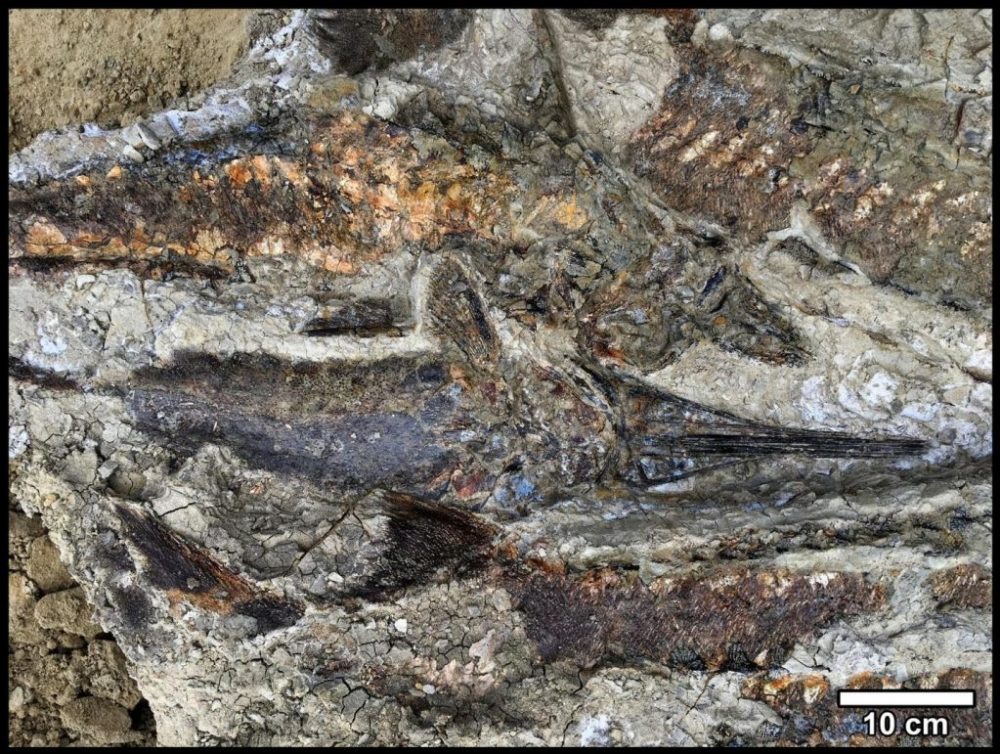
In 2013, paleontologist Robert DePalma discovered a fossil cemetery at an excavation site in the Hell Creek Formation. There he found fossilized remains of fish stacked on top of each other, as well as burnt tree trunks, dead mammals, insects, bones of mosasaurs, marine microorganisms, marine cephalopods, and partial remains of Triceratops.
Even then, he suspected that this accumulation of dead creatures in one area could result from an asteroid impact that killed the dinosaurs.
What was the last day for dinosaurs like?
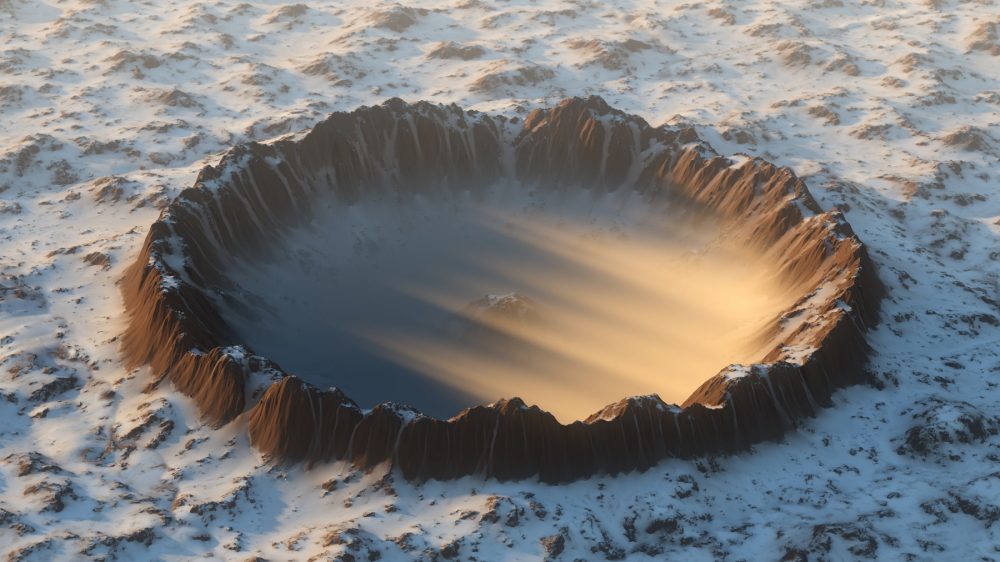
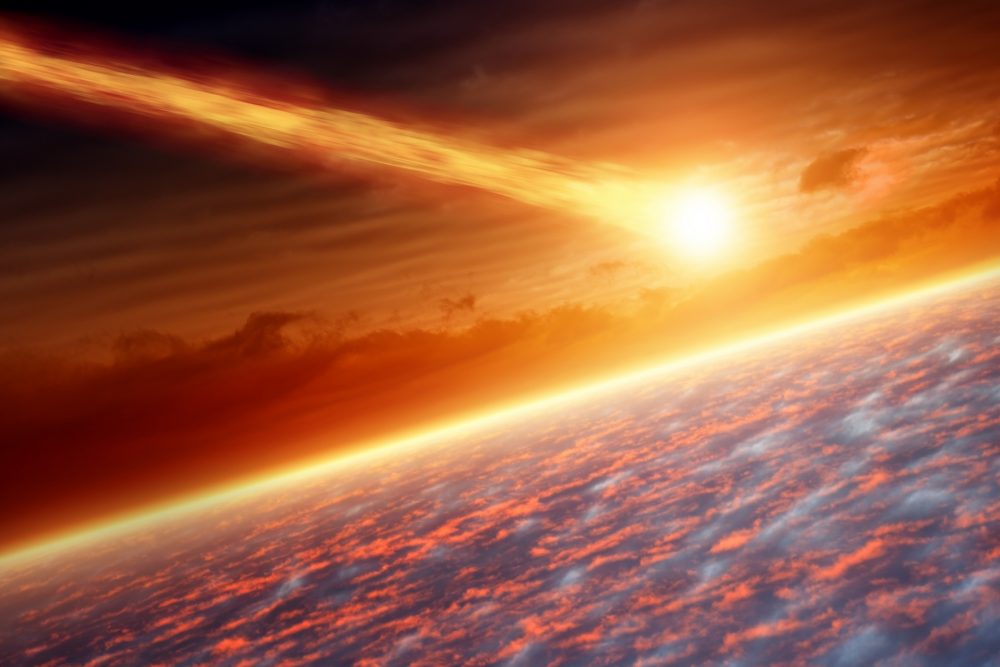
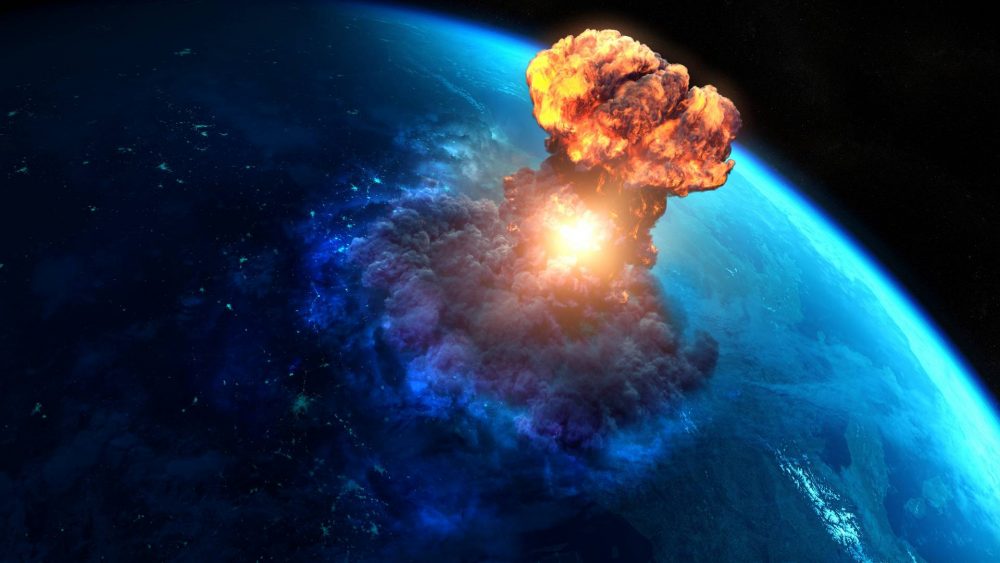
It is known that about 66 million years ago, a meteorite with a diameter of about 10-15 kilometers fell on the Yucatan Peninsula. According to the main hypothesis, the dust from the explosion reduced the transparency of the atmosphere for many years, which caused a global cooling on the planet, which led to the extinction of not only dinosaurs but also 75% of all animal species.
The discovery of fossils in the Hell Creek Formation has helped scientists reconstruct events immediately after the fall.

In both layers of the found fossils, there is an excess amount of iridium, and only in the lowest layer are tektites. Consequently, the fossils were formed as a result of two different events.
First, due to the impact, giant waves rose in the waters of the inland sea in the territory of modern North Dakota. Then, a “glass rain” of tektites (balls of hot rock with a diameter of about 5 millimeters) began to fall from the sky, which set fire to most of the land vegetation.
The rising sea turned into a 10-meter wall of water. When it reached the river’s mouth flowing into it, countless freshwater fish washed up on the shore, where it was bombarded by glass rain for almost half an hour.
The second event also included another massive wave, which flooded the coast and buried fish, dinosaurs, and other species under tektites and sand. In addition, small spheres from the “glass rain” were found in the gills of more than half of all fish. And the fossil deposits are covered with clay with a high concentration of iridium – a metal that is rarely found on Earth but is abundant in asteroids.
“When we proposed the impact hypothesis to explain the great extinction, it was based just on finding an anomalous concentration of iridium — the fingerprint of an asteroid or comet,” said Alvarez. “Since then, the evidence has gradually built up. But it never crossed my mind that we would find a deathbed like this.”
It is interesting to mention some approximate estimates calculated by Walter Alvarez, a UC Berkeley professor. He addressed the speed of the falling tektites and suggested that they might have rained down on Earth at the mind-blowing 100-200 miles per hour.
How would you feel if something like that hit you a thousand times in seconds? According to Alvarez, at this velocity, the glass rain would have killed you as it probably did with countless animals and dinosaurs.
I share the same opinion as the people behind the discovery of this “death field” – this could be the beginning of a new era for historical discoveries about dinosaurs. No other fossil site in the world has such an abundance of remains from around the period when not only dinosaurs but also most of the world’s species came to their end.
2023 studies shed insight
Scientific studies published in 2023 have shown that, contrary to popular belief, the dinosaur-killing asteroid that struck the planet did not trigger a massive nuclear winter. According to scientific research, global temperatures did not plummet as a result of the asteroid impact.
Join the discussion and participate in awesome giveaways in our mobile Telegram group. Join Curiosmos on Telegram Today. t.me/Curiosmos
Sources:
• Ben Guarino, T. (n.d.). Catastrophic New Details From The ‘Day The Dinosaurs Died’ Uncovered in Fossils. Retrieved December 05, 2020, from https://www.sciencealert.com/catastrophic-new-details-from-the-day-the-dinosaurs-died-uncovered-in-fossils
• Mack, E. (2019, September 10). The Day The Dinosaurs Died, Told In Horrifying New Detail. Retrieved December 05, 2020, from https://www.forbes.com/sites/ericmack/2019/09/09/the-day-the-dinosaurs-died-told-in-horrifying-new-detail/?sh=543394286df5
• UCBerkeleyNews. (n.d.). 66-million-year-old deathbed linked to the dinosaur-killing meteor. Retrieved December 05, 2020, from https://eurekalert.org/pub_releases/2019-03/uoc–6md032919.php?fbclid=IwAR1Kh5q-kVbTa1Eeg9IDJhIJho_MJhFuxZD-s7G-kMk5Sd6oOHag7DAs61s