What is the difference between a meteor, meteoroid and meteorite? They are three stages of one possible journey: a meteoroid travels through space, a meteor is the bright trail made during atmospheric entry, and a meteorite is the fragment that reaches the ground. The names change because the object’s surroundings change.
That simple distinction helps explain why “shooting star” is a misleading phrase. A meteor is not a star and usually is not even a large rock. It is light produced by a small piece of debris moving rapidly through gas.
What Is a Meteoroid Before It Reaches Earth?
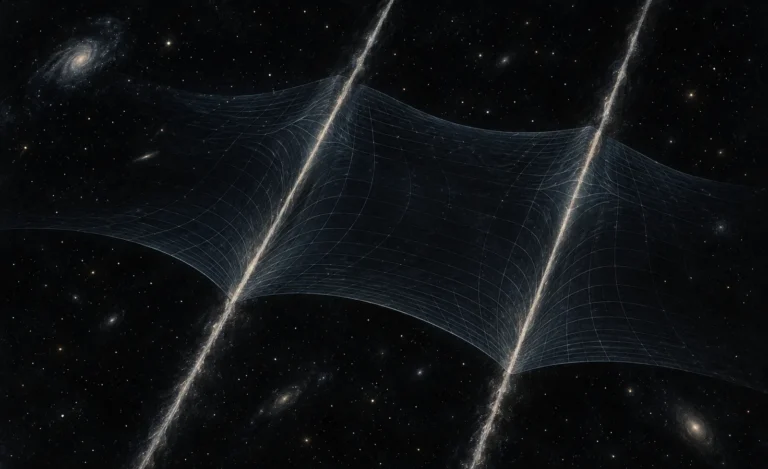
A meteoroid is a small rocky or metallic body travelling through space. NASA uses the term for objects smaller than asteroids, from dust grains to pieces several metres across. They can be fragments of asteroids, debris shed by comets or material knocked off the Moon and other worlds by impacts.
Most meteoroids are too small and too dark to see directly. Their presence becomes obvious when one intersects a planet’s atmosphere. Earth sweeps through streams of debris at particular times of year, producing meteor showers.
When does it become a meteor?
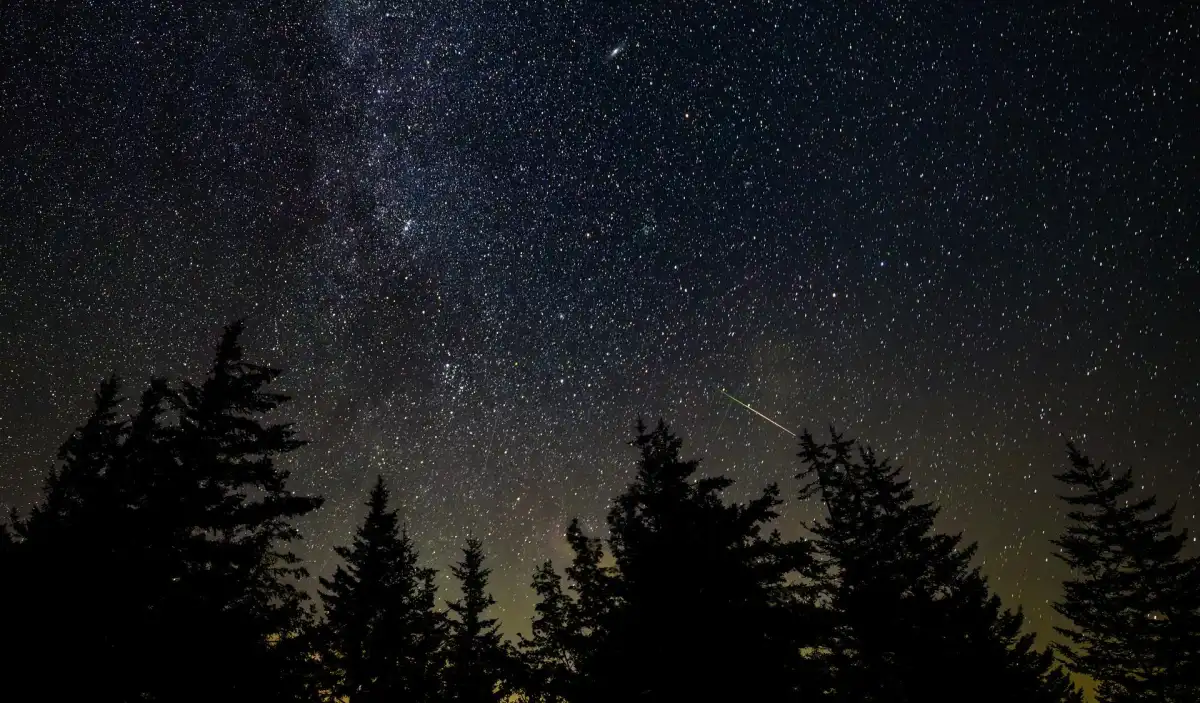
As a meteoroid plunges into the atmosphere, it compresses the air in front of it and heats both the air and the object’s surface. The glowing trail is called a meteor. The popular word “shooting star” describes the appearance, not the object.
Most meteors come from particles smaller than a pebble. The atmosphere slows and destroys them high above the ground. A shower can produce dozens of visible streaks in an hour, while sporadic meteors appear on any clear night.
Curiosmos’s report on iron forged in meteorites follows what happens when one of these visitors survives its passage through the atmosphere. A meteor shower is the brief flash; a meteorite is the piece that reaches the ground.
What makes a meteorite?
A meteorite is the part of a meteoroid that survives atmospheric entry and lands on a planet or moon. The largest objects can break apart in an airburst, while smaller fragments may fall as a scattered field. Scientists study the rocks for clues about the early Solar System, asteroid interiors and the chemistry of other worlds.
Meteorites are often classified by what they contain. Stony meteorites are rich in silicate minerals, iron meteorites contain unusually large amounts of iron and nickel, and stony-irons combine both materials. Some contain tiny grains older than the Sun, preserved from the cloud that formed the Solar System.
Why the names matter in the lab
The word used for an object tells scientists which evidence is available. A meteor can be measured by its brightness, speed and changing colour as it crosses the sky. A meteorite can be weighed, cut, photographed under a microscope and tested for minerals and isotopes. The two records describe different parts of the same journey.
Researchers also have to separate a visitor from an ordinary Earth rock. A fresh fusion crust, an unusual metal content and a chemistry that does not match local geology can point to an extraterrestrial origin. Isotope ratios then provide a stronger test, linking the specimen to known groups of asteroids, the Moon or Mars.
Why meteor showers repeat
A comet’s orbit can leave a broad stream of dust and grit behind it. When Earth passes through the stream, the particles enter the atmosphere from similar directions. Their trails appear to radiate from one point in the sky, called the radiant. The meteors are not travelling outward from that point; perspective makes parallel paths look as if they meet.
The timing is predictable because Earth’s orbit is predictable. The intensity is less certain. The dust stream is uneven, the Moon can wash out faint streaks and local weather can end an observing session before it begins.
Comets are one of the main suppliers of these dust streams. The distant Oort Cloud is a separate reservoir of icy bodies, but both regions show how small pieces left over from planet formation can still cross Earth’s path.
How scientists recover meteorites
Researchers combine eyewitness reports, camera networks, weather radar and the path of the fireball to estimate where fragments may have fallen. Fresh meteorites can have a dark fusion crust and a different appearance from ordinary terrestrial rocks. A laboratory then measures their minerals, isotopes and magnetic properties.
The same object can therefore have three names during one journey. In space it is a meteoroid. In the air it creates a meteor. On the ground, the surviving fragment is a meteorite.
Those samples give planetary scientists a record that a telescope cannot provide on its own. A meteorite can preserve minerals formed before Earth existed, traces of water inside an asteroid or gases trapped in a crystal. The flash in the sky lasts seconds; the rock can hold evidence from the Solar System’s first chapter.