Large carbon-based molecules are common in space, turning up around dying stars, inside interstellar clouds, and in material returned from carbon-rich asteroids. The problem has been explaining how they form quickly enough. A new laboratory study identifies a reaction that can build several chemical bonds in one step, offering a faster route to the complex molecules astronomers observe.
The molecules are polycyclic aromatic hydrocarbons, or PAHs. They are made from linked carbon rings with hydrogen attached around their edges. Existing models often built them by adding carbon atoms one at a time, a slow process that struggled to reproduce their abundance in hot stellar environments and in samples such as those returned from asteroid Ryugu.
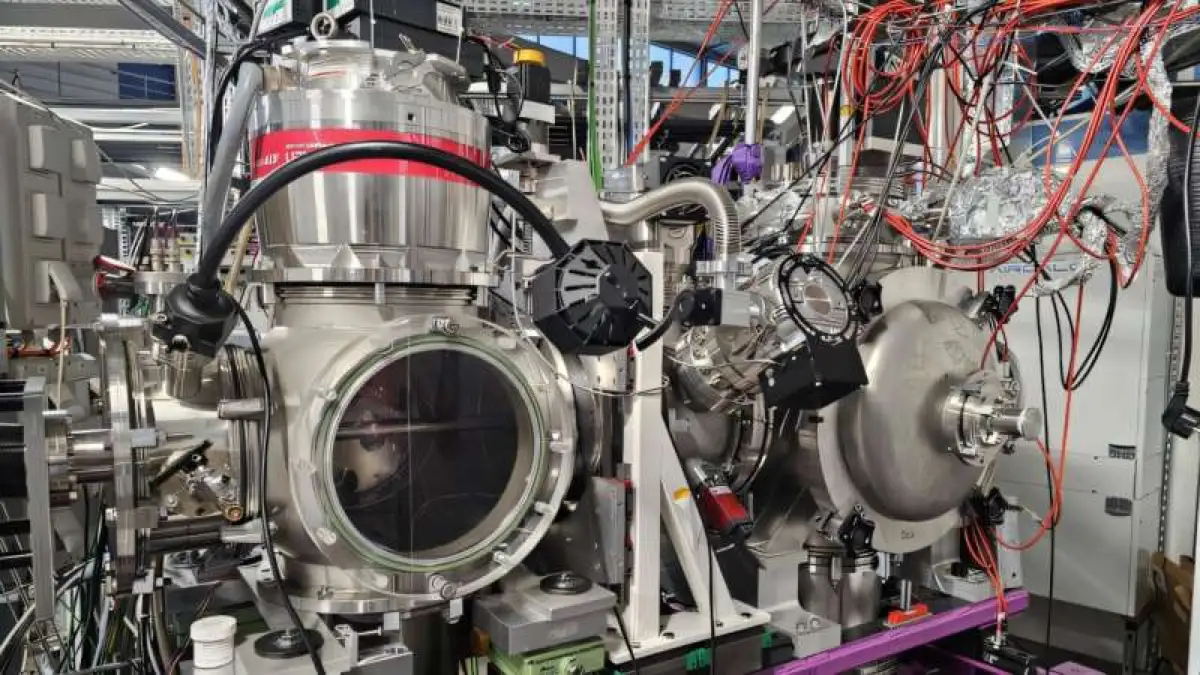
Researchers at the University of Hawaiʻi at Mānoa, working with collaborators in Taiwan and France, tested reactions under temperatures similar to those found around aging stars. Their experiments identified an aryl-radical addition followed by dehydrocyclization, a sequence that allows several new bonds to form during one rapid reaction.
Keep exploring
Continue with Curiosmos
The laboratory reactions produced several large PAHs that had been predicted by chemical models but were difficult to explain using older pathways. Instead of assembling a ring system through a long chain of separate additions, the new route lets smaller carbon fragments rearrange and close rings more efficiently.
That speed changes how scientists can think about carbon chemistry between stars. Molecules formed near an aging star can enter the surrounding gas and dust, where they may survive, break apart, or become part of new material. Some of that material later contributes to young stellar systems and the solids that grow into planets and asteroids.
The result does not show that life began in space, and it does not identify a biological process. It addresses a chemical bottleneck: how ordinary carbon-bearing fragments can become stable, complex structures under conditions that are too hot and reactive for many familiar laboratory reactions.
The study also gives astronomers a more realistic set of molecules to look for in astronomical spectra. If the pathway operates in the environments where the experiments were designed to mimic it, future observations can test whether the predicted PAHs appear with the expected mixture and abundance.
By linking a laboratory reaction to molecules found throughout the universe, the work fills in a missing step between simple carbon compounds and the richer chemistry present in stars, clouds, asteroids, and emerging planetary systems.