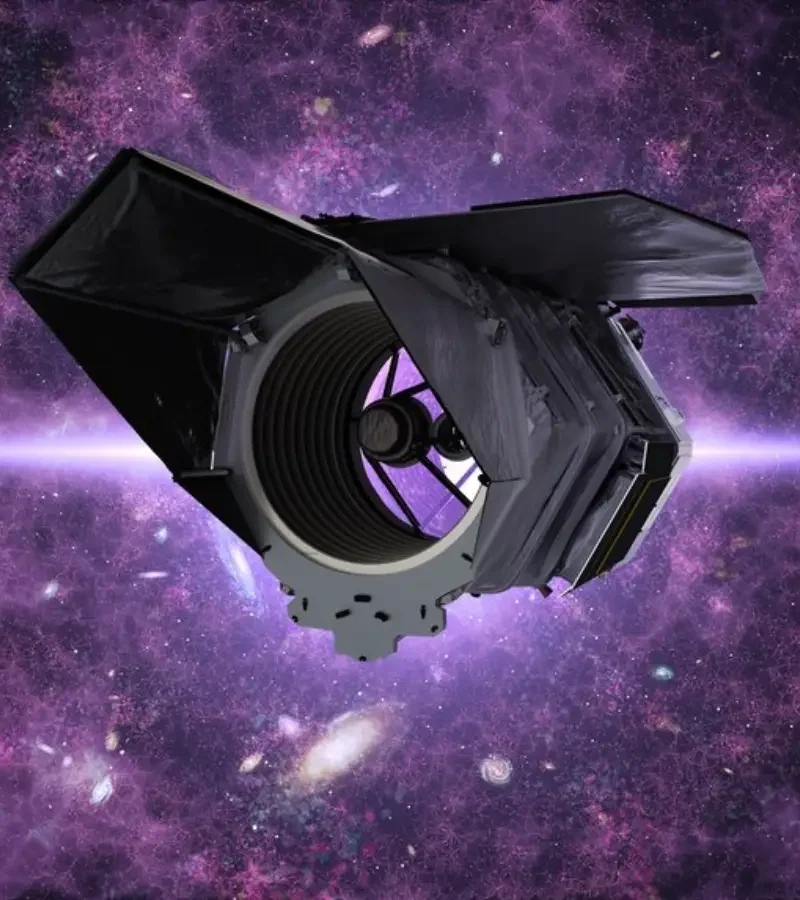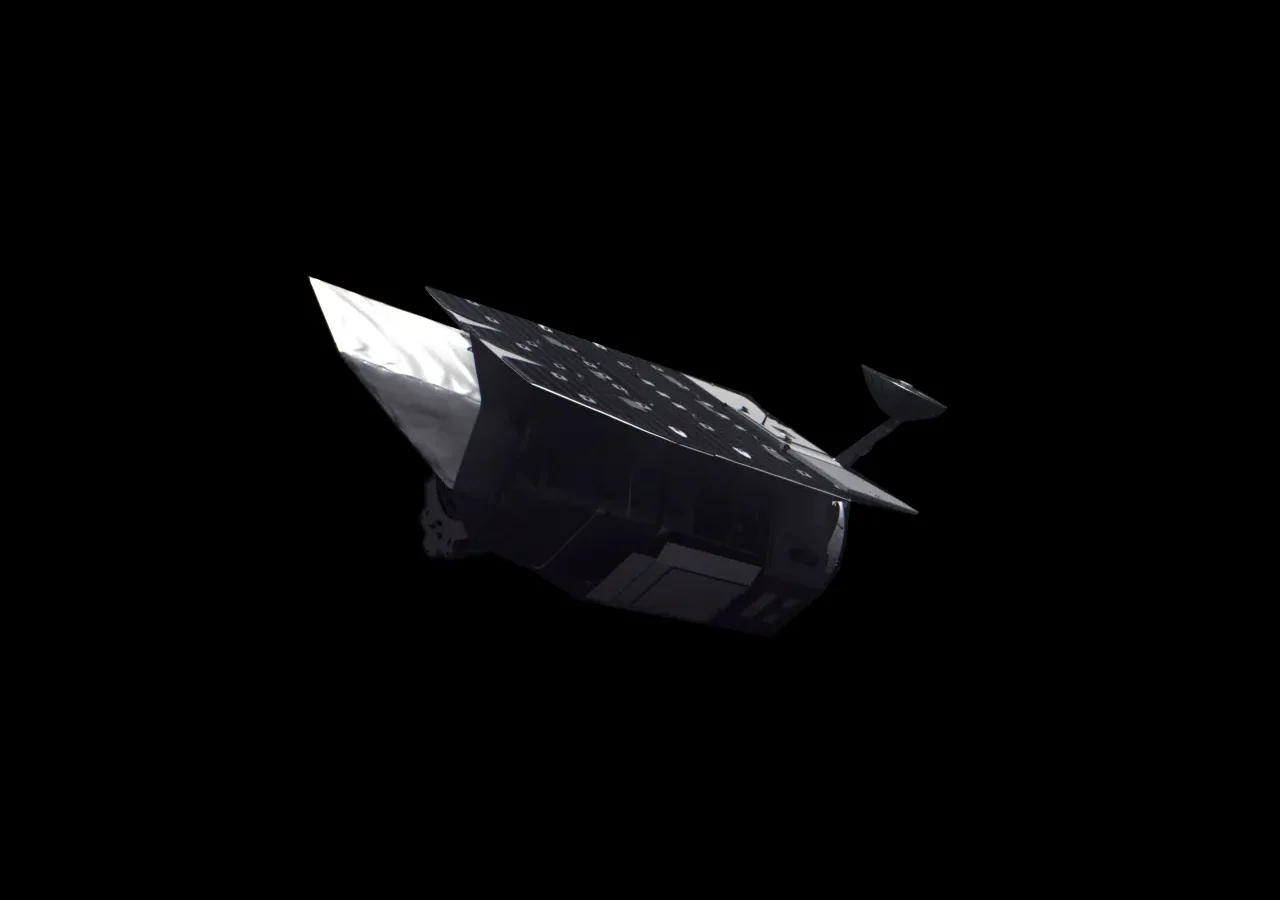
NASA’s Nancy Grace Roman Space Telescope has successfully deployed its high-gain antenna and its visor-like sunshade, completing two of the observatory’s first major tests in space. The work is part of a three-month commissioning campaign that must finish before Roman begins its wide survey of dark energy, dark matter and distant planetary systems.
The antenna is about 5.6 feet (1.7 metres) wide but weighs only 24 pounds. NASA says its carbon-composite structure was designed to remain stable through the large temperature changes the spacecraft will experience while it works far from Earth.
A large radio link for a data-heavy telescope
Roman’s high-gain antenna will handle both routine communications and the huge stream of survey data produced by the telescope. One frequency will carry commands and information about the spacecraft’s health and position; another will send science data to ground stations in New Mexico, Australia and Japan.
Keep exploring
Continue with Curiosmos
The antenna deployment took about four minutes and finished at 2:03 p.m. Eastern time on August 31, according to NASA. The observatory is expected to transmit data at rates of up to 500 megabits per second, a capacity that reflects the scale of the survey Roman is being built to conduct.
That survey will cover enormous areas of sky rather than concentrating on a few individual targets. Roman’s wide field of view will let astronomers compare billions of stars and galaxies, looking for changes in their brightness, the effects of gravity and the signatures of planets passing in front of their stars.
Keeping stray light out
After the antenna, the team released the deployable aperture cover. The cover acts as a large sunshade, helping to keep unwanted light away from Roman’s instruments so that faint astronomical signals are easier to measure.
Three electronically triggered booms pushed the cover into position. NASA says that deployment lasted about eight minutes and was completed at 6:05 a.m. Eastern time on September 1.
These mechanisms are simple to describe but difficult to test on a spacecraft that cannot be repaired by hand. Engineers therefore check each movement, latch and signal before moving on to the instruments that will gather the science.
Science comes after the mechanical checks
Roman’s next major milestone is activation of its Coronagraph Instrument. The Wide Field Instrument will power on in the following weeks, and both instruments will go through calibration and performance tests during the rest of commissioning.
NASA expects Roman’s first images in early 2027. Until then, the deployment results show that the observatory is moving through the practical steps required to turn a launched spacecraft into a working survey telescope.
Roman will complement the detailed views from telescopes such as the instruments astronomers use to measure the motion of distant galaxies. Its contribution will come from combining a broad, consistent map of the sky with the precision needed to track how the universe changes over time.