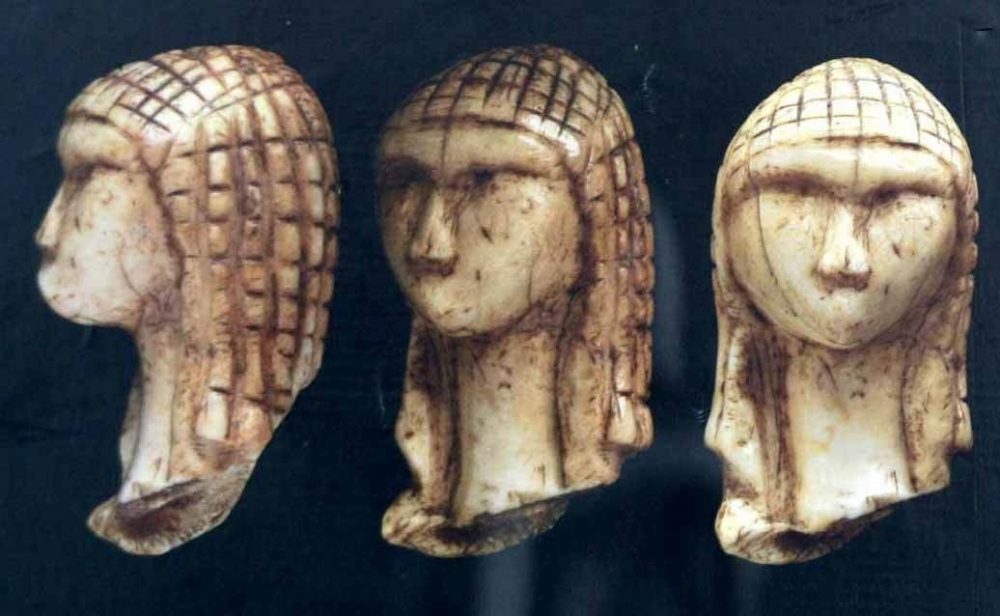
Why do archaeologists call the Lady of Brassempouy one of the earliest realistic human faces? The tiny mammoth-ivory head was found in the Grotte du Pape at Brassempouy in southwest France. The Musée d’Archéologie nationale dates it to around 28,000 BC, placing it deep in the Gravettian period.
Why the tiny head matters
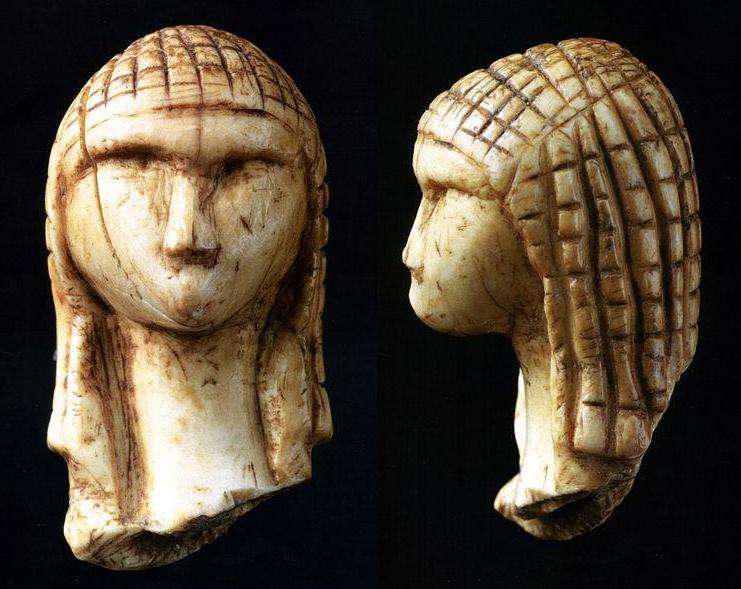
The sculpture is only a few centimetres high, yet its maker modeled the forehead, eyebrows, nose and chin in relief. The eyes are represented by small pupils, while the mouth is absent. A checkerboard pattern covers the top and sides of the head. It may represent hair, a cap or a hood; the object itself cannot settle that question.
What the museum record shows
The head was recovered in 1894 during Édouard Piette’s excavations at the Grotte du Pape, alongside other Palaeolithic figurines. It was carved from the inner part of a mammoth tusk. The museum describes the work as a combination of scraping, polishing and fine incisions—techniques that produced a balanced, sub-triangular face despite its small size.
Keep exploring
Continue with Curiosmos
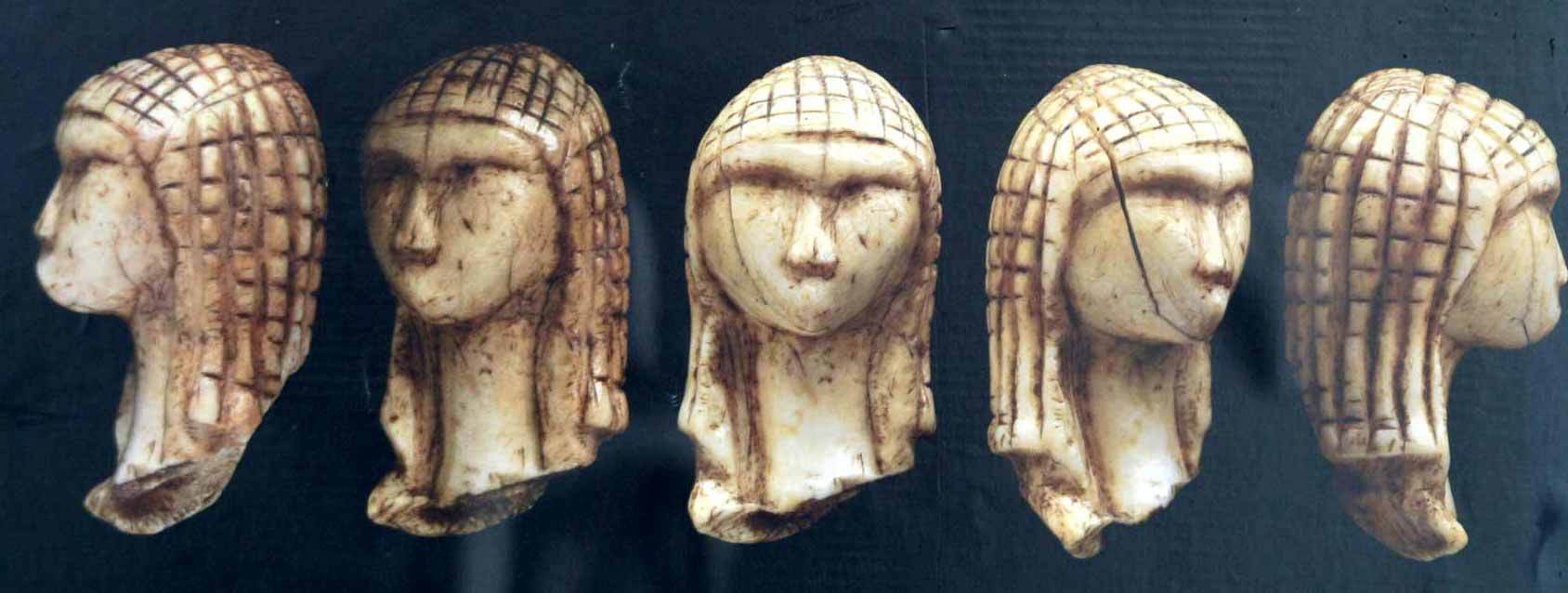
The familiar name “Venus” is a later label. The museum calls the object the “Lady with the Hood” and notes that it is not an individualised portrait. That distinction matters: a realistic arrangement of facial features does not tell us whether the artist intended to depict a particular person, a social identity or a symbolic figure.
What the face cannot tell us
The sculpture is often described as the oldest realistic depiction of a human face, but that is a comparison among surviving finds, not a claim that no earlier image ever existed. Organic materials rarely survive, and “realistic” depends on how researchers define resemblance. The strongest evidence is narrower: this is an exceptionally early, carefully worked human head whose details show that Ice Age artists were experimenting with faces long before written history.
That same caution helps when reading claims about other early monuments. Our guide to ancient stone sites explains how archaeologists separate what a structure proves from what later stories add to it.
Source: Musée d’Archéologie nationale, “The Lady with the Hood.”