There are several ancient astronomical observatories that date back thousands and thousands of years.
One of the oldest observatories on Earth isn’t in a lab or university—it’s buried in the Sahara, built by cattle herders over 7,000 years ago. And it tracked the sun with shocking accuracy. And it was built long before majestic strcutures such as the pyramids in Egypt.
One of the oldest observatories on Earth isn’t in a lab or university—it’s buried in the Sahara, built by cattle herders over 7,000 years ago. And it tracked the sun with shocking accuracy.
Before Stonehenge, before the Egyptian pyramids rose from the desert, ancient people were already marking the sky with surprising precision. Scattered across Africa, Europe, and the Near East, several prehistoric sites appear to have been built, at least in part, to watch the heavens. Some align with solstices. Others follow the path of stars. What they all share is age—and a purpose still being uncovered.
These ancient astronomical observatories challenge long-held assumptions about early science. Built without metal, writing, or mathematics as we know it, they hint at a sky-watching tradition far more advanced than previously thought.
Nabta Playa: A Stone Circle in the Sahara
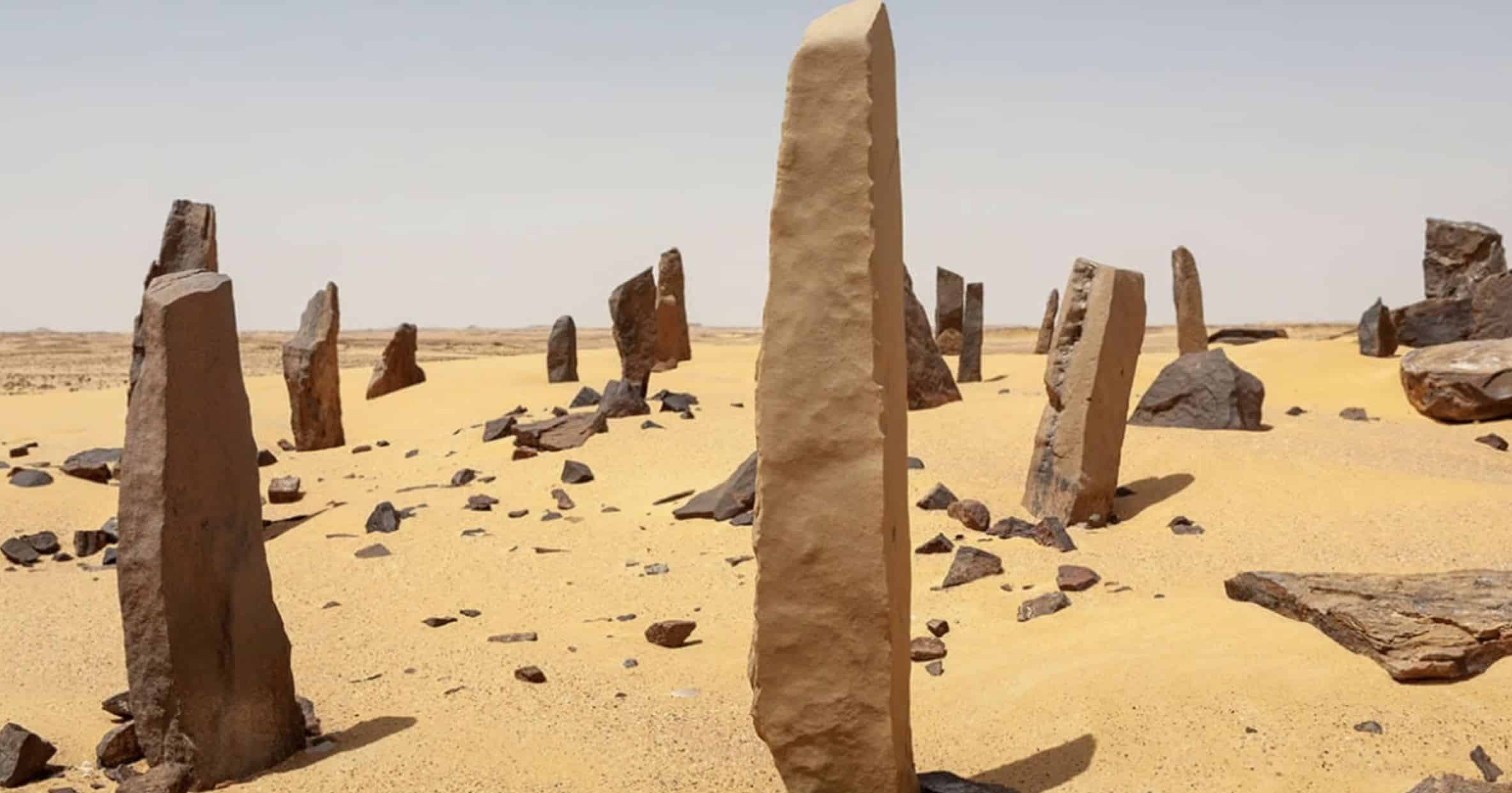
Located deep in southern Egypt, Nabta Playa is one of the oldest known solar-aligned structures in the world. Built between 4800 and 3000 BCE, it consists of standing stones arranged in a circle, precisely aligned with the summer solstice sunrise.
At the time, this region of the Sahara was dotted with seasonal lakes and supported small pastoral communities. The solstice alignment likely served as a calendar marker, signaling the coming of rains and guiding migration and ritual.
Some of the stones also point toward Orion’s Belt and Sirius—two celestial features later deeply embedded in Egyptian mythology. Though often overshadowed by monuments along the Nile, Nabta Playa predates them all, quietly marking the sky from the edge of the desert.
Goseck Circle: Europe’s Oldest Solar Observatory
In the German state of Saxony-Anhalt lies a circular wooden structure built around 4900 BCE—older than both Stonehenge and the pyramids. Known as the Goseck Circle, it features a ditch and palisade with gates aligned to the winter solstice sunrise and sunset.
Discovered via aerial photography in the 1990s, the site has since been reconstructed and studied extensively. Its builders, part of the Neolithic Linear Pottery culture, likely used it to track solar cycles, possibly for agricultural timing and ritual events.
The accuracy of its alignments, and the clear solar orientation of its entrances, mark it as the earliest known solar observatory in Europe.
Mnajdra Temples: Solar Alignment on a Mediterranean Island

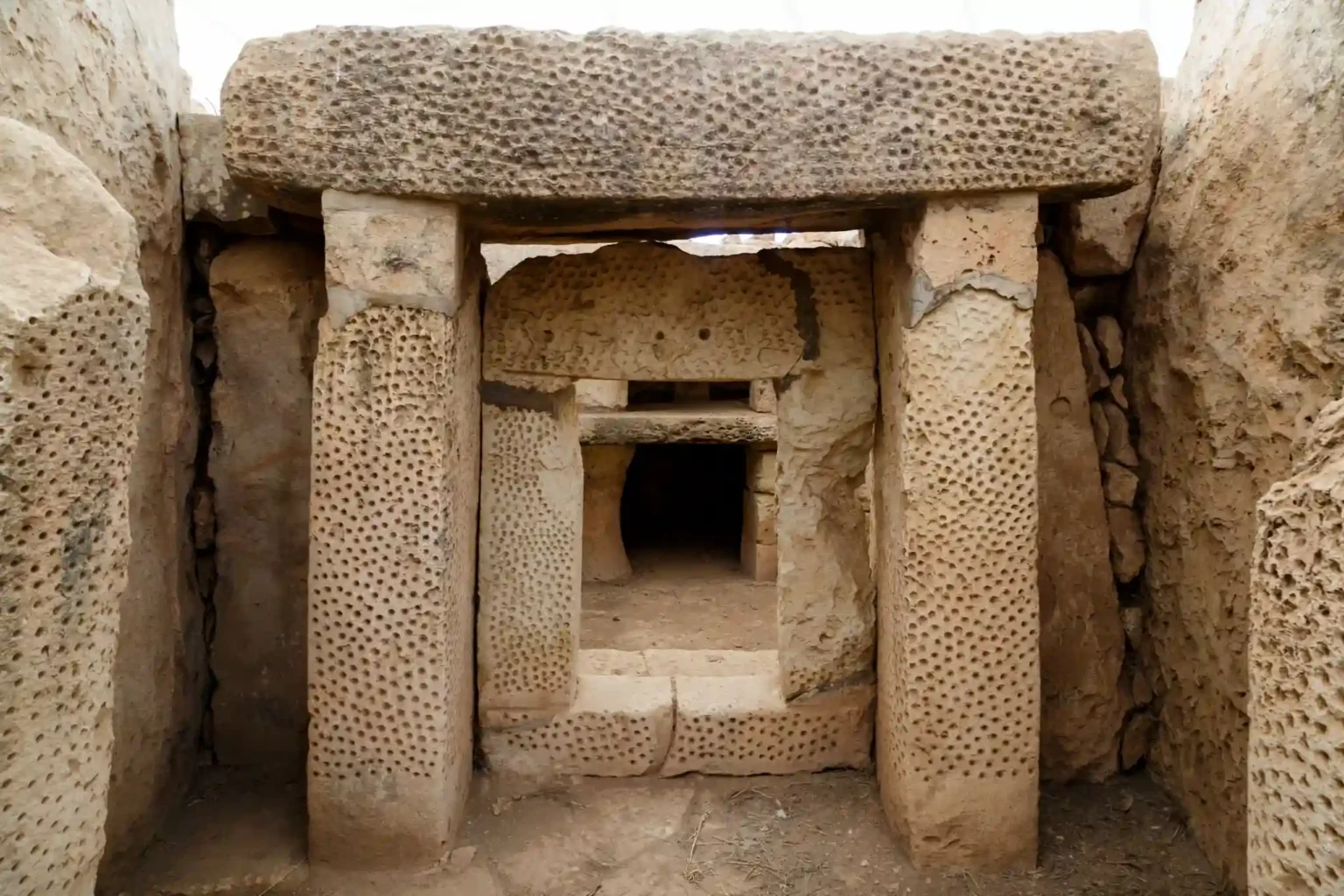
On the southern coast of Malta, overlooking the sea, stand the Mnajdra Temples—stone structures built between 3600 and 2500 BCE. While just overlapping with the era of pyramid construction, their foundations are older, and one temple shows unmistakable solar alignment.
During the equinoxes, sunlight passes directly through the temple’s main doorway. On the solstices, light falls on specific megaliths. This intentional design suggests the builders had a deep understanding of the sun’s path, and likely used the temple as a kind of calendar.
Given Malta’s isolation, the Mnajdra Temples demonstrate that early sky-watching was not limited to Egypt or Mesopotamia. Instead, it may have been a widespread human trait.
Göbekli Tepe: The Oldest of All?

Dating back to around 9600 BCE, Göbekli Tepe in southeastern Turkey is the oldest known monumental site ever discovered. Though not universally accepted as an astronomical observatory, several researchers have proposed that its circular enclosures—lined with carved T-shaped pillars—may align with specific stars or celestial events.
Some theories suggest a focus on Sirius, which began reappearing in the pre-dawn sky around the time Göbekli Tepe was built. Others point to solstices or even lunar cycles.
The debate is ongoing, and direct evidence of sky-watching remains limited. But if Göbekli Tepe was indeed used for celestial observation, it would make it the oldest observatory on Earth—by far.
A Shared Human Legacy
These ancient observatories are reminders that people have always looked to the sky for meaning, for guidance, and for structure. Whether to plan seasonal movement, celebrate sacred days, or simply make sense of the universe, early humans went to great lengths to track the sun and stars.
What’s perhaps most astonishing is that all of this was done without writing, metal tools, or complex instruments. Just stone, observation, and memory. And yet, the alignments still hold today—thousands of years later.
These ancient structures weren’t just built for watching the sky. I honetly beleive that they were part of how people lived. When to move. When to plant. When to gather. Every alignment, every stone, carried meaning.
Nothing about them was accidental. They reflect attention, memory, and a need to make sense of the world. Not through books, but through observation and experience—passed down, tested, and carved into the earth.
This is basically where science began. Not in a flash of discovery, but in patterns noticed across generations. In the quiet persistence of people who looked up and started asking questions.
And some ancient methods were so precise, they still baffle scientists today.