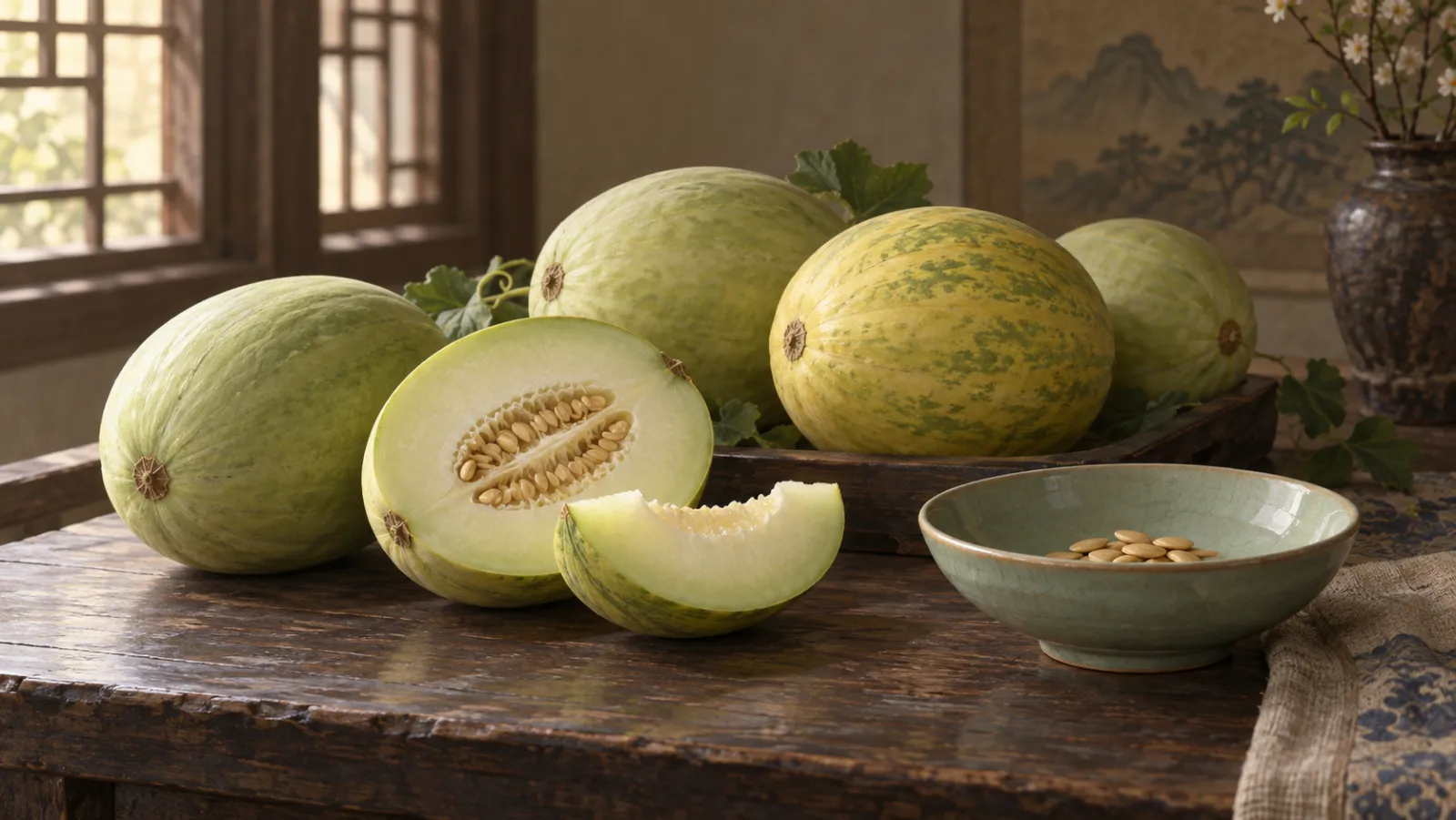
What would a melon served in medieval China have looked like? Two seeds recovered from an ancient port are helping researchers approach that question through the fruit’s DNA.
A new PNAS study, published September 4, places the seeds within an East Asian cultivated melon lineage. Their genetic traits suggest fruit suited to fresh eating or cooking, rather than selection for the intense sweetness of a modern dessert melon.
A port preserved more than its cargo
The seeds came from Shuomen Gugang in present-day Wenzhou. During the Song dynasty, the port connected China with maritime networks across the Pacific and Indian Ocean worlds. In its waterlogged deposits, traces of food survived alongside the material remains of commerce.
Keep exploring
Continue with Curiosmos
Washington University’s account of the research describes how archaeologist Xinyi Liu and biologist Susanne Renner brought their interests together around the finds. Archaeology supplied the setting; genetics offered another way to investigate the plants themselves.
That combination is especially useful when a seed’s appearance leaves several possibilities open. A preserved seed can establish that a plant was present, while comparisons with living varieties can help reconstruct what people cultivated.
The team attempted DNA extraction from 24 seeds across several sites. Just two yielded enough ancient DNA for this analysis. Damage patterns in the surviving fragments helped identify the DNA as ancient, an important part of how researchers identify and interpret ancient DNA. Here, that approach follows a crop through history.
Color is a clue to an ancient meal
The researchers recovered usable genomes from two seeds. Neither carried the orange-flesh variant they examined; other markers suggested pale or green flesh and, in one sample, yellow peel. A separate seed from the same context provided a radiocarbon date of approximately AD 1020–1150.
The team interpreted the fruit through comparisons with living culinary melons. That is a reconstruction from surviving traits, rather than a measurement of sugar in ancient flesh. The distinction makes the result more interesting: a familiar crop could have filled a different place at the table.
Liu notes that traditions of eating melon as vegetables or pickles persist in the lower Yangtze region. He also connects the proposed green flesh with melon-shaped celadon ceramics and their jade-like glazes. The possible relationship brings food, cultivation and aesthetics into the same story.
The longer journey remains open
The genomes fit introduction from the wider Asian domestication pool. The authors also leave room for an extinct or unsampled Chinese ancestor. Older seeds could help connect the Song-period evidence with China’s much earlier archaeological plant remains.
Liu identifies a southern route through the Himalayan and southwest Chinese mountain networks as a promising candidate, based on the distribution of earlier finds. The port’s later maritime connections add another chapter to investigate.
The opportunity now is to join those chapters. What changed as the crop moved between communities—and which qualities did growers choose to preserve? Two seeds offer a small but tangible starting point for recovering the history of a meal.