What might happen when the ingredients of life have an entire landscape in which to react? On Titan, NASA hopes to investigate that question by flying from one patch of ground to another.
The Dragonfly rotorcraft is taking shape at the Johns Hopkins Applied Physics Laboratory in Maryland. In a September 2 mission update, NASA described the installation of its electrical harness: the connections that carry power and data between the vehicle’s instruments, computers and other components. Installed on the flight structure in July, the harness contains roughly 17,315 feet of conductor wire. That is about 5.3 kilometers, packed into a machine built to explore another world.
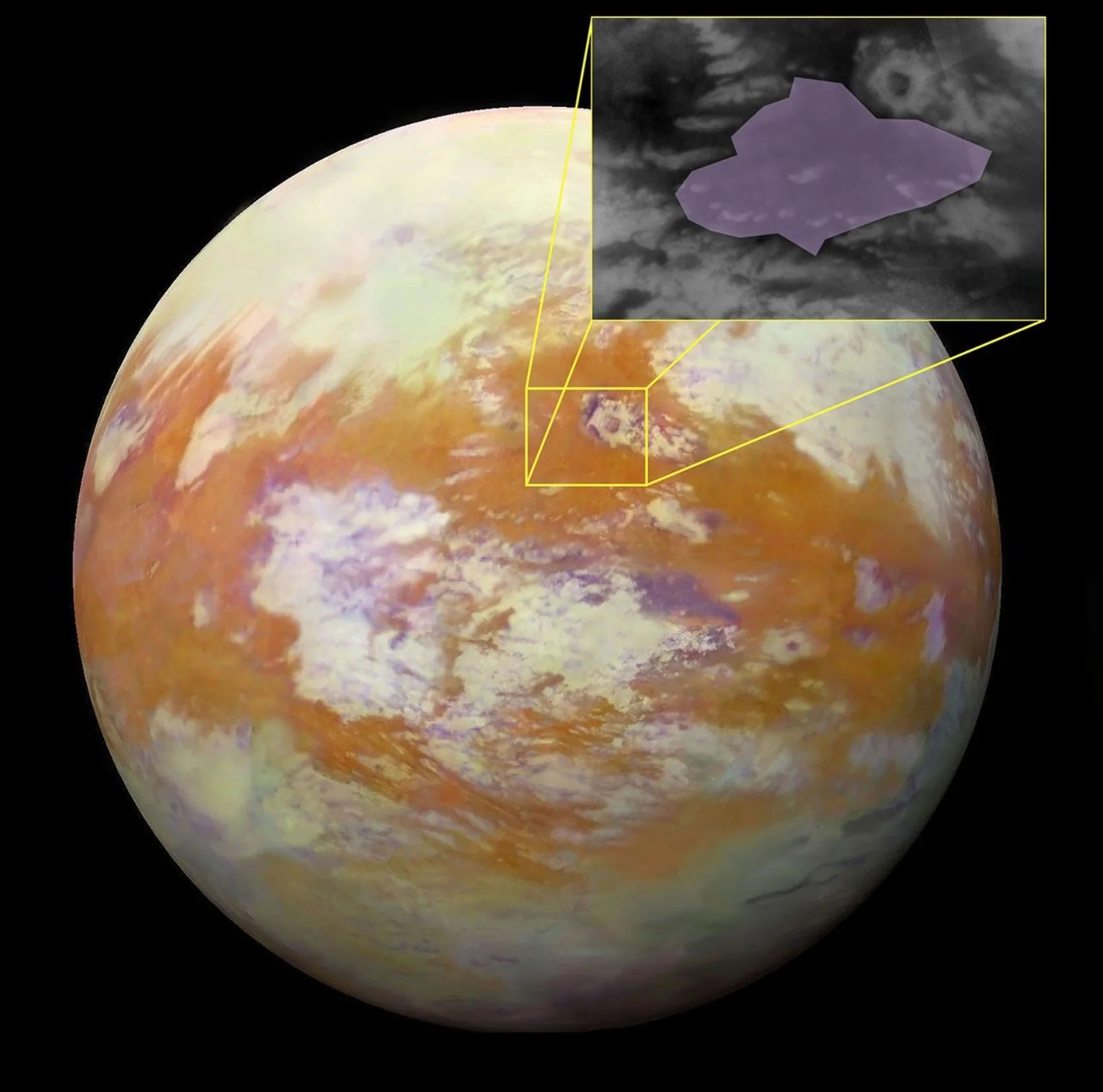
The update also highlighted the name of its landing region, Ahmakiq Undae. Beyond the engineering milestone lies the reason for making the journey: this part of Saturn’s largest moon brings dunes and an ancient impact site within the reach of a flying laboratory.
Keep exploring
Continue with Curiosmos
A name on the map, a destination on the ground
The official planetary gazetteer records Ahmakiq Undae as an approximately 812-kilometer-wide feature. Its name refers to a Mayan deity associated with restraining crop-damaging winds. The International Astronomical Union approved it on April 13, 2026; NASA’s September update brought the name into its account of the mission’s progress.
That distinction matters when picturing the destination. A named dune field is an extensive landscape, rather than a single landing point. Dragonfly’s investigation will depend on the particular places it can visit and compare within that wider setting.
Why investigate the ground around a crater?
NASA identifies deposits associated with nearby Selk Crater as important exploration targets. The impact could have melted Titan’s icy ground, bringing liquid water into contact with organic material. What chemical traces might such an encounter leave behind?
The mission’s science plan connects that question to a series of measurements. Dragonfly will analyze surface samples with a mass spectrometer, investigate elemental composition, monitor local conditions and photograph geological features. While flying, it will gather atmospheric measurements and scout possible landing sites.
These observations belong together. A chemical result becomes more revealing when scientists can place it within a landscape: where the sample came from, what surrounds it and how it differs from material at the next stop. Mobility gives the mission a way to build those comparisons.
Reading the chemistry before choosing the next stop
One instrument, DraGNS, will help the team investigate the surface’s elemental makeup. Neutrons interacting with the ground produce gamma rays that carry information about the elements present. The instrument’s reconnaissance measurements can help identify promising places for more detailed chemical analysis.
An inventory of elements and an inventory of molecules answer different questions. The first establishes which chemical building blocks are available; the second investigates how those building blocks are arranged. Combining them offers a richer picture of what has happened in the ground.
Dragonfly is currently scheduled to launch in summer 2028 and reach Titan in late 2034. Its samples may eventually let researchers examine a question that images alone cannot settle: how far did chemistry travel toward life’s complexity in this very different corner of the solar system?