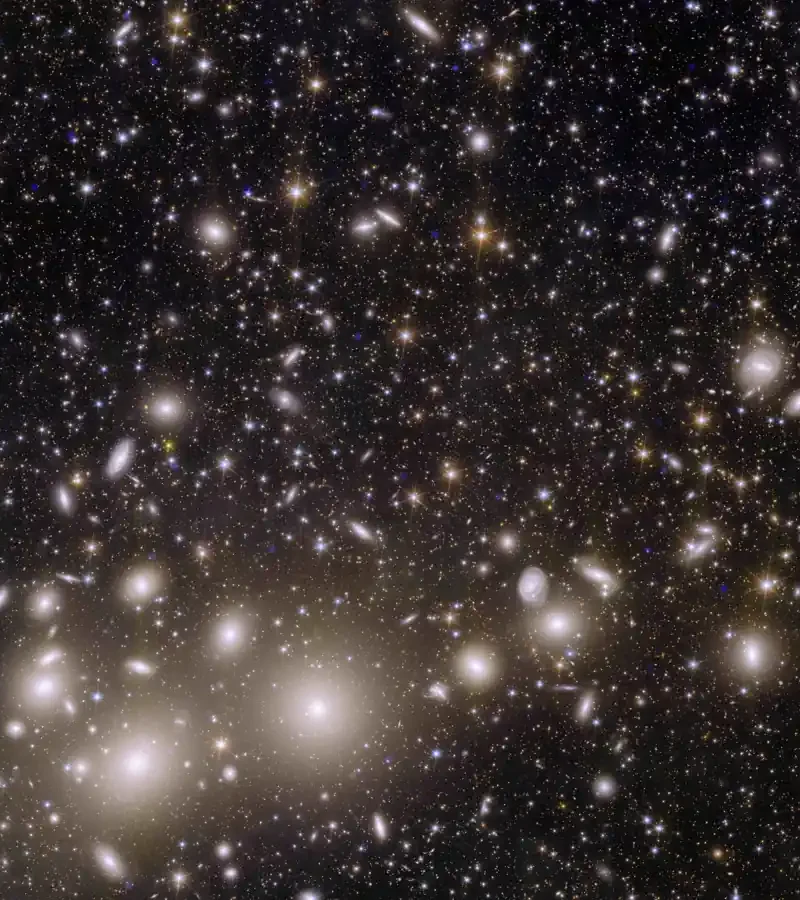
A thousand points of light can look much alike in a photograph. Split their light into spectra, however, and those points begin to tell different stories: what they contain, how they move and where they might have come from.
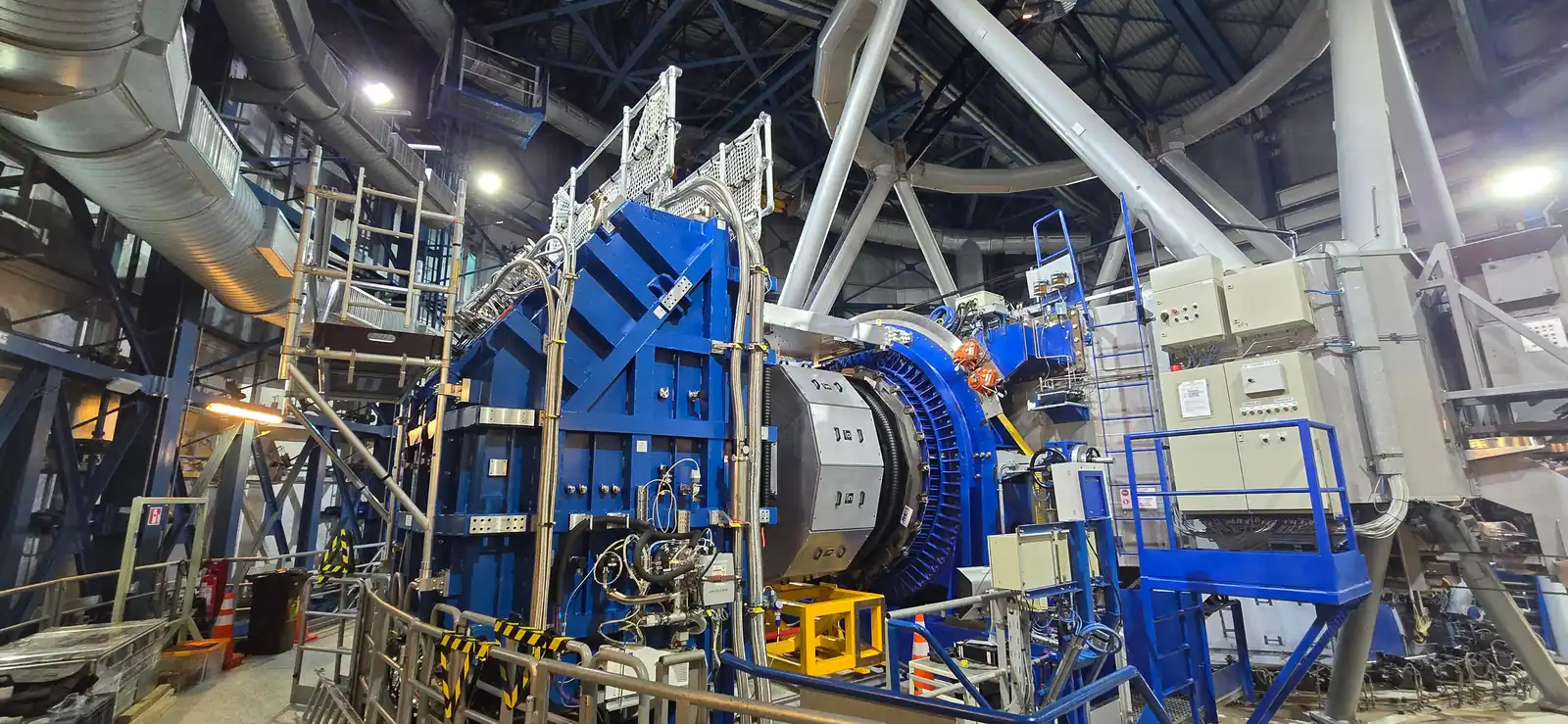
ESO’s new MOONS instrument has made its first observations at the Very Large Telescope in Chile. In its September 3 announcement, the observatory reported a successful first-light test on stars in the dust-obscured plane of the Milky Way. The instrument is designed to study about 1,000 targets simultaneously.
A thousand fibres, a thousand separate stories
Robotic positioners place optical fibres on selected targets. Those fibres carry the collected light into two spectrographs, each handling roughly 500 objects. The resulting spectra separate light by wavelength rather than combining everything into a single brightness measurement.
Keep exploring
Continue with Curiosmos
That is the important distinction behind the impressive target count. A crowded photograph reveals where objects appear. Spectroscopy helps investigate what those objects are doing. Multiplying the number of spectra makes it possible to compare populations as well as examine individual curiosities.
Looking into the Milky Way’s hidden regions
MOONS observes red and near-infrared light. These wavelengths help it investigate regions obscured by dust and study distant galaxies whose light has shifted towards longer wavelengths during its journey.
The instrument’s science description explains how this complements imaging surveys. Tracking a star across the sky measures one component of its motion; a spectrum helps measure movement towards or away from us. Chemical abundances add another set of clues to the history of stellar populations.
Imagine trying to reconstruct a city’s history from a map of its inhabitants. Their positions would help, but knowing how they move and which characteristics they share would change the investigation. MOONS supplies additional measurements for that kind of reconstruction on a galactic scale.
First light opens the investigation
The milestone demonstrates that the instrument has begun observing astronomical targets. It is the start of the investigation, rather than a completed account of the Milky Way’s formation.
Its value will emerge as measurements accumulate: which stars share chemical patterns, which move differently and which refuse to fit the expected groups? With many targets observed together, astronomers can search for the broad pattern while keeping an eye on the exceptions that may reveal something new.