Crawford Lake ancient DNA raises a deceptively simple question: can a lake remember a village without preserving a single house? The evidence is not a tool or a shard of pottery, but traces that plants, animals and microbes left behind in the mud.
That is the question behind a new study of Crawford Lake in southern Ontario. Researchers examined sedimentary ancient DNA—often called sedaDNA—to reconstruct how the lake and its surrounding ecosystem changed over roughly 1,300 years. The result is a record of farming, settlement, abandonment and later industrial activity written across layers too small to read with the naked eye.
The study, published in Molecular Ecology, does not recover a diary of the people who lived beside the lake. It identifies biological signals carried into the water and preserved in sediment. Together with archaeology, pollen, geochemistry and other records, those signals show how human choices altered an entire local ecosystem.
Keep exploring
Continue with Curiosmos
What can ancient DNA in lake mud reveal?
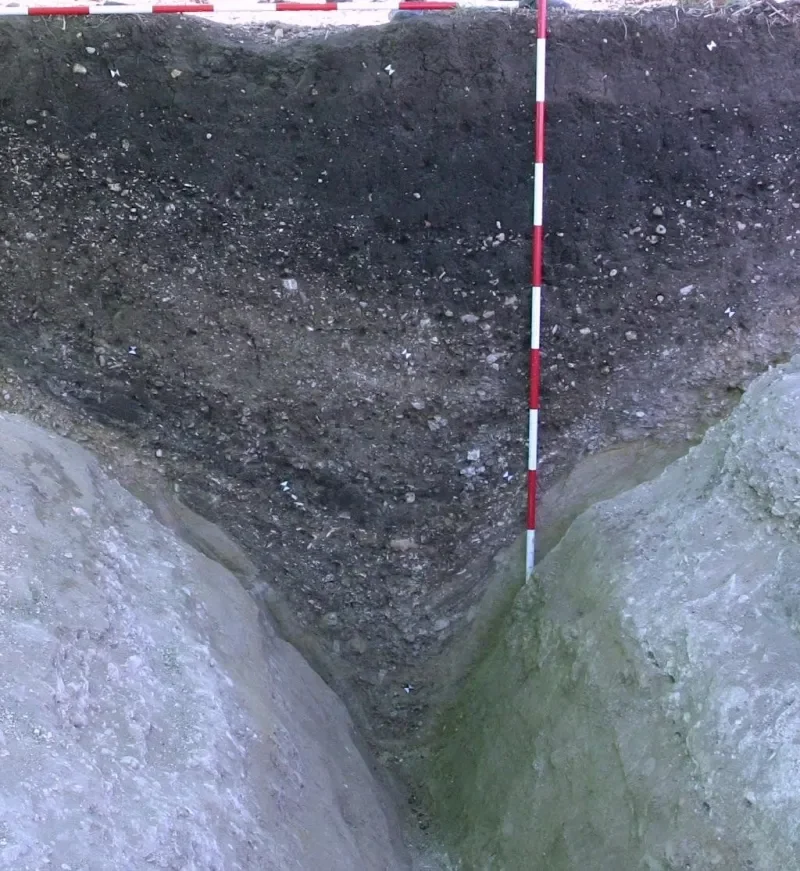
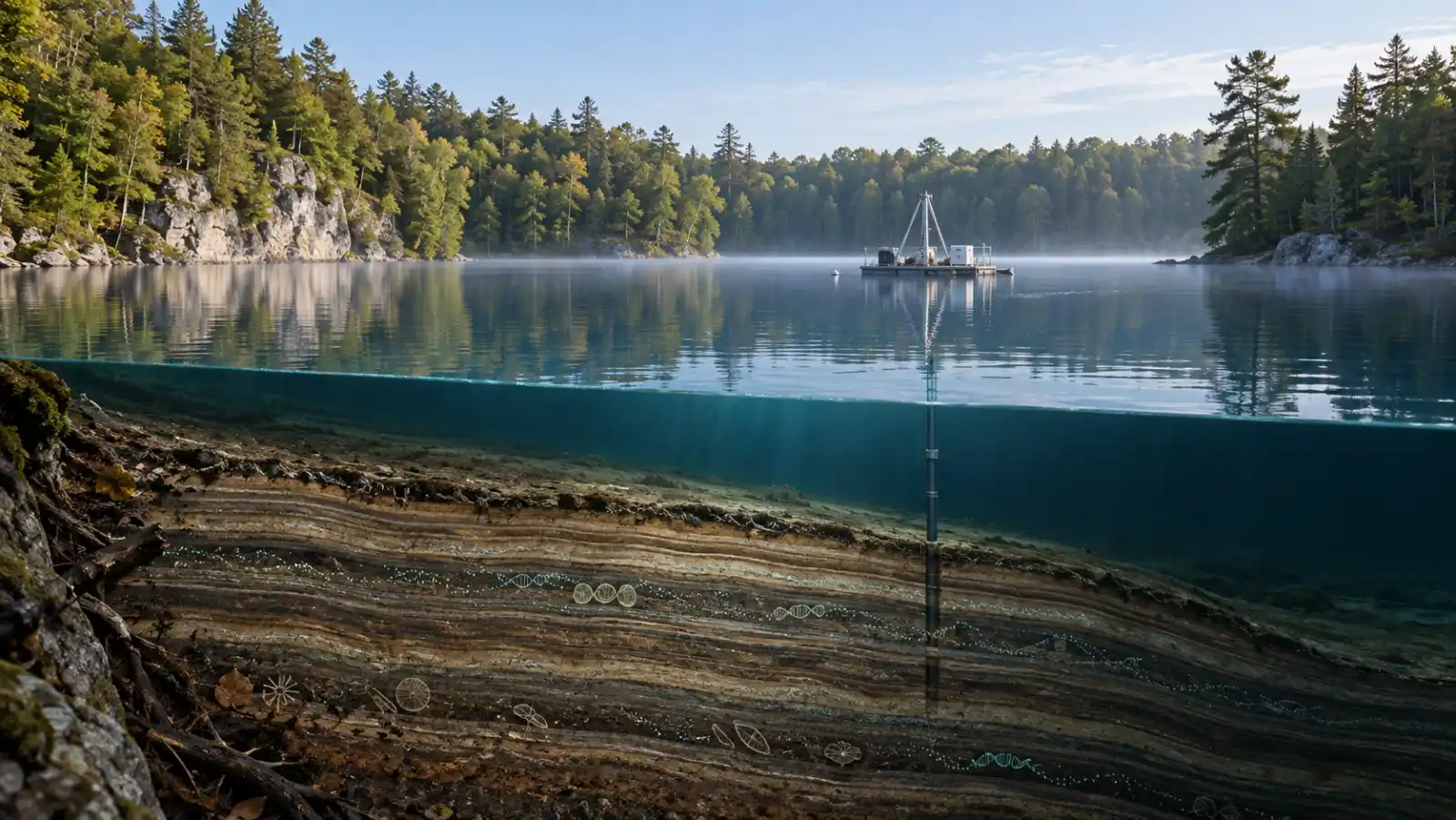
Every landscape sheds biological material. Leaves, pollen, feathers, skin cells, faeces and microscopic organisms can enter a lake and settle on its floor. If the sediment remains relatively undisturbed, fragments of DNA may survive in a sequence of layers. Each layer is a small sample of the world at the time it formed.
Crawford Lake is unusually useful because its deep basin is meromictic: the lower water does not mix freely with the upper water. Its sediments also form visible annual layers, or varves. Earlier archaeological and palaeoecological work had already documented maize pollen, charcoal, algal changes and other signs of land-use change. The new study asks what an environmental DNA record adds to that picture.
The researchers analysed about one metre of a gravity core recovered from the lake in 2019. They processed 28 subsamples using shotgun sequencing and targeted capture. The method looked for DNA from plants and animals, while also examining bacterial, fungal and algal signals.
The study used an Arctic and Subarctic bait set on a temperate forest lake. That choice limited the detection of some agricultural plants, so the authors treat the results as a first molecular survey rather than a complete inventory of everything that grew around Crawford Lake.
When did the lake begin to change?
The deepest part of the analysed core represents a pre-farming forested catchment. Above it, the DNA record separates into broad ecological zones: a pre-farming interval, an Indigenous farming interval, a post-farming period of ecological succession and a later Euro-Canadian interval.
The transition is not a single sharp line. Plant and animal DNA changes most strongly at one depth, while microbial and algal communities mark another. That matters because an ecosystem does not respond all at once. Forest clearance, cultivation, soil erosion, animal activity and nutrient runoff can arrive at different times and leave different signatures.
During the Indigenous farming phase, the researchers found a marked increase in grass DNA and in DNA from Canada geese. The pattern agrees with archaeological evidence for Longhouse People cultivating maize and other crops in the surrounding area between roughly the 13th and 16th centuries.
Why would geese appear in an archaeological DNA record?
The geese are one of the study’s most revealing clues. Fields cleared for cultivation created new feeding opportunities. Geese could forage there and return to the lake, carrying the effects of that land use into the sediment through their droppings.
The researchers connect the increase in goose DNA with coordinated shifts in algae and bacteria. More nutrients entering the lake would have encouraged eutrophication and algal blooms. In this reading, the geese are not proof of one particular event. They are part of a community-level pattern that links farming, animal behaviour and changes in water chemistry.
That is the value of the molecular record: it connects organisms that would rarely be found together in a conventional excavation. A pollen grain can indicate a plant. A bone can indicate an animal. SedaDNA can reveal a wider ecological response, including organisms too small or fragile to leave recognisable remains.
What happened after the village was abandoned?
Maize DNA and pollen disappear from the record around the 16th century, when agriculture in the immediate watershed appears to have stopped or slowed substantially. Other signals suggest that the lake did not instantly return to its earlier condition. Forest succession unfolded over time, and some effects of nutrient enrichment persisted after the fields were no longer being cultivated.
A later shift appears with Euro-Canadian settlement, logging and farming in the 19th century. Cattle DNA enters the record, while algae, bacteria and fungi again change as the catchment is cleared and nutrient delivery increases. The study therefore records more than a before-and-after story. It shows repeated phases of disturbance and recovery, with each phase leaving a different biological mixture in the sediment.
The pattern echoes what ancient DNA has revealed at other archaeological sites, but the archive is different. Instead of asking what can be extracted from a human skeleton, researchers are reading an ecosystem’s shared residue. Our earlier guide to what ancient DNA can tell us about lost populations explores the human side of that broader method.
Does the core contain DNA from the people who lived there?
No. The study did not interpret the human DNA detected in the samples as DNA from ancient inhabitants. The team worked with Crawford Lake’s Indigenous Council and agreed that any endogenous human DNA would be removed before analysis. The human DNA found in the laboratory controls and samples was treated as modern contamination.
That distinction is essential. The paper documents human impact through environmental signals—cultivated plants, animals, microbes and changes in the lake—not through a recovered genetic profile of the Longhouse People.
Why does Crawford Lake matter beyond the Anthropocene debate?
Crawford Lake became a candidate site in the debate over where a formal Anthropocene boundary might be placed, although that proposal was rejected in 2024. The new study shows why the lake remains scientifically important even without a geological label.
Its sediment preserves a long, cross-checked record of human–environment interaction. The DNA results agree with earlier evidence in some places, add organisms that were previously difficult to identify and reveal where different parts of the ecosystem changed at different speeds. They also show the limits of the method: some crop DNA is absent, the dating of one transition remains uncertain and a regional bait panel would improve future work.
The quiet surface of Crawford Lake hides a moving history. A core of dark sediment can hold the signal of a forest, a cultivated field, a flock of geese, a village’s departure and a later wave of clearing. What if the most complete record of a community is sometimes preserved in everything that gathered around it?
Sources and further reading
- Sedimentary Ancient DNA Tracks Multi-Kingdom Ecosystem Reorganizations Following Sequential Human Land Use at Crawford Lake, Molecular Ecology (2026).
- Full article at Wiley Online Library.
- Ancient DNA reveals 1,000 years of human–environment interactions at Crawford Lake, Binghamton University news release.
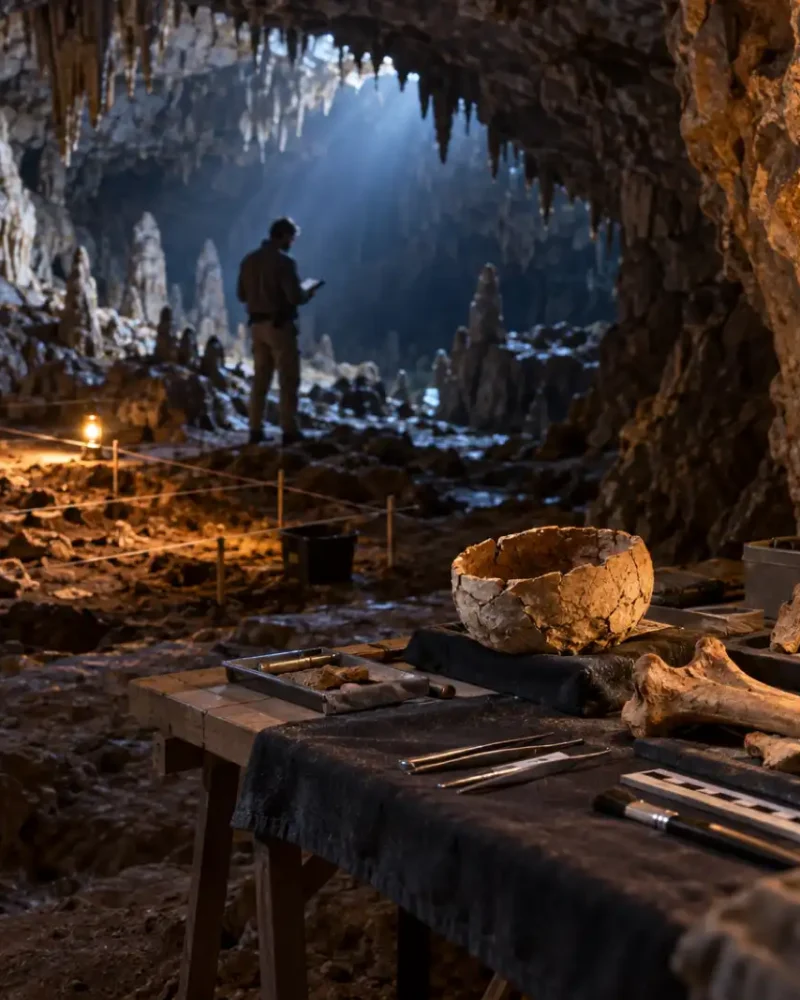
Image: Curiosmos illustration generated for this article. It is a conceptual depiction of a lake sediment archive, not a photograph of Crawford Lake or a literal reconstruction of the sampled core.