What can a Chan Chan burial platform preserve after six centuries of rain, wind and the attention of people looking for treasure? At Chan Chan, on Peru’s northern coast, archaeologists have uncovered a nearly intact funerary platform containing the remains of 38 people and a set of chambers that may reveal how Chimú society organised status, ritual and memory.
The discovery was presented on 8 September after research and conservation work at the Utzh An walled complex, the former Gran Chimú Palace. The platform had remained hidden for more than 600 years. Its survival matters because the arrangement of the rooms and the objects left inside provide context that isolated artefacts cannot.
What was found beneath the platform?
The funerary structure has a central chamber and two side chambers. The central room is about 1.2 metres wide and 5 metres deep. An entrance leads to a staircase descending roughly 2.5 metres below the working surface, where archaeologists found a niche and the remains of one individual accompanied by shell and metal objects.
Keep exploring
Continue with Curiosmos
The side chambers are larger and were used differently. Each measures about 1.5 metres wide and 8 metres long, with the floors about 3.5 metres below the surface. One contained weapons and metal emblems but no human remains. The other yielded 20 burials. Together with 18 more individuals found elsewhere on the platform, the total is 38.
Why does one burial stand out?
Chimú burials were often placed in flexed or seated-flexed positions. One individual at this platform was laid fully extended at the bottom of a chamber. That difference does not, by itself, explain the person’s identity or role, but it is an important departure from the pattern archaeologists expected to see.
The position could reflect an individual decision, a distinct ritual or a social difference. Those possibilities will have to be tested against the associated objects, the condition of the remains and comparisons with other Chimú funerary contexts. The discovery gives researchers a question they can investigate rather than a ready-made answer.
What do the grave goods tell us?
Shell and metal objects in the central chamber point to the value attached to at least one burial. The weapons and metal emblems in the other side chamber show that the rooms were not simply repeated copies of one another. Their different contents suggest that the platform brought several kinds of ritual activity together.
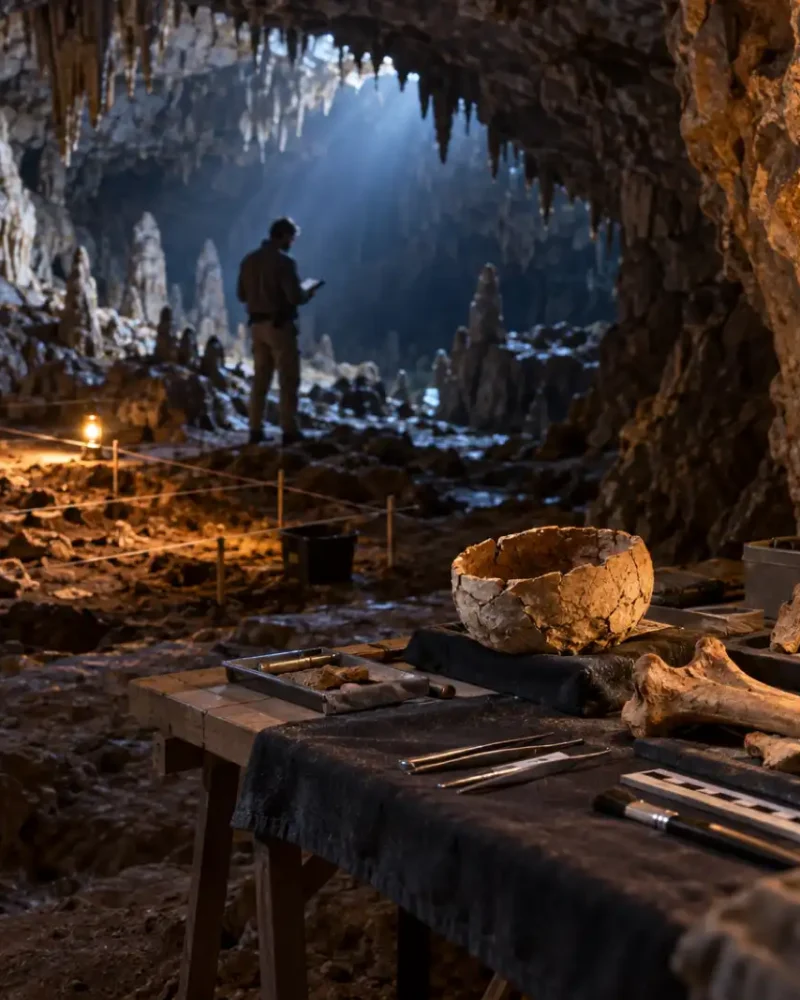
Objects are most informative when archaeologists can study their exact position. A shell ornament found beside a body, a weapon placed in a separate chamber and an empty room each carry a different meaning. The intact architecture allows the team to consider those relationships instead of treating every artefact as an isolated treasure.
Was the platform a tomb for one family?
It is too early to say. The number of burials and the division into three chambers show that the structure served a wider purpose than a single simple grave, but the identities and relationships of the people have not been established. Osteological study, dating and analysis of the objects may reveal whether the burials belong to one episode or accumulated over time.
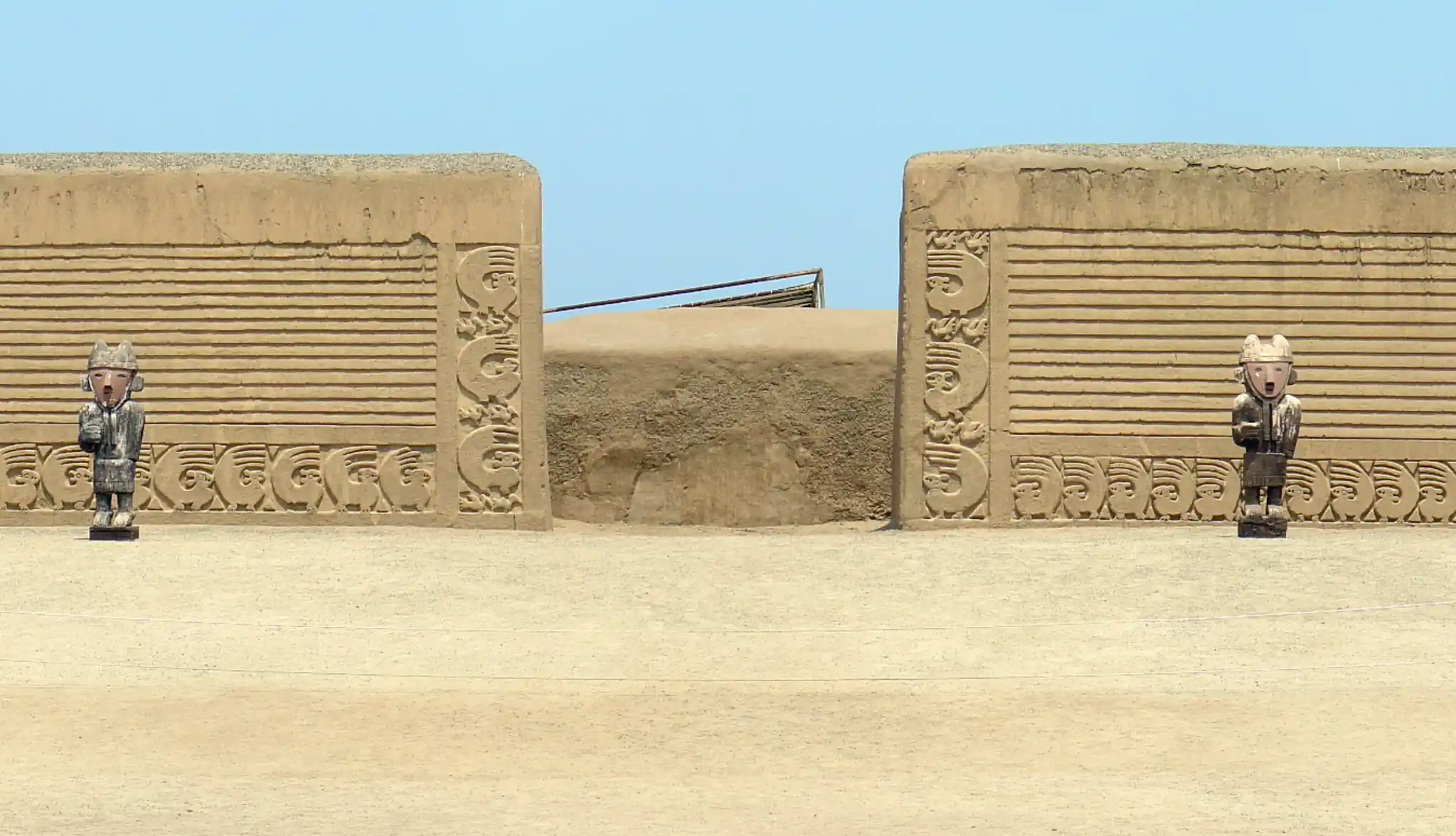
The platform also sits within Chan Chan, the capital of the Chimú state and one of the largest adobe urban centres in the Americas. Its scale means that the new find should be read alongside the city’s palaces, plazas, workshops and earlier discoveries. Our background report on how Chan Chan ruled Peru’s northern coast provides that wider setting.
Why was the discovery kept protected?
The platform will be covered again after research and conservation work, in part to reduce the risks from weather and the effects of El Niño. Reburial in this case is not a sign that the evidence is being abandoned. It is a protection measure for a fragile adobe site whose value depends on preserving the rooms, floors and deposits in place.
That decision also explains why the first announcement focuses on what was observed, not on a dramatic reconstruction of the people’s lives. The work is still at the stage where careful documentation can change the interpretation.
What happens next?
Researchers will need to document the platform, study the human remains and analyse the shell, metal and other materials. Comparisons with other Chimú burials may show whether the extended body represents a rare local practice or a broader tradition that has been overlooked.
For now, the discovery gives Chan Chan a new and unusually complete funerary context. The 38 burials are the headline number, but the more revealing evidence may lie in the way the chambers differ—and in why one person was placed in a way that did not follow the expected pattern.