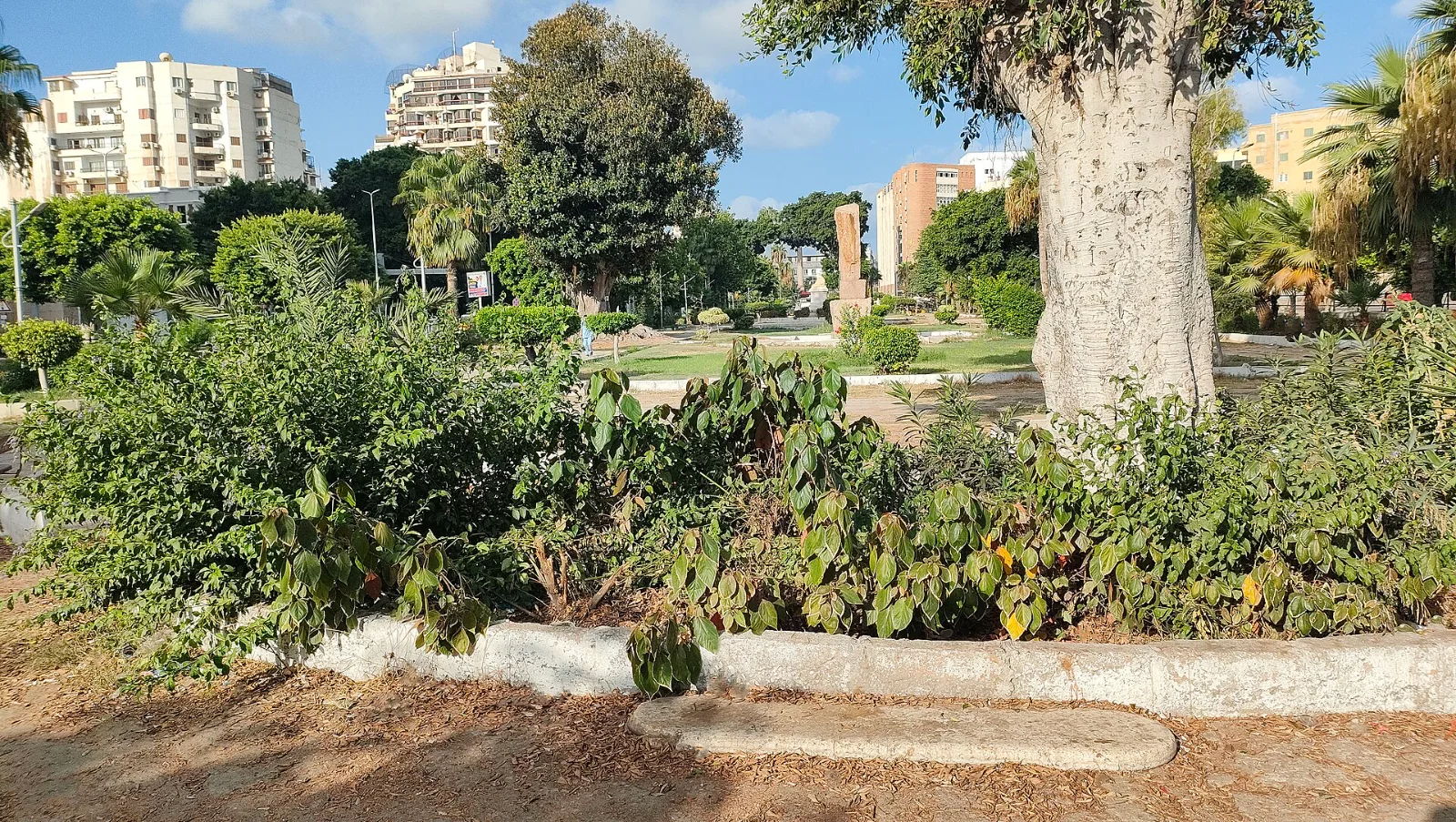
Egypt’s Ministry of Tourism and Antiquities says the massive limestone foundations of a building in Alexandria’s Shallalat Gardens may belong to the royal tomb complex of the Ptolemies, the Greek dynasty that ruled Egypt for nearly three centuries after Alexander the Great. The ministry announced the assessment on 24 November after a scientific committee reviewed the excavation.
The committee called it a preliminary hypothesis. If it holds, the find would point to the Sema, also written Soma: the walled funerary complex that ancient writers placed among Alexandria’s royal palaces, and which, they said, also held Alexander’s tomb.
- Where: Shallalat Gardens, inside the royal quarter of ancient Alexandria.
- What: limestone foundations of a large square building, surrounding walls and a partly flooded tunnel running north beneath it.
- Status: a working hypothesis. No inscriptions, coffins or human remains have been reported.
What the excavators found
The dig is led by Greek archaeologist Calliope Limneos-Papakosta of the Hellenic Research Institute of Alexandrian Civilization, whose team has worked in Alexandria for about 20 years with funding from the Moheb Kassabgui Foundation and Reliance Egypt.
Her team exposed monumental limestone foundations. According to the committee, the square plan and the size of the structure suggest it once stood tall. Walls enclose it, and a tunnel with a pitched stone ceiling runs north underneath. The tunnel is partly flooded, and what it was used for is still unknown. The ministry has not published measurements.
Why a royal tomb?
Tourism and Antiquities Minister Sherif Fathy set up the committee after receiving the team’s report. Headed by Ayman Ashmawy, it included specialists in Greek and Roman archaeology from the universities of Alexandria and Tanta. Its members concluded that the building’s architecture and its position in the royal quarter point to a funerary purpose.
Two ancient texts fit that reading. The Greek geographer Strabo described the Sema as part of the royal palaces, an enclosure containing the tombs of the Ptolemaic kings and of Alexander. Zenobius, a Greek writer of the second century CE, says Ptolemy IV, who ruled from 221 to 204 BCE, built a funerary monument in the centre of the city for his ancestors, his mother and Alexander.
Where that complex stood has never been established. It is one of ancient Alexandria’s great lost landmarks, alongside the Great Library of Alexandria.
What it does not show yet
Ashmawy has said the identification needs further archaeological and architectural research before the building can be named. Even if the complex is confirmed, that would not necessarily mean Alexander’s own tomb, or his remains, have been found.
The committee has recommended more work at the site. No timetable for the next excavation season has been announced.
Why the search keeps returning to this garden
Shallalat Gardens is not a random spot. Limneos-Papakosta’s team has excavated here for two decades, and in May 2009 it found an early Hellenistic marble statue of a standing man whose features, she wrote in a 2022 paper, connect with portraits of Alexander the Great. That is a suggested link, not a confirmed identification, but it explains why the team has kept digging in the same place.
Claims to have found Alexander’s tomb also have a long record of falling apart. In the 1990s, Greek archaeologist Liana Souvaltzi announced she had found it at the Siwa Oasis in Egypt’s Western Desert. Egypt’s antiquities authorities distanced themselves from the claim, pointing to ancient reports that the Roman emperors Augustus and Caracalla saw Alexander’s body in Alexandria (Archaeology magazine). That history is one reason this week’s announcement is worded so carefully: the committee is backing a location, not yet a tomb.
Sources
- Limneos-Papakosta, C., Early Hellenistic marble statue found in Alexandria, Egypt (2022)
- Archaeology magazine: The search for the tomb of Alexander
- Egypt’s Ministry of Tourism and Antiquities, announcement, 24 November 2026
- Arkeonews: Lost Royal Tomb of the Ptolemies May Have Been Found in Ancient Alexandria, 25 November 2026