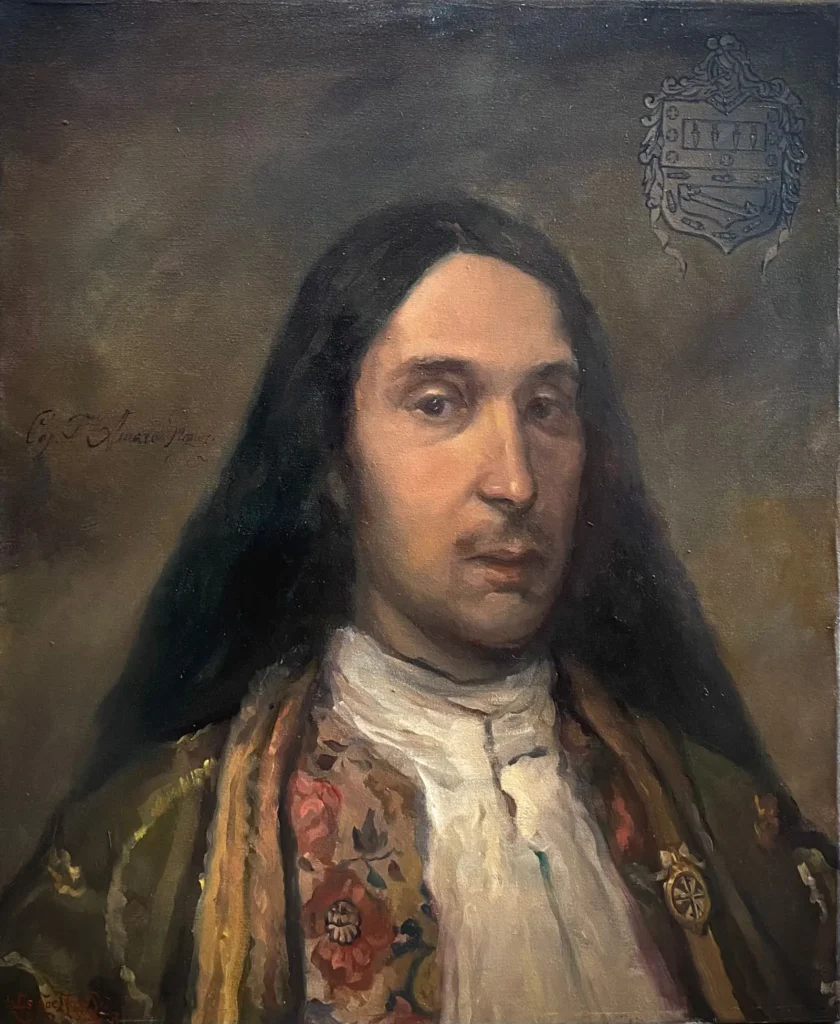
Among the books associated with Amaro Pargo were works on navigation, fencing, medicine and the laws of privateering. It is a revealing collection for a man usually remembered through treasure stories. Steering a ship, surviving a fight and knowing the rules governing a captured cargo all belonged to the same dangerous business.
Amaro Rodríguez Felipe, known as Amaro Pargo, lived from 1678 to 1747 and came from La Laguna on Tenerife. His name still draws people toward stories of hidden wealth. The surviving documents lead into ships, property, royal commissions and arguments over who would inherit his fortune.
A royal commission and a dangerous trade
A privateering commission allowed an armed vessel to take enemy shipping under a ruler’s authority. The distinction from piracy depended on whose ship was seized, whether the commission applied and how the prize was handled. A royal document was no blanket permission to attack anyone at sea. That shifting boundary also runs through the careers of William Kidd and other captains remembered as pirates.
Historians Daniel García Pulido and Manuel de Paz Sánchez have assembled a substantial documentary record of Pargo’s life. The University of La Laguna’s record for their first volume, Héroe y forajido, identifies research in the Archives of the Indies, military collections and Tenerife’s historical archives.
Their work follows Pargo’s participation in protecting the Crown’s Atlantic trading interests, including the period from 1719 to 1723. His royal orders survive alongside shipping records and legal disputes, allowing historians to compare the authority he held with what happened at sea.
Captured cargo and family property
In his 2019 review of the research project, García Pulido describes evidence of Pargo’s early voyages, privateering activity and the sale of captured cargo. The documents also expose disputes over conduct at sea.
One legal case involved allegations concerning a British prize, changes of flag, concealed records and unauthorised sales. Such evidence makes the familiar choice between respectable merchant and lawless pirate much harder to apply to every episode of his career.
Pargo’s investments extended onto land. Notarial documents and arrangements for keeping property within the family allow researchers to follow an accumulating estate. García Pulido also traces the nickname Pargo back through the family to Bernabé González Pargo. A colourful explanation based on the corsair’s speed or resemblance to a fish is unnecessary when the name already appears in earlier generations.
The house that became a treasure story
The opening of the 2017 documentary volume discusses a heritage sign near the ruined “Pirate’s House” at Machado. It repeated a local treasure tradition, then said that Pargo had not been a pirate and that the house did not exist when he died.
The authors challenged that tidy account. They examined evidence for older buildings in the area, Pargo’s property connections and conduct that could exceed the rules of authorised privateering. A sign intended to correct a legend had compressed a complicated history too far.
The same volume follows an inheritance struggle involving Manuel de la Trinidad Rodríguez Felipe, Pargo’s Cuban son. Here was a very real question about wealth: which relatives could claim it, and whose claim would survive a legal contest?
For his son and other relatives, the fortune was an inheritance to fight over. Their competing claims draw the story away from a nameless treasure chest and into the family Pargo left behind.
The fortune he left in view
The researchers’ second volume, El Heredero, examines property at Punta del Hidalgo and the library with its practical books. Those subjects offer ways to investigate how wealth was held and how an Atlantic captain equipped himself intellectually.
The library puts practical knowledge beside the wealth: how to navigate, treat an injury, handle a weapon and interpret the law. It offers a glimpse of the preparation behind a captain’s voyages, even though ownership alone cannot tell us how often he consulted each book.
Pargo’s legend leaves room for curiosity. Any claim about a particular buried chest needs its own evidence. Meanwhile, the documentary fortune is already there to explore—in the vessels, houses, family claims and books that make him a much more interesting figure than a name on a treasure map.