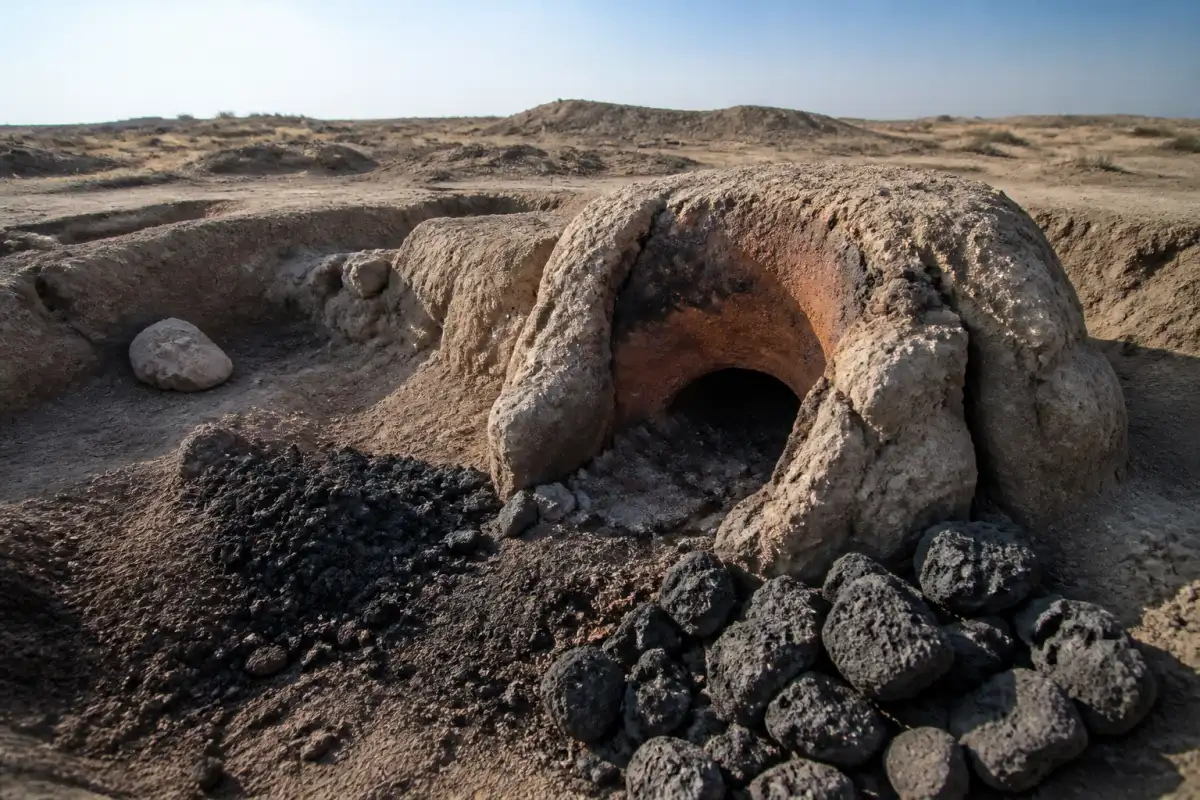
An excavation in Uzbekistan is bringing archaeologists, materials scientists and environmental researchers together around a single ancient furnace. At Abu Muslim Qala, in the historic Khorezm region, a Purdue-led project has uncovered the remains of a settlement and a large iron-smelting furnace that could reveal how metal was produced along Central Asia’s trade routes.
The site stood in a region that linked Central Asia with the Middle East and northern Europe. Its location mattered because iron was not made in isolation. Ore, fuel, technical knowledge and finished metal all had to move through landscapes shaped by rivers, roads and political power. A furnace therefore has a story that extends far beyond its walls.
The team is studying the furnace with several kinds of evidence. Archaeologists document its shape and relationship to the settlement. Materials specialists examine slag and furnace remains. Geophysicists can help map buried features, while environmental scientists investigate the fuel and landscape that supported production.
Iron smelting is different from simply heating or shaping a piece of metal. The furnace had to create conditions in which oxygen was removed from iron-bearing ore. The result was often a spongy mass called a bloom, together with a waste product known as slag. The slag can preserve clues about temperature, fuel, ore chemistry and the way the furnace was operated.
That evidence is why archaeologists do not identify ancient metalworking from a dark patch of soil alone. They look for a pattern: furnace architecture, slag, fragments of ore, fuel remains and tools or working surfaces nearby. When those clues appear together, the case for smelting becomes much stronger.
The Khorezm region was known in the medieval world for its iron and steel production, but the exact organisation of that industry is still being reconstructed. The furnace at Abu Muslim Qala may help show whether production was small and local, tied to a settlement, or part of a larger network supplying travellers, armies and workshops.
The environmental side matters as well. Smelting consumed fuel, and repeated production could change woodland, soils and the demand for transport. Charcoal and plant remains can reveal what people burned and what vegetation grew around the site. Those details connect technological history to the landscape that made the technology possible.
Researchers also have to be precise about what the furnace can prove. Finding an iron-smelting furnace does not automatically tell us how much metal it produced, who controlled it or whether the same people made high-carbon steel. Those questions require laboratory analysis and comparisons with other sites in the region.
Abu Muslim Qala is valuable because it brings those questions together in one place. The furnace is a piece of technology, but the settlement, trade routes and surrounding environment show how that technology fitted into everyday life. As the excavation and laboratory work continue, the site may help move the history of Central Asian metalworking away from isolated artefacts and toward the people, resources and connections that kept production going.
Sources and further reading
Featured image: Curiosmos illustration created for this report from the cited archaeological research.
For a related look at how archaeologists identify ancient iron, read our explainer on iron made from meteoritic metal.