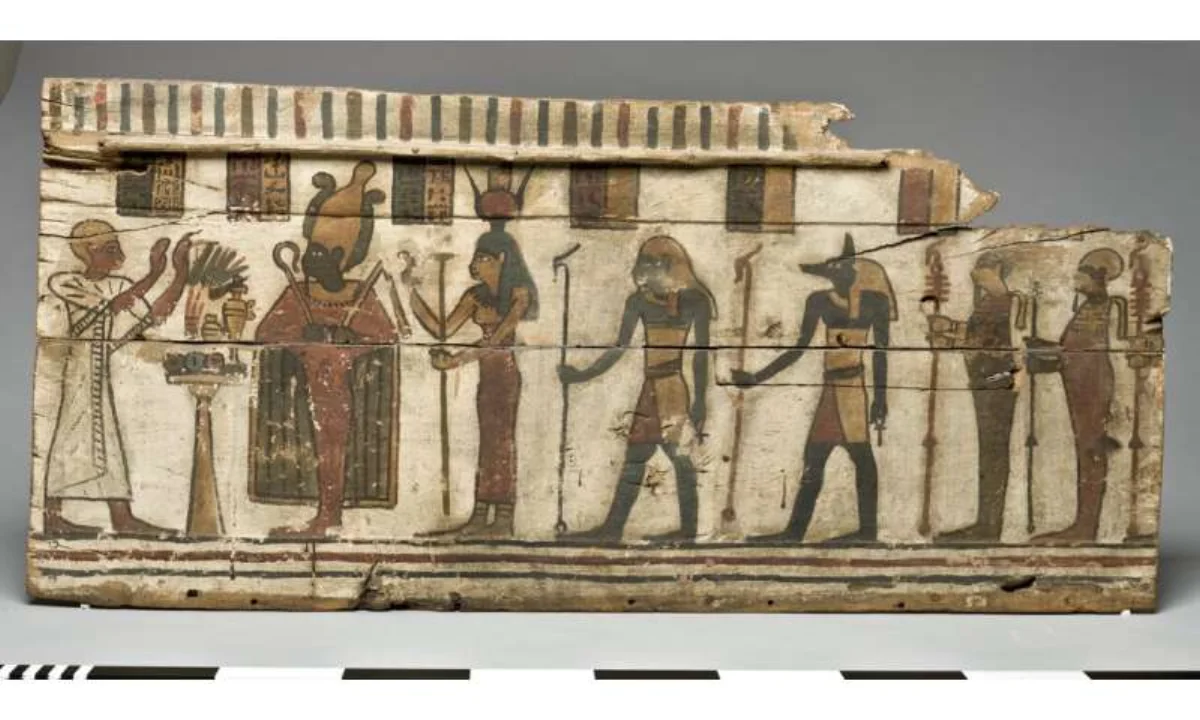
Ancient Egyptian artists were working with a much wider range of materials than the usual picture of "paint and glue" suggests. A new analysis of 28 microscopic samples from 14 painted objects found evidence for glues made from several animals, along with plant products from sesame and moringa.
The objects date from about 1425 BCE to 400 CE and include coffins, tomb paintings, painted limestone and plaster connected with mummies. They are held in three European museum collections. Because the samples were tiny, the researchers had to use methods capable of extracting useful information from only a few traces of ancient material.
The study, published in Science Advances, used mass-spectrometry-based proteomics. In simple terms, the team examined surviving protein fragments and compared them with known biological signatures. That made it possible to ask a more precise question than "what kind of glue is this?" The researchers could investigate which animals and tissues had contributed to the material.
Several animals appear in the recipes
Cattle glue was the most common animal-based material in the samples that contained animal glue. But it was not the only source. The protein evidence also pointed to sheep or goats, donkeys, horses and possibly wild antelopes. The materials appear to have come from hides and connective tissues, rather than being made from bones alone.
That variety does not mean every painter used the same recipe. The samples span more than a thousand years and come from different kinds of objects, so their mixtures may reflect different workshops, periods and practical needs. The point is that ancient Egyptian paint technology cannot be reduced to one standard formula.
The analysis also detected plant proteins, including signatures associated with sesame and moringa. The researchers describe these as previously undocumented ingredients in ancient Egyptian painted artworks. Their presence raises a practical question: were the painters using plant oils, or something left behind when oil was made?
A clue in the material left after pressing seeds
To investigate, the team combined the protein results with established chemical tests, including Fourier-transform infrared spectroscopy and pyrolysis gas chromatography–mass spectrometry. The pattern pointed to a protein-rich material that contained traces of oil.
That combination is consistent with seed cake—the solid residue left after pressing seeds for oil—rather than with pure sesame or moringa oil. Seed cake would have been available wherever oil was produced, and its proteins could have helped bind pigments to a surface. The researchers present this as a proposed explanation, not as a recipe recovered in written form.
Paint binders matter because pigments do not simply stay on wood, plaster or stone by themselves. A binder helps carry the colour, hold it to the surface and influence how it ages. A recipe that worked well on a wooden coffin might not have been the best choice for a limestone relief or a plastered wall.
The new results therefore have a direct use beyond reconstructing ancient craft. Conservators treating Egyptian objects need to know what organic materials may still be present, how those materials have changed, and how a cleaning or stabilisation treatment might interact with them. A more complete material history can help museums choose safer methods.
The findings also fit a broader archaeological lesson: technical knowledge often survives in the objects themselves even when the written record is incomplete. The proteins do not tell us the name of an individual painter or describe a workshop manual, but they preserve evidence of choices made at the workbench.
The study does not show that every Egyptian artwork used animal glue, sesame or moringa products. It shows that a carefully selected set of objects contains a more complicated mixture of animal and plant materials than earlier analyses had documented. Further sampling will be needed to determine how widespread these recipes were and whether particular ingredients were linked to specific periods or types of artwork.
For readers interested in how Egyptian materials were used on a much larger scale, Curiosmos has also examined why ancient Egyptians built the pyramids and what archaeology can actually show. In this case, the evidence comes from microscopic traces rather than monumental stone, but both lines of research ask the same basic question: how did people turn available materials into something that could last for millennia?