Among the files in the Pentagon’s eighth UAP release is a 2009 contractor report describing plans for “a highly secure underground vault” in North Las Vegas, built to hold “exotic material or tissue” and recovered “hardware”. The 538-page document was produced by Bigelow Aerospace Advanced Space Studies (BAASS) for a Defense Intelligence Agency programme, and it is the first time the Pentagon has published it.
The record, listed as DOW-UAP-D172, “BAASS Ten-Month Report, July 2009”, was released on 20 November with 42 other files. There is no public record that the vault was ever built.
At a glance
- What: a July 2009 BAASS report with a design for an underground storage vault for “exotic material”, biological samples and hardware.
- Where: planned for the Bigelow Aerospace site in North Las Vegas, Nevada.
- Specs: a 5,000-square-foot vault under 15 to 20 feet of earth, with 3-foot-thick walls and a thick steel door.
- Caveat: no evidence the vault was built, and later BAASS reports released by the Pentagon do not mention it.
What the report says
BAASS was the contractor behind a DIA study of potential future aerospace threats, funded by Congress at the urging of then-Senate Majority Leader Harry Reid. The programme is widely known as AAWSAP, the Advanced Aerospace Weapon System Applications Program.
According to the report, as quoted by CBS News, “It was recognized by the BAASS administrator that there was no highly secure facility at BAASS to store exotic material or tissue that the organization could obtain.” It continues: “Accordingly, the BAASS administrator designed an underground facility to be located in North Las Vegas at the Bigelow Aerospace facility.”
The vault was meant to store “hardware and biological samples from the corporate world and/or from private individuals and groups located elsewhere, including Brazil”. It would have been buried under 15 to 20 feet of dirt, and the report adds that “any surface structures protruding from the ground will be extensively camouflaged.”
What happened next
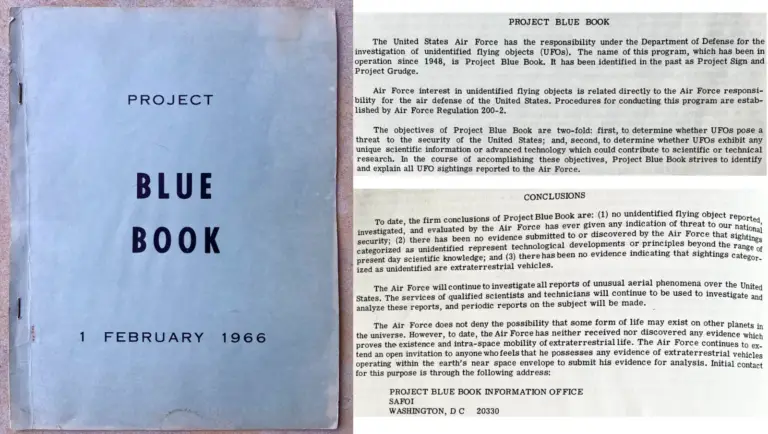
The vault appears to have stayed on paper. Subsequent BAASS reports the Pentagon has released make no mention of it. Several months after the report, a DIA official judged the company’s reports to be of “limited value”, and the Pentagon’s research project ended in 2012. Bigelow Aerospace, BAASS’s parent company, laid off its entire workforce in 2020. A copy of the report circulated online last year, but this is its first official release.
Our take: what the vault does and does not prove
The document is significant because it shows that a Pentagon-funded contractor took the idea of acquiring physical material seriously enough to design secure storage for it. It reads as a plan for something BAASS hoped to obtain, not an inventory of something it already held. The wording “could obtain” is the key phrase.
That matters because claims of recovered craft and biological remains sit at the centre of today’s UAP debate, from the testimony of David Grusch to accounts by former BAASS insiders such as Colm Kelleher. On the other side, the Pentagon’s All-domain Anomaly Resolution Office said in its 2024 historical report that it found no verifiable evidence that any US government investigation had confirmed extraterrestrial technology. The vault plan does not settle that dispute. What it does show is that the people running the programme planned for the possibility that such material would come in.
The rest of the eighth release, including a radar track estimated at about Mach 2.5 and a 1953 sighting by Lockheed’s Kelly Johnson, is covered in our full guide to the release. For how the subject reached this point, see How Ufology Went from Fringe to Mainstream Science.