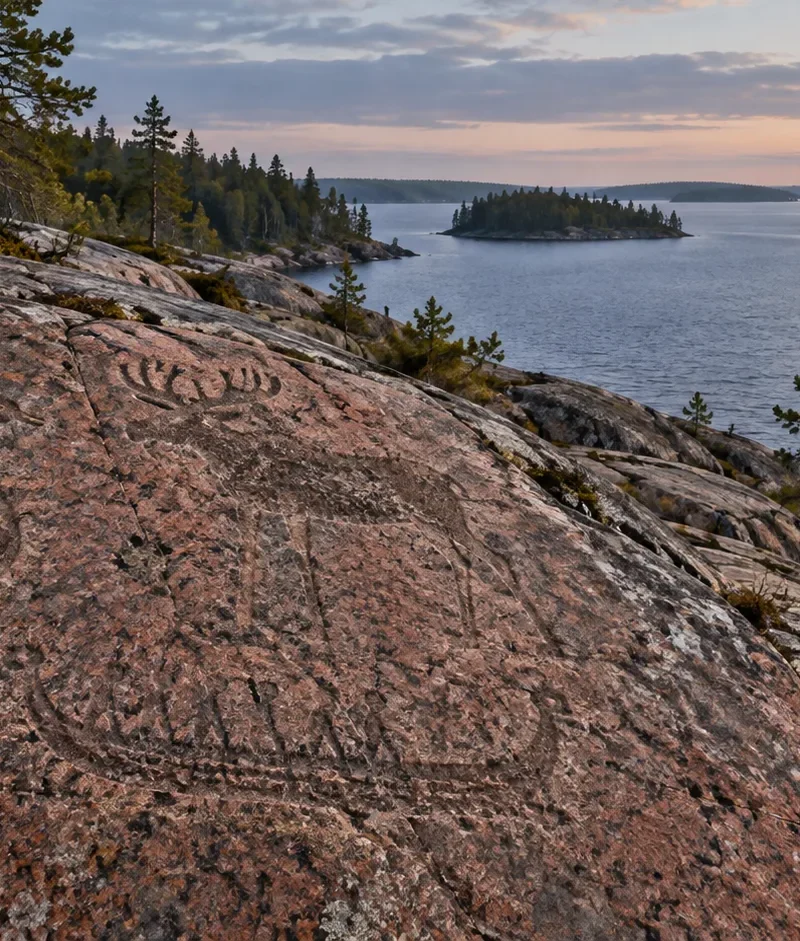
A spiral or boat carved into rock can look familiar even when it appears thousands of kilometres from the nearest example. That visual jolt lies behind claims that the petroglyphs at Track Rock Gap in Georgia point to Bronze Age Europe.
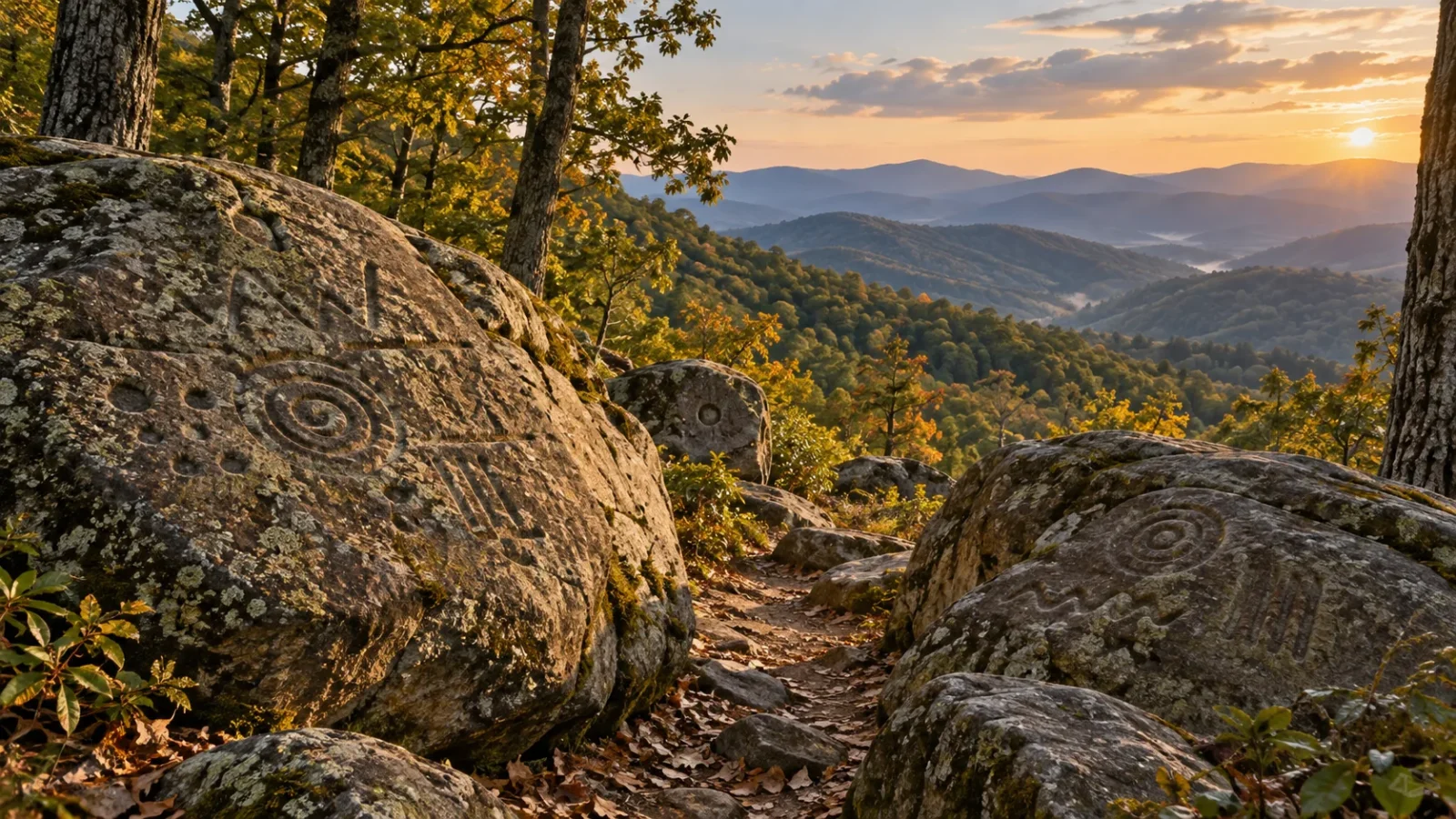
Track Rock Gap is in the U.S. state of Georgia, in the Blue Ridge Mountains. State descriptions identify the carvings as ancient Native American rock art. The question of European contact cannot be answered by comparing a few shapes in photographs; it depends on dates, archaeological context and evidence connecting the two regions.
A carved landscape in the mountains
The protected Track Rock Archaeological Area covers about 52 acres in the Chattahoochee-Oconee National Forest. Petroglyphs are cut into boulders along a mountain pass. The gap itself matters: routes, nearby water, the slope and the placement of the carvings all form part of the site.
Keep exploring
Continue with Curiosmos
Researchers ask how the images relate to one another and to the landscape. Were the rocks used as a meeting place, a route marker, a ritual setting, or at different times for different purposes? A photograph of one symbol cannot answer those questions by itself.
When does resemblance become evidence?
Comparisons have linked some Track Rock shapes with Scandinavian Bronze Age carvings, Irish spirals and Mediterranean symbols. A circle, cross-like mark or boat can certainly invite comparison. But simple forms are likely to recur wherever people draw the sun, water, travel or the human body.
To argue for contact, researchers would need more than images that can be given the same name. A secure date, repeated and distinctive techniques, imported materials or a chain of related sites could help make the case. At present, the resemblance alone does not demonstrate a voyage from Europe to Georgia.
Dating the marks is difficult
Rock art is hard to date directly. The boulder may be ancient, but a groove could have been made much later. Archaeologists compare weathering, overlapping carvings, tool marks, nearby deposits and datable objects. Even then, a date may apply to one part of a panel rather than every mark on it.
Experimental work at the Trialeti petroglyphs in the country of Georgia shows how researchers can test carving techniques. Georgian National Museum scientists made trial engravings with flint and obsidian tools, then studied the wear on the tools and the marks left in the rock. That research does not date Track Rock Gap. It shows the sort of physical evidence that can help identify how a carving was made.
A University of Georgia archaeological report records Track Rock as site 9UN361 and discusses nearby stone features at 9UN367. The work treats the area as an archaeological landscape, while also showing that questions about the surrounding features and their dates remain.
Indigenous history belongs at the centre
When a Native American site is explained primarily as a possible trace of outsiders, the people who made it can disappear from the story. The carvings deserve to be studied within their own setting and history. A lack of written records does not mean the makers lacked history, technical knowledge or explanations for the images.
That does not close the door to future evidence. Better recording, archaeological excavation and collaboration with Indigenous communities could clarify when different marks were made and how the place was used. A new find might change what we know; visual resemblance alone cannot do that work.
What the petroglyphs preserve
The carvings show that people returned to particular rocks and chose to mark this mountain pass. Tool traces and the relationships between figures can reveal how the panels were made. The setting can help researchers understand why this stretch of landscape mattered.
The claim of a Bronze Age European connection remains unproven. Track Rock Gap is compelling on its own: a place where images, routes and rock have preserved a human presence whose full story has yet to be recovered.
Curiosmos has surveyed ancient stone sites and the questions they raise. At Track Rock Gap, careful context is what turns a visual comparison into archaeology.