Near the summit of a mountain on the Greek island of Euboea, archaeologists have found a sanctuary where worshippers climbed to make offerings for more than a thousand years. There is no temple and no altar, only pottery, burned animal bones and a long, steep walk. The goddess they honoured may have been Artemis.
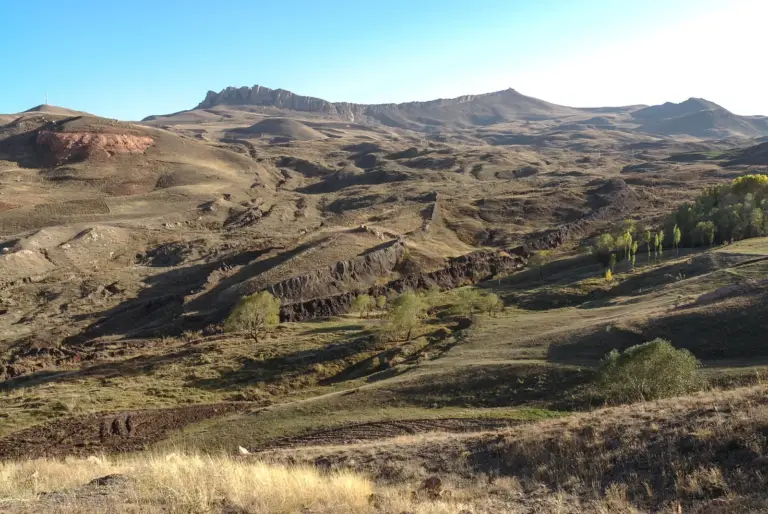
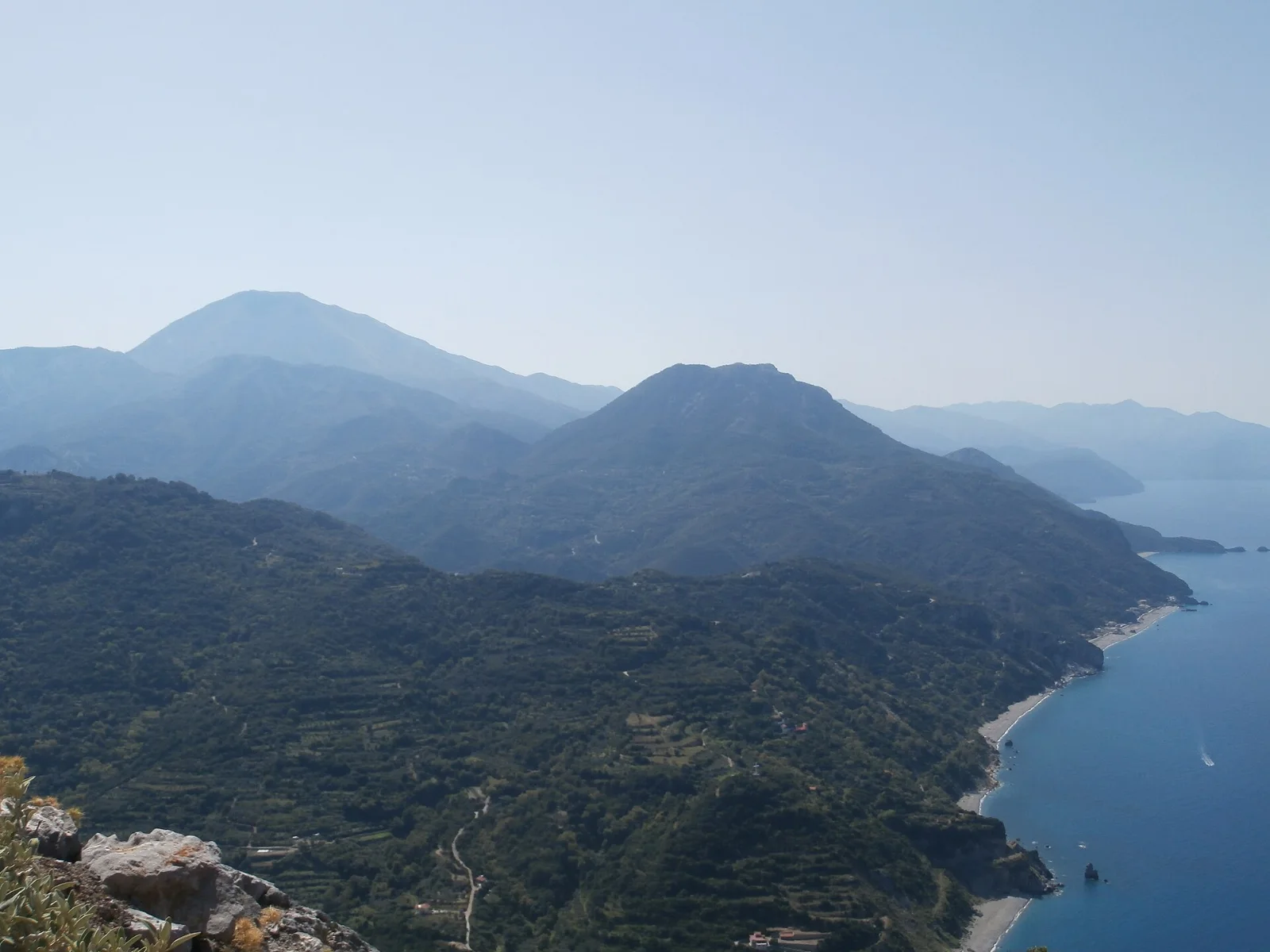
The site sits near the top of Elatias, one of the highest peaks of Euboea’s own Mount Olympus, above the ancient city of Eretria. It was excavated this year by a team led by Chloé Chezeaux of the Swiss School of Archaeology in Greece, Live Science reports.
At a glance
- Where: near the summit of Elatias on Mount Olympus, Euboea, about 50 km northeast of Athens. Not the famous Olympus of the gods in northern Greece.
- When: in use from at least the 9th century BC until the 1st or 2nd century AD.
- What: no buildings, but “an exceptional concentration of pottery” and sheep and goat bones, some burned at very high temperatures.
- Caveat: the Artemis link comes from an inscription found elsewhere, in Eretria. No altar or dedication has been found at the summit.
What the excavators found
A survey first spotted the site in 2025, and digging began in 2026. The oldest pottery dates to the Early Geometric period, at least the ninth century BC. “This means that people were coming to this summit over several centuries, perhaps even for more than a thousand years,” Chezeaux said.
Offerings had been tucked into crevices in the rock. “Several of them show signs of burning, sometimes at very high temperatures,” she said of the animal bones. “These finds naturally suggest practices involving animal sacrifice and ritual meals.” Most of the worshippers probably came from Eretria, the powerful city on the island’s coast where the Swiss School is based today.
Why the climb mattered
Getting there is still hard work. The final ascent is about 3 km with 650 metres of climbing, Chezeaux said. Her team does it in about an hour from the nearest pass, but how ancient pilgrims travelled is unknown. “People were willing to devote considerable time and energy to reaching these places, and in our case they seem to have done so over many generations,” she said.
Sites like this are easy to miss. “These sanctuaries often left very little archaeological evidence, sometimes with no visible structures at all,” Chezeaux said. That makes every confirmed one valuable: it shows how much Greek religion happened outside the marble temples we picture.
Artemis or Zeus?
Mountaintops in Greece usually belonged to Zeus. But an inscription from Eretria mentions “Artemis Olympia”, a title that would fit a goddess of wild places worshipped on a mountain called Olympus. Until an altar or a dedication turns up on the summit itself, the attribution is a well-grounded guess.
Our take
The name invites confusion, and it is worth clearing up. This is not the 2,900-metre peak in Thessaly where Homer placed the gods. “Olympus” was a common name for high mountains, and Greece still has several. That is part of what makes the find useful: it shows ordinary communities building their own holy mountains, with their own gods, close to home.
Euboea keeps producing surprises. Read our piece on the island’s mysterious “dragon houses”, and on another mountaintop sanctuary built for gods and kings, Mount Nemrut.