For more than a century, historians have argued about where exactly Rome’s Tenth Legion built its fortress in Jerusalem. A new study in the Journal of Roman Archaeology argues that one corner of the camp has been hiding in plain sight: in walls dug up in the 1970s just south of the city’s Citadel, and never fully published.
Archaeologist Shimon Gibson of the University of North Carolina at Charlotte re-examined the unpublished records of excavations led by Magen Broshi between 1975 and 1978. In his paper, “Solving the location of the camp of Legio X Fretensis in Jerusalem”, published on 20 November, he identifies two of those walls as the southwestern corner of the legionary base.
At a glance
- What: a proposed southwestern corner of the camp of Legio X Fretensis, the legion that garrisoned Jerusalem after AD 70.
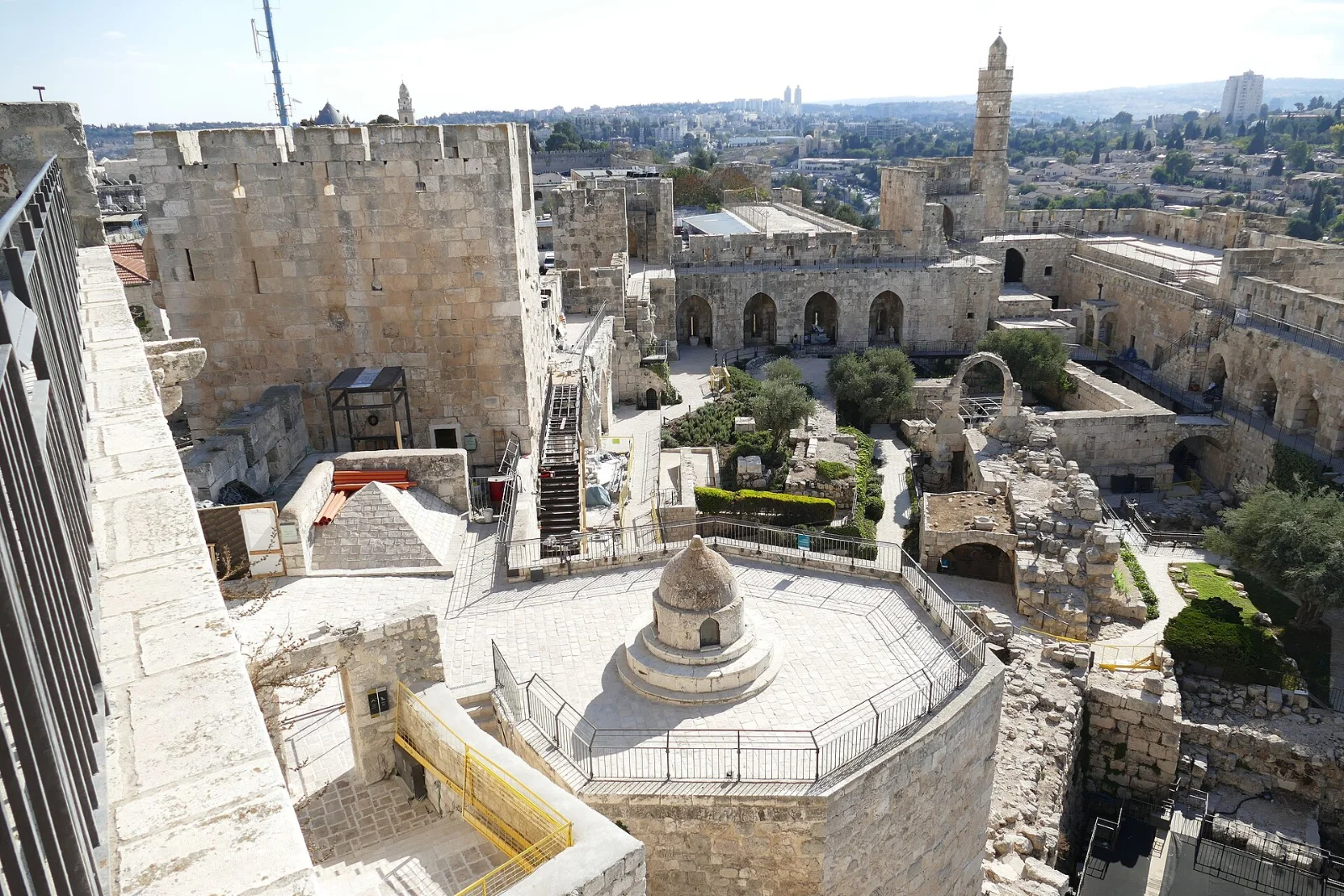
- Where: immediately south of today’s Citadel (the Tower of David), on the city’s Western Hill.
- Evidence: two walls forming a corner, reassessed pottery and a 37.7-metre stretch of sloping road.
- Caveat: the camp’s eastern and southern edges are still unknown, so its size is a working estimate.
A corner built on an older tower
The key remains are two walls, labelled W31 and W32 in the excavation records, that meet at a corner. One runs about 9.5 metres north to south, the other about 7.6 metres east to west, and both sit on top of an earlier, pre-Roman defensive tower.
Gibson’s case also rests on the pottery. Some types once classed as Early Roman, and so dated before AD 70, turn out to have stayed in production until about AD 130. That matters for dating any structure built after the city’s destruction in AD 70. Nearby, the excavators recorded a sloping road preserved for about 37.7 metres, edged with large stone blocks and reused column drums. Gibson suggests it may have led to a western entrance.
How big was the camp?
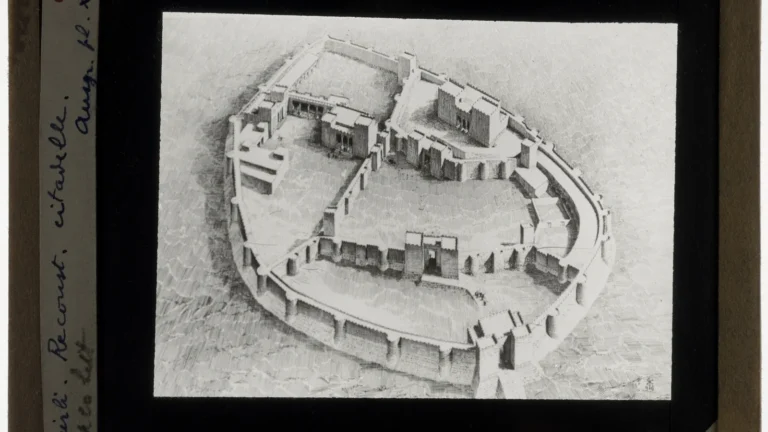
Gibson links the new corner to a Herodian tower inside the Citadel, about 285 metres to the north, which may mark the camp’s northwestern corner. If the camp was roughly square, it would have measured about 285 by 285 metres, around 8.1 hectares (20 acres). He stresses that this is provisional, because the eastern and southern boundaries have not been found.
A base that size would have held about 1,800 to 2,200 soldiers and attached specialists, by his estimate. That is fewer than a full legion, which suggests Jerusalem served as a regional headquarters while other units were stationed elsewhere. He also proposes that parts of the former palace of Herod the Great were folded into the headquarters, and that a civilian settlement, or canabae, grew up around Mount Zion.
Why the camp has been so hard to find
Few traces of the fortress survive. Gibson suggests it may have been deliberately dismantled before the legion left in the late third century AD, or that its stone was reused in the Byzantine period. What has survived are smaller finds: roof tiles and water pipes bearing military stamps, which show the soldiers were there without showing exactly where their walls ran. Without clearly identified defensive walls, earlier reconstructions drew the camp’s boundaries in very different places.
Our take
This is a strong argument rather than a final answer. Its strength is that it rests on excavated walls and stratified pottery, not on reading ancient texts alone. Its weakness is that it fixes one corner, and a square camp is an assumption. The real test will come if future digs in the Armenian Quarter or on Mount Zion find the line of a wall where Gibson’s plan predicts one.
The study is also a reminder of how much archaeology waits in old excavation archives. Rome’s legions remain some of the most debated subjects in ancient history, as the long search for the vanished Ninth Legion shows. For the symbol every legion marched behind, see our piece on the aquila. For Jerusalem in the Crusader era, read Baldwin IV and the Fight Over Jerusalem’s Future.