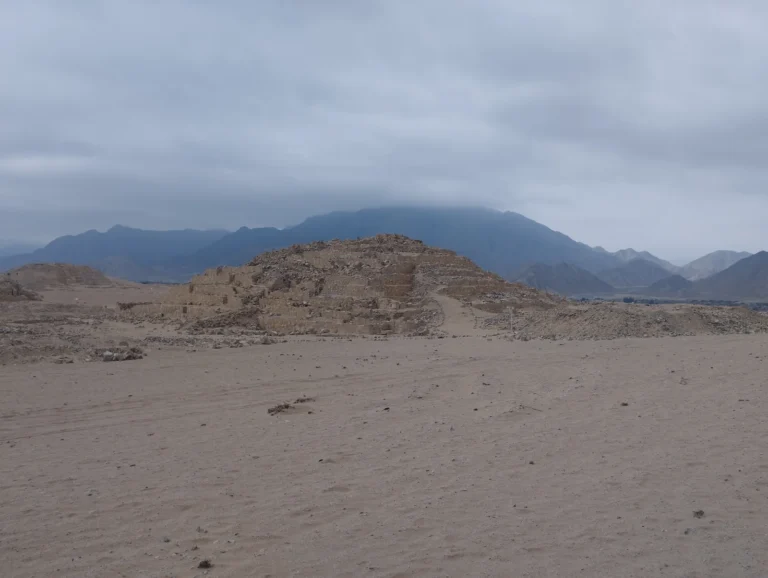
The Great Pyramid of Cholula is easy to underestimate. From a distance it looks like a wooded hill with a church on top. Beneath that vegetation, however, is a monumental platform that grew through successive building campaigns in central Mexico.
Cholula is commonly described as the largest pyramid in the world by volume. That comparison needs a qualification: “largest” can mean volume, height, footprint or the size of the surrounding ceremonial complex. Cholula’s distinction comes from its extraordinary bulk and broad base, not from a sharp summit like the Great Pyramid of Giza.
How large is the Great Pyramid of Cholula?
Mexico’s National Institute of Anthropology and History, or INAH, describes the monument as the largest pyramid by surface area in Mesoamerica, with a base of roughly 450 metres on each side. Guinness World Records lists the Great Pyramid of Cholula as the largest pyramid by volume, at about 4.45 million cubic metres.
The figures are estimates because the monument is not a single, neatly preserved structure. It contains earlier buildings, terraces and fills added over centuries. Modern visitors see only part of the mass, while tunnels inside the pyramid expose layers that are hidden from the surface.
Cholula was built in stages, not by one forgotten civilisation
The pyramid’s Nahuatl name, Tlachihualtepetl, is often translated as “made-by-hand mountain.” The name fits its appearance, but it should not be taken to mean that Cholula was an artificial mountain built in one unexplained episode. Archaeologists have documented a sequence of construction phases in which later builders enlarged and covered earlier temples.
That process was familiar across Mesoamerica. A community could preserve a sacred location while giving it a new form, a larger summit and a different architectural language. At Cholula, the result was a vast stepped platform rather than a single smooth-sided pyramid. The visible hill is therefore a record of changing religious and political priorities.
INAH identifies the pyramid as a monument dedicated to Tláloc, the rain and storm deity. Other phases of Cholula’s history were associated with the worship of Quetzalcoatl. Those associations belong to different moments and should not be compressed into one timeless “pyramid religion.”
What is inside the pyramid?
Exploration tunnels cut through the monument have revealed painted walls, stairways and sections of earlier construction. The tunnels were not a secret network built for an unknown purpose; they are archaeological passages that allow researchers to study how the platform was enlarged.
One famous section contains the mural known as the Drinkers, a scene showing people gathered around large vessels. It is usually dated to an early period in Cholula’s development and is important because it gives archaeologists a glimpse of ritual and social life rather than only the monument’s exterior.
The layers also explain why the pyramid can be both ancient and difficult to date with a single number. The first major construction began long before the Spanish conquest, but the structure changed repeatedly as the city grew and religious centres were rebuilt.
Why is there a church on the summit?
After the Spanish conquest, a church dedicated to Nuestra Señora de los Remedios was built on the summit. Its position was not accidental. Spanish colonists often placed Christian churches on or near prominent Indigenous ceremonial sites, creating a new religious landscape on top of an older one.
The church does not prove that the pyramid was forgotten in a single dramatic event. Local people continued to live around the mound, while soil and vegetation gradually made the earlier architecture look like a natural hill. The church became the feature most visible to later visitors, but the buried platform never stopped being part of Cholula’s history.
How does Cholula compare with Giza?
Khufu’s Great Pyramid at Giza was taller and more precisely finished. Its original height was about 146.5 metres, and it was built as a royal funerary monument during Egypt’s Fourth Dynasty. Cholula is broader, lower and the product of repeated additions around a sacred centre.
That is why the two monuments should not be reduced to a contest over which is “bigger.” Giza represents a concentrated royal project completed within a relatively short period. Cholula records a much longer urban and religious history. Its size reflects accumulation: one community built over another without abandoning the location.
Was Cholula built by a lost advanced civilisation?
No. The monument is sometimes presented online as evidence of a vanished civilisation unrelated to the Indigenous societies of Mexico. Archaeology does not support that claim. Excavations, ceramics, murals and nearby settlements place Cholula within the history of Mesoamerican cultures and their changing political networks.
The real story is more interesting than a lost-civilisation explanation. Cholula survived because generations of builders kept returning to the same sacred ground, adapting old platforms to new rituals and new communities. Its unusual appearance is the result of continuity, not a missing chapter of human history.
Why the pyramid still matters
The Great Pyramid of Cholula is a reminder that monumental architecture does not always look monumental. A grassy hill can conceal a structure larger by volume than the famous pyramid at Giza, while a church can stand above layers created more than a thousand years earlier.
Its importance lies in the combination of scale and time. Cholula was not simply a giant construction project. It was a place repeatedly rebuilt, renamed and reinterpreted. The 450-metre base, the buried murals and the church at the summit are different parts of the same long archaeological record.
Additional institutional context is available from INAH’s Cholula entry and its archaeological research journal.