An ancient iron object can look simple: a blade, nail, tool or fragment of a chain. Making it required a long chain of decisions, from finding ore and fuel to building a furnace and working the metal after it cooled. Archaeometallurgy—the study of ancient metals and metalworking—tries to reconstruct that chain from the remains left in the ground.
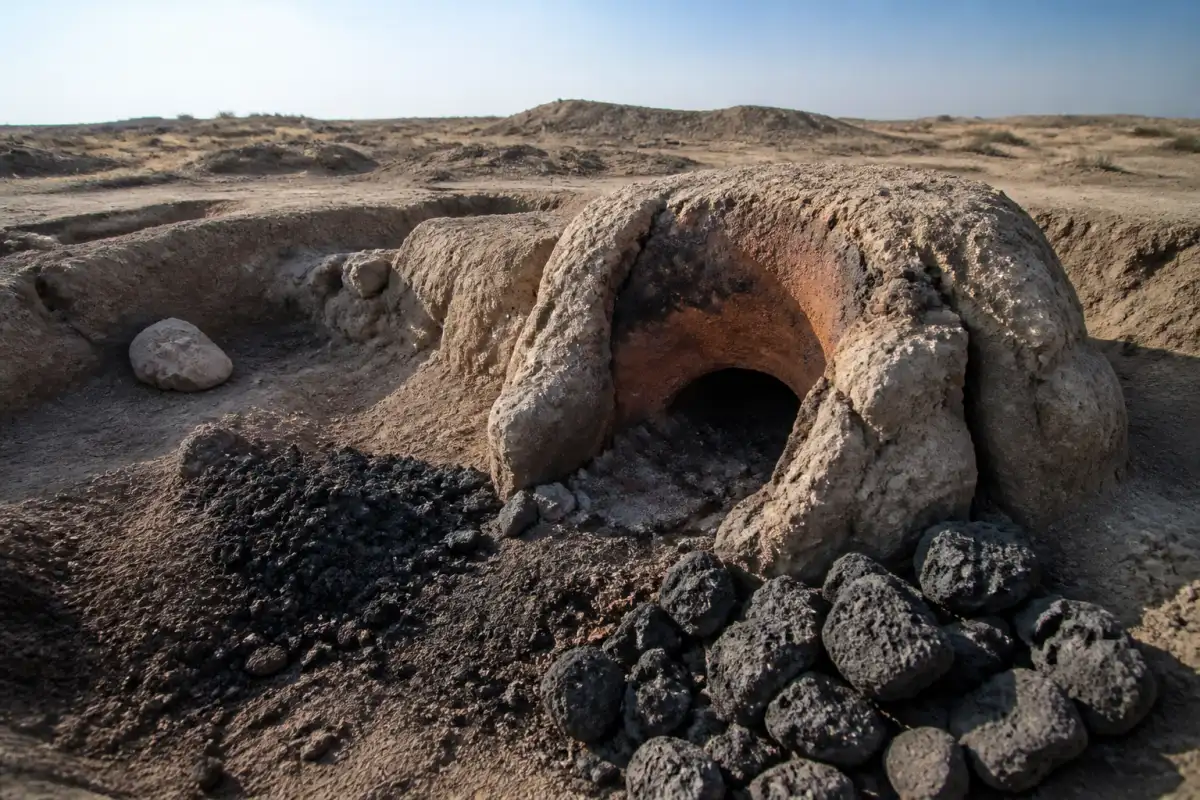
The first question is whether iron was smelted at a site or merely used there. Archaeologists look for the combination of ore, furnace remains, charcoal, tuyères or air pipes, slag and working surfaces. One fragment is rarely enough. A cluster of related evidence can show that a community processed ore rather than simply traded or repaired finished objects.
Smelting and forging are different stages. Smelting extracts iron from ore in a hot, oxygen-poor furnace. In many early furnaces the product was a spongy bloom containing iron mixed with slag. The bloom then had to be reheated and hammered so the waste could be squeezed out and the metal shaped.
Slag is one of the most useful clues. It is the waste left when minerals in the ore, furnace lining and fuel react at high temperature. Its chemistry and texture can reveal the kind of ore used, the temperature reached and whether the furnace was run once or repeatedly. A large slag heap can also show how important production was to the settlement.
Charcoal helps answer a different question: what fuel made the process possible? The species of wood can sometimes be identified, and radiocarbon dating may help establish when the furnace was used. A large industry could change nearby woodland, while a small workshop might rely on a very different supply system.
Furnace design provides another line of evidence. The shape of the chamber, the position of the air inlets and the thickness of the lining affect temperature and airflow. Experimental archaeologists can build carefully documented replicas to test whether a proposed reconstruction works, but a replica is a test of a process, not proof that ancient people used exactly the same method.
Laboratories can examine metal at a much smaller scale. Microscopy reveals how iron crystals changed during heating and hammering. Chemical analysis can identify elements added by the ore, fuel or furnace. Techniques such as portable X-ray fluorescence and electron microscopy help compare artefacts with slag, ore and furnace debris.
The distinction between iron and steel also matters. Steel is iron with a higher amount of carbon, and its properties depend on how that carbon entered the metal and how the material was heated and cooled. Finding an iron furnace does not automatically prove that the community produced high-quality steel. Researchers need evidence from the metal itself and from the production debris.
This is why the furnace being studied at Abu Muslim Qala in Uzbekistan is valuable. The Purdue-led project is combining excavation with materials engineering, geophysics and environmental research to understand an ancient iron-production site in the Khorezm region. The furnace is not an isolated machine; it belongs to a settlement connected to Central Asian trade routes.
Archaeometallurgy also has limits. Ancient workshops were cleaned, rebuilt and sometimes robbed of their best material. Slag may have been moved or reused. A metal object can travel far from the furnace that made it. Good interpretations therefore combine laboratory results with the site’s architecture, layers and wider landscape.
The aim is not to turn one piece of iron into a complete story. It is to reconstruct the people, resources and choices behind it. When ore, furnace, fuel, slag and finished metal can be connected, an artefact becomes evidence of a working community rather than a mysterious object without a maker.
Featured image: Curiosmos illustration created for this report from the cited archaeological research.
For a current case study, see our report on iron made from meteoritic metal.