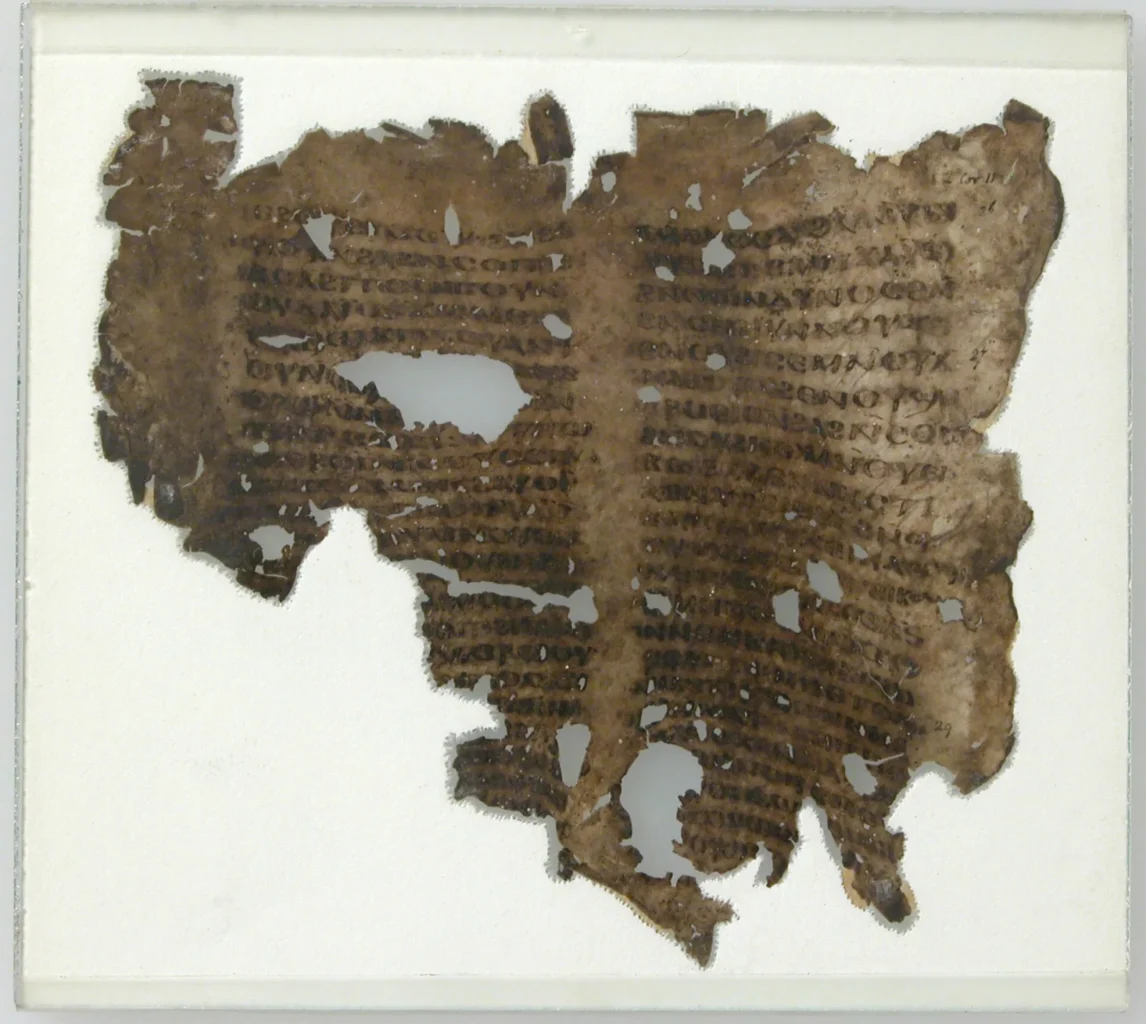
Seventeen pieces of medieval writing have been found hidden inside early modern records from Guernsey. The scraps were reused as covers and bindings for notebooks and administrative volumes, but they preserve Latin and French text from books that would otherwise have vanished. One fragment belongs to a rare version of the story of Griselda, a character whose medieval play survives in very few witnesses.
The discovery is the first clear evidence that medieval books and sustained reading were present on the island, rather than arriving only through later English administration. The fragments were identified by researchers studying the material history of Guernsey’s records. A study day planned for September 10 will bring together the findings and the people working to conserve them.
Books that survived as rubbish
When a medieval book was damaged or no longer needed, its parchment could be cut into strips and used by a later scribe or clerk. A binding made from old pages was practical: the material was strong, already prepared and available. That reuse often destroyed the original book while preserving a few lines that would otherwise have been lost.
The Guernsey fragments were found in records made in the early modern period. Their second life helped protect the parchment from weather and handling, even as it separated the pieces from their original neighbours. Researchers can still study the script, language and layout to determine what kind of book each scrap came from.
Six of the pieces contain French, while many others are in Latin. That mixture fits a medieval world in which church, legal and literary writing moved between languages. The fragments do not provide a complete library catalogue, but they show that readers on the island encountered more than one written tradition.
A rare play in a discarded page
The most unusual fragment preserves part of a medieval play about Griselda. The character appears in a story that circulated widely in European literature, but the dramatic version survives in only one complete manuscript and two later editions. A small Guernsey scrap can therefore help scholars compare how the story was adapted for performance.
The fragment is not a complete scene, and its exact date and place of writing still need to be established. Letter shapes and spelling can narrow the period, while the wording can be compared with other copies. Even a few lines may reveal changes in dialogue, staging or the language used by a local audience.
Finding the play beside religious and administrative material is also useful. It suggests that the books later cut up for bindings came from different parts of a written culture. The people who handled them may have valued some texts, ignored others or simply treated all old parchment as a convenient material.
What the fragments say about Guernsey
Guernsey’s surviving medieval records are uneven. Fires, rebuilding and later administrative changes have removed much of the evidence that would normally show who owned books and where they were read. Reused fragments fill one part of that gap because they are physical traces of books that were once present, even when the volumes themselves are gone.
Curiosmos has covered how unusual records preserve information that ordinary archives lose and how island communities can leave complex archaeological traces. The Guernsey pieces offer a quieter version of the same problem: a few reused pages can change what historians think was possible in a place.
Reading the evidence carefully
The researchers are still cataloguing the fragments and checking how they were attached to later volumes. Conservation work must balance the need to see both sides of the parchment with the need to protect fragile edges. Digital photography and multispectral imaging may reveal more text without flattening or dismantling every binding.
The fragments do not prove that Guernsey had a large medieval library, and they cannot identify every reader who handled the books. They do establish that medieval written material reached the island and remained in circulation long enough to be reused. That is a firm change to the historical record, built from scraps that once looked like waste.
The range of languages also complicates any simple picture of literacy. Latin connected the island to church and administrative networks, while French belonged to the literary and legal world of medieval Normandy and the Channel Islands. A fragment does not tell us whether an island resident read it aloud, copied it or merely stored it, but it places the written culture within reach.
Researchers can learn more by studying how the scraps were cut. A narrow strip may have reinforced a spine, while a larger folded leaf may have served as a cover. The pattern of holes and folds can reveal the size of the later notebook and, in turn, the practical value that early modern clerks saw in medieval parchment.