The Moon is usually described as a lifeless world, but NASA scientists have identified places near its south pole where microbes brought by human explorers could remain alive for at least a day. The study does not suggest that the Moon can support a thriving ecosystem. It shows instead that pockets of shade may protect dormant organisms long enough to complicate future searches for the Moon’s own chemistry and, eventually, signs of life on Mars.
The finding matters because the lunar south pole is the focus of future exploration. Its permanently shadowed craters may contain water ice, while nearby ridges receive sunlight useful for power. Crews, habitats and instruments are likely to work close together in a landscape where small differences in elevation can determine whether a patch of ground is exposed to sunlight or remains cold and dark.
Why shade changes the equation
The Moon has only a very small axial tilt. Near the poles, the Sun stays low on the horizon, and crater rims or small ridges can block direct light from reaching the ground. Some depressions remain in darkness for long periods, preserving cold temperatures and shielding molecules from ultraviolet radiation.
That geometry creates a patchwork of conditions rather than one uniform lunar environment. A sunlit slope may be hostile to almost every Earth organism, while a nearby hollow could provide temporary shelter. The NASA team modelled three south-polar regions—Nobile Rim, Connecting Ridge and De Gerlache Rim—using elevation and temperature data from the Lunar Reconnaissance Orbiter and models of how radiation reaches the surface.
The result is a set of probability maps, not a claim that a particular crater contains living organisms. Conditions change as the Sun moves around the horizon and as spacecraft disturb the surface. Future missions will need to sample carefully and record where people, machines and materials have been before interpreting any biological signal.
Five tough organisms in the study
The researchers examined microbes commonly associated with humans or spacecraft environments. The group included Aspergillus niger, Bacillus subtilis, Staphylococcus aureus, Deinococcus radiodurans and several Fusarium species. They compared the organisms’ known tolerance to heat and ultraviolet radiation with the environmental conditions predicted for the lunar sites.
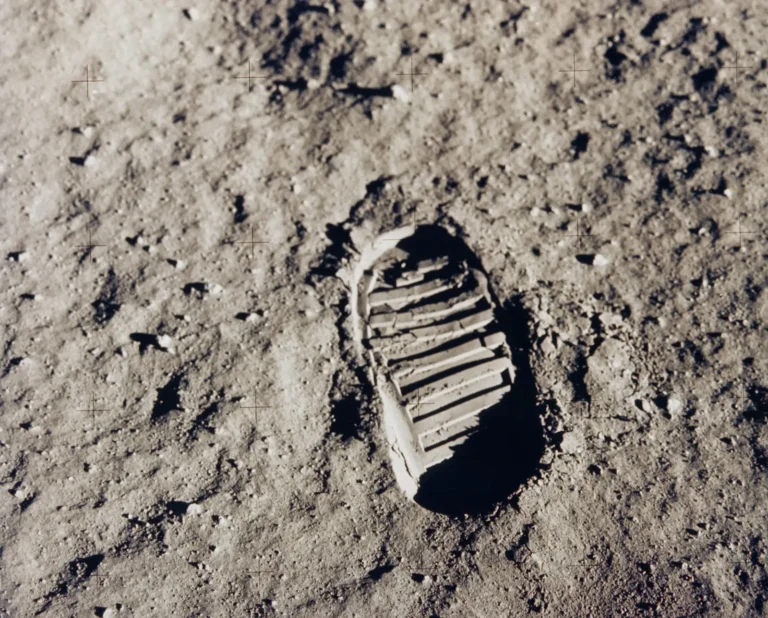
The models produced “survivable niches” ranging from large crater floors to areas as small as an astronaut’s boot print. Aspergillus niger, a fungus familiar from warm, damp places on Earth, was the most resistant to ultraviolet radiation in the study. It could remain viable even in places receiving some sunlight.
The maps are therefore useful for mission planning as well as biology. A lander could park in sunlight for power while a nearby shadowed depression retains a different thermal and radiation environment. The same terrain that makes the south pole attractive for a base also creates a patchwork of places where contamination might persist after an astronaut, rover or discarded material has moved on.
Survival in this context has a precise meaning. It means that a microbe could remain alive in a dormant or stressed state for at least one Earth day. It does not mean the organism could grow, reproduce or establish a colony on the Moon. The authors found no evidence that the lunar surface provides the liquid water and moderate conditions needed for sustained growth.
Contamination becomes part of the science
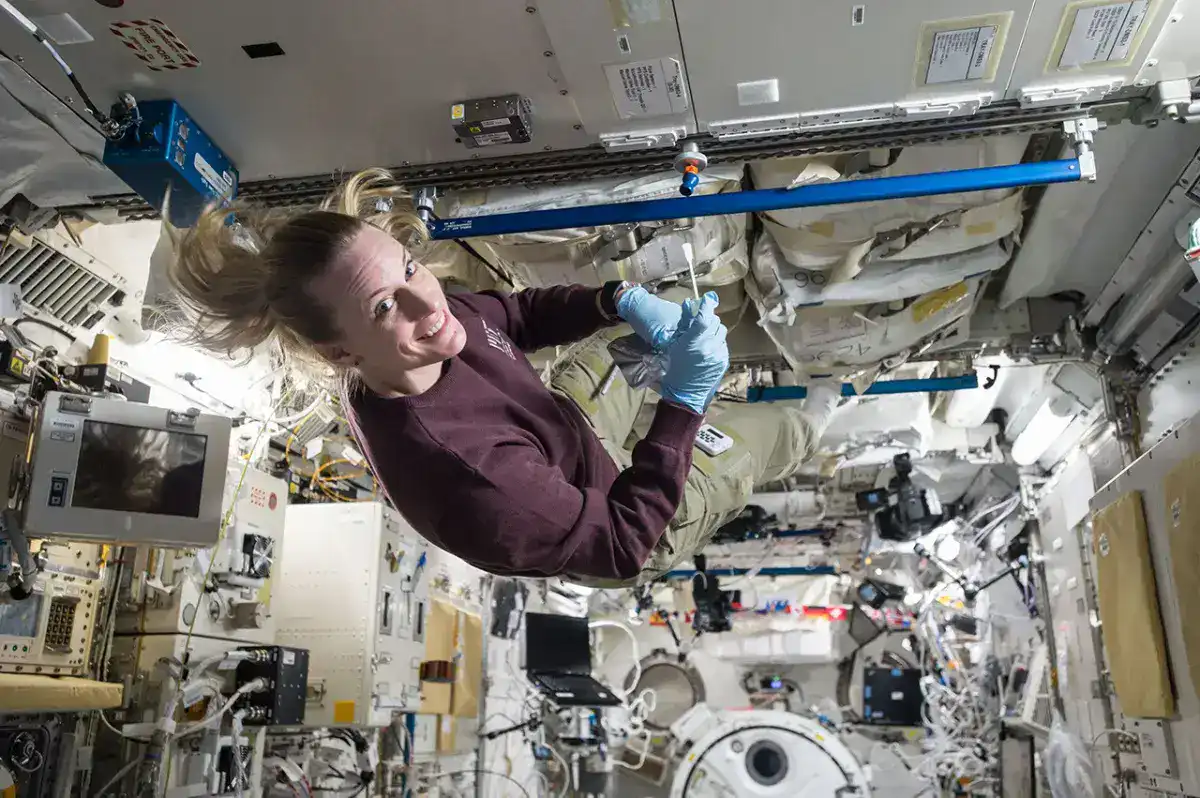
Astronauts cannot be sterilised in the same way as robotic spacecraft. People carry bacteria and fungi on their skin, in their clothing and inside habitats. Those organisms can escape into the environment through spacesuits, air systems or discarded equipment, even when crews follow careful contamination-control procedures.
That creates a problem for future science. If a probe finds an organic molecule or a surviving microbe near a lunar base, researchers will need to know whether it was native to the Moon or arrived with a human mission. The same issue will be even more serious on Mars, where the search for ancient or present-day biology depends on distinguishing local evidence from material brought from Earth.
The NASA team argues that the Moon should be treated as a natural laboratory. Researchers could deliberately monitor how selected organisms behave in shaded lunar environments, while also establishing a chemical and biological baseline before large-scale construction begins. That would turn an unavoidable risk into a controlled experiment.
The study changes the practical question from “Can life exist on the Moon?” to “Where might our own biological traces persist after we arrive?” The answer appears to include small, cold pockets near the south pole—places a future mission may need to map before it can trust the evidence it finds there.