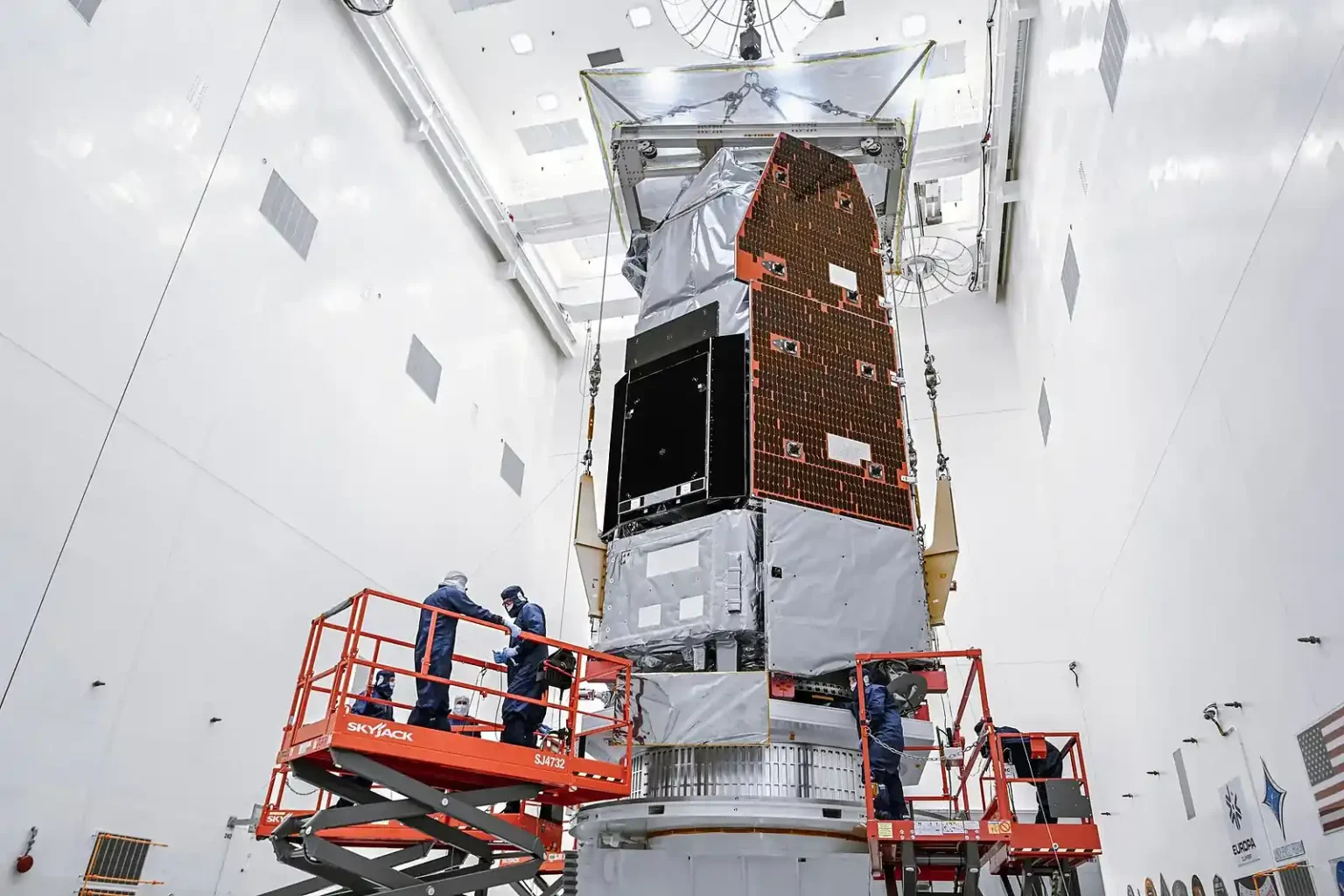
NASA is currently targeting August 30 for the launch of the Nancy Grace Roman Space Telescope from Florida. The date can move, as launch dates do, but the mission is close enough to the pad that its central idea deserves a clear look: Roman will survey huge stretches of the universe in one exposure, gathering the kind of wide, deep data that Hubble and Webb were never designed to collect at the same scale.
That does not make Roman a replacement for either telescope. It gives astronomers another instrument with a different job. Hubble has provided decades of sharp, flexible imaging. Webb looks deeply into the infrared and can examine selected targets with remarkable sensitivity. Roman will trade some of that narrow focus for breadth, turning vast sky surveys into a central part of its science.
A wide-angle observatory with Hubble-like sharpness
NASA says Roman’s field of view will be at least 100 times larger than Hubble’s. The comparison is easy to misunderstand. It does not mean Roman sees objects 100 times better. It means that when Roman takes an image at comparable sharpness, it can include an enormously larger patch of sky.
That is valuable because many astronomical questions are statistical. To understand how galaxies are distributed, how dark energy may have changed the universe’s expansion, or how common certain kinds of planets are, scientists need large, consistent samples. A beautiful close-up of one galaxy is not enough. Roman is built to make the wide maps that let researchers compare millions of galaxies and stars on the same footing.
The telescope’s Wide Field Instrument will be the engine of that work. It will scan broad areas in infrared light, letting astronomers look through some of the dust that obscures regions of our Milky Way and reach distant galaxies whose light has been stretched toward infrared wavelengths by the expansion of space.
Dark energy is a survey problem
One of Roman’s main goals is to investigate dark energy, the name given to the still-unexplained phenomenon associated with the accelerating expansion of the universe. The mission will not point at dark energy itself. No telescope can photograph it as a glowing object. Instead, Roman will measure its possible effects across huge samples of galaxies and exploding stars.
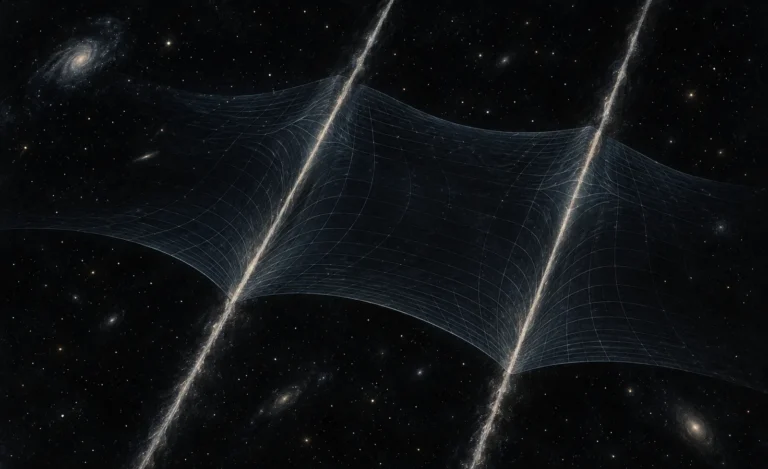
There are several routes into that question. The shapes and positions of distant galaxies can reveal how matter bends light along the line of sight, a method called weak gravitational lensing. Patterns in the large-scale distribution of galaxies preserve information about cosmic expansion. Type Ia supernovae, used as distance indicators, can show how the expansion rate has changed across time. Roman’s role is to collect these measurements in volumes large enough for small patterns to matter.
The result will not be a single dramatic image announcing that dark energy has been solved. It will be a more demanding kind of evidence: maps, catalogues and comparisons that let competing models survive or fail against far larger datasets.
A census of planets the other telescopes cannot easily take
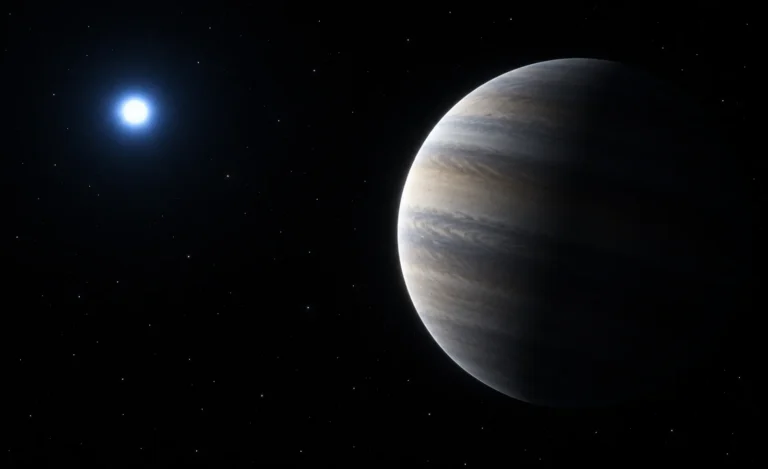
Roman will also conduct a major exoplanet survey using gravitational microlensing. The technique relies on a chance alignment. When one star passes almost directly in front of another from our viewpoint, the foreground star’s gravity bends and magnifies the background light. If the foreground star has a planet, the planet can add a brief, smaller disturbance to that brightening.
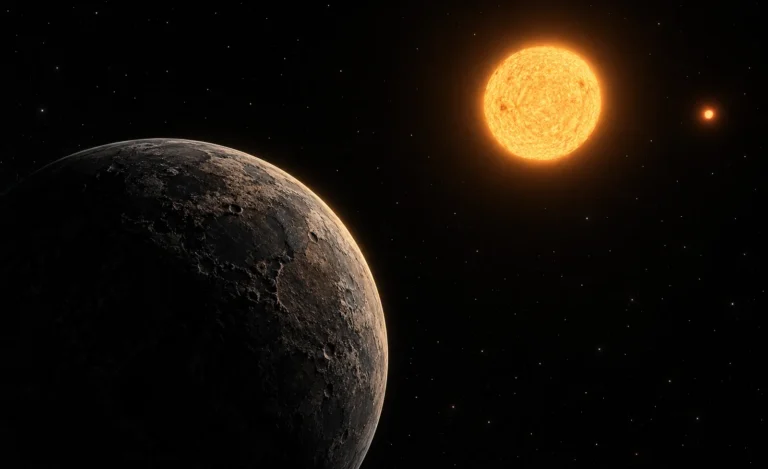
Microlensing does not usually give astronomers a planet they can revisit on demand. The alignment is temporary and rare. What it does provide is a way to detect worlds at distances and orbital separations that are awkward for other methods, including colder planets farther from their stars and small bodies that may be drifting freely through the galaxy.
That makes Roman a population mission. It should help answer how planetary systems are distributed across the Milky Way, rather than offering only a shortlist of nearby worlds suitable for close study. Webb can examine particular planetary atmospheres in extraordinary detail; Roman will help reveal how representative, or unusual, planetary systems like ours may be.
A technology test for direct imaging
Roman also carries a Coronagraph Instrument, a technology demonstration designed to test very high-contrast imaging of planets around nearby stars. The goal is to suppress starlight so effectively that faint planets and disks can be separated from the star’s glare.
It is important to keep the language precise here. The coronagraph is a demonstration, not a guaranteed factory for Earth twins. NASA describes it as the most advanced technology of its kind flown in space, a step toward future missions that could directly image smaller and fainter planets. Even a limited set of observations will show how the hardware behaves in the real thermal, optical and pointing conditions of space.
That technical work matters because direct imaging is one of the hardest tasks in exoplanet science. A planet close to a star is buried in light; detecting it requires exquisite control of optics as well as a stable telescope. Roman’s demonstration will test methods that future observatories may use in the search for potentially habitable worlds.
Why is this launch a bit different?
Roman arrives when astronomy is learning to work as a network. Ground surveys can flag a transient object. Roman can map a large region in infrared. Webb or Hubble can spend precious, detailed observing time on the most interesting targets. The strength is not one telescope doing every job; it is each telescope giving the others better questions to ask.
For readers, the practical distinction is simple. Webb gives us intimate encounters with selected objects: a distant galaxy, a planet atmosphere, a dusty stellar nursery. Roman is meant to supply the wide context. It will show how common those things are, where they sit in the larger cosmic pattern and which targets deserve the close-up treatment next.
NASA’s current August target is the beginning of that work, not its finish. Once Roman is commissioned, the most consequential results will arrive gradually through surveys and public data releases. They may be less theatrical than a single first image, but the mission is designed to change the map on which a generation of discoveries is made.
Sources
NASA: Roman launch target and mission briefing
NASA Science: Nancy Grace Roman Space Telescope