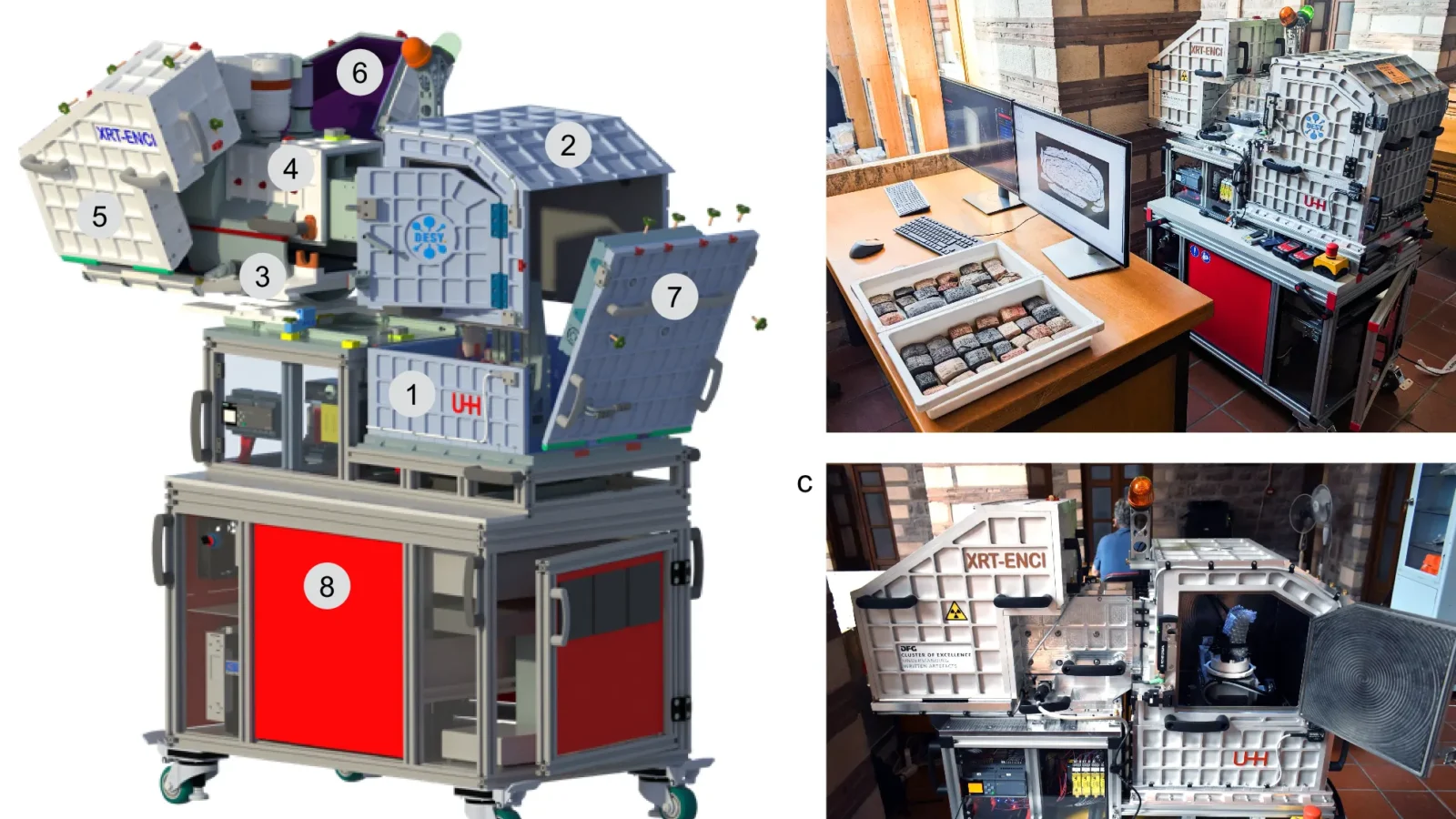
For thousands of years, some letters from Mesopotamia have remained exactly where their writers left them: inside small clay envelopes, sealed and unread. Researchers are now using mobile high-definition X-ray computed tomography (CT) to examine those letters without breaking the envelopes open.
The technique is revealing a hidden layer of ancient correspondence. The tablets inside the envelopes can preserve the message itself, while the outside carries the address, seal impressions or a short summary. In many cases, the envelope is not just packaging. It is part of the document.
Why ancient letters were sealed
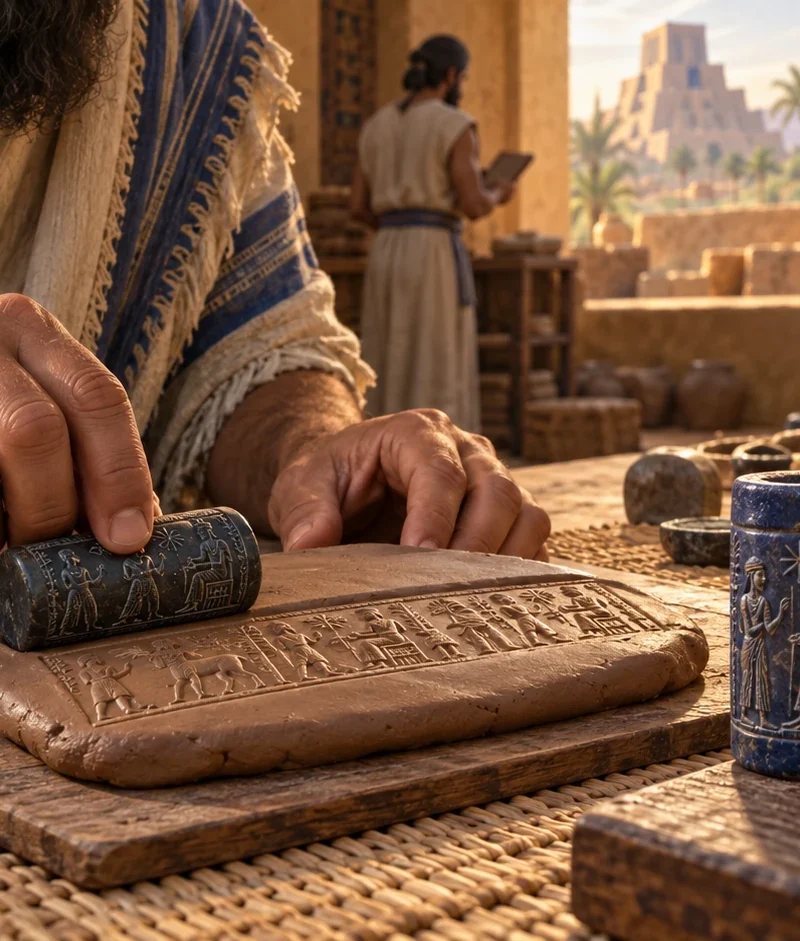
Clay tablets were the everyday writing material of ancient Mesopotamia. A scribe pressed a reed stylus into damp clay to record a contract, an account, a legal decision or a personal message. For sensitive correspondence, the tablet could then be enclosed in a second layer of clay and sealed with a cylinder seal.
Keep exploring
Continue with Curiosmos
That outer layer helped show whether a message had been opened or altered. It also created a public-facing surface where a name, title or brief description could be repeated. The result was a document with two voices: the visible envelope and the text hidden inside it.
Opening the envelope by hand is risky. The clay can break, the seal impressions can be lost and the relationship between the outer and inner texts can be destroyed. Many collections have therefore left such objects untouched, even when scholars knew that a tablet was probably inside.
Virtual unwrapping replaces the knife
CT scanning solves the problem by recording thousands of X-ray images as the object rotates. Software then builds a three-dimensional model from those slices. In a virtual workspace, researchers can separate the layers, flatten the tablet and follow the impressions made by the stylus.
The process is similar in principle to reading a rolled manuscript digitally, but clay creates its own difficulties. The tablet and envelope may have similar densities, the surfaces can be irregular and the writing is made of wedge-shaped impressions rather than ink. The scans therefore need careful segmentation and specialist knowledge of cuneiform signs.
A mobile system has an additional advantage. Instead of moving fragile objects to a distant laboratory, researchers can bring the scanner to a collection. The recent work included roughly 50 objects scanned in Ankara after a mobile CT deployment at the Louvre in 2024.
What the hidden tablets can tell us
The letters are valuable because they capture people communicating about immediate problems. A sealed envelope may preserve a request, a complaint, a delivery instruction or a report that was never meant to become a public inscription. The tablet inside can also be compared with the summary or address on the outside.
That comparison may reveal how ancient writers edited information for different readers. A brief note on the envelope could identify the subject, while the tablet carried the details. If a letter was never delivered, the intact envelope preserves a rare snapshot of a message in transit rather than a text copied for an archive.
Researchers can also study the physical process of writing. The shape of the signs, the order of the lines and the arrangement of the seals provide clues about who prepared a document and how it moved through an administrative system.
What the method cannot do yet
Virtual unwrapping is not an automatic translation machine. A scan can make hidden surfaces visible, but specialists still have to identify damaged signs, reconstruct broken passages and decide how a phrase should be translated. Some tablets will remain too compressed, too poorly preserved or too similar in density to separate cleanly.
Nor does every sealed object contain a letter. Envelopes could protect legal tablets, accounts or other records. The only safe conclusion is the one the images support: the objects contain layers of information that physical opening would risk destroying.
A new window on Mesopotamian life
The work joins a wider shift in archaeology, where non-destructive imaging is being used to study objects that cannot be handled like ordinary fragments. It complements the evidence from ancient cities and the broader history of writing, trade and administration in the region.
At Curiosmos, we have looked at how archaeologists date complex sites and how layers of rebuilding can create cities on top of older cities. The sealed letters add a more intimate scale to that story. They preserve not only what institutions recorded, but what individuals tried to say when the message still had somewhere to go.
As the scans are processed and the signs are read, some of these envelopes may finally give up their contents. The achievement is not that a machine has replaced the scholar. It is that the scholar can now examine a document that was previously closed to every method except destruction.