A star does not switch off the instant its fuel runs low. The change begins in the core, where nuclear reactions have supported the star against gravity for most of its life. Once the core’s hydrogen supply is depleted, the balance changes and the star follows a new path determined largely by its mass.
That is why the phrase “a star died” can describe very different events. A Sun-like star will swell into a red giant, lose its outer layers and leave a hot white dwarf. A much heavier star can end in a supernova, leaving behind a neutron star or a black hole.
The long main-sequence years
For most of its lifetime, a star fuses hydrogen into helium in its core. The released energy creates outward pressure, while gravity pulls the star inward. This balance is called hydrostatic equilibrium. It is not perfectly static, but it can last for millions or billions of years.
Mass sets the pace. Massive stars burn their fuel at a furious rate and live relatively short lives. Smaller stars use their fuel more sparingly. The Sun is about 4.6 billion years old and is expected to remain in its current phase for roughly another five billion years.
Mass is not the only variable
A star’s surroundings can change the route as well. In a close binary system, one star may pull gas from its companion. The transfer can expose layers that would otherwise stay hidden, trigger a new burst of nuclear activity or alter the mass left behind. Two stars born together can therefore end in different remnants.
Rotation and magnetic fields also affect how material moves through a star. They can mix fresh hydrogen into the core, shape the winds that carry matter away and influence the debris seen after an explosion. The mass of the star sets the broad outline, but the details of its life are written in its composition and its neighbourhood.
What happens to a Sun-like star?
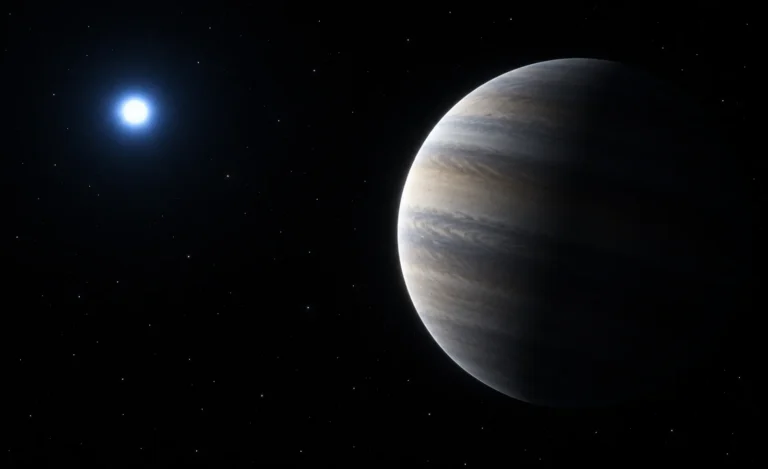
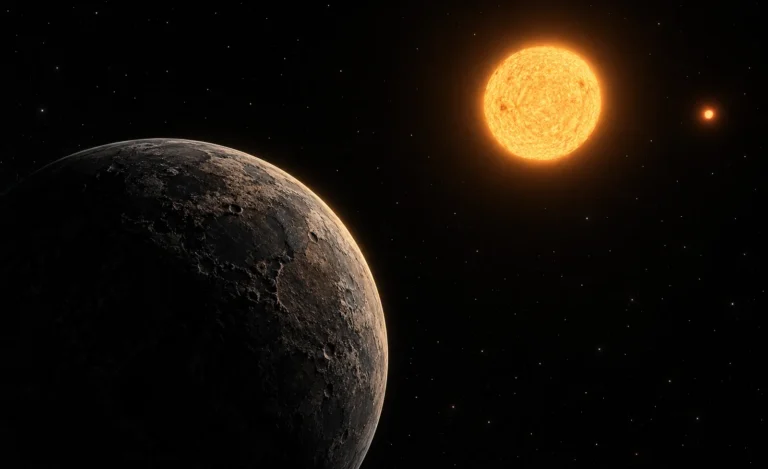
When hydrogen fusion in the core slows, gravity compresses the core and raises its temperature. Hydrogen continues to fuse in a shell around the core. The outer layers expand, and the star becomes a red giant. The surface cools compared with its earlier state, but the enlarged star can be thousands of times brighter.
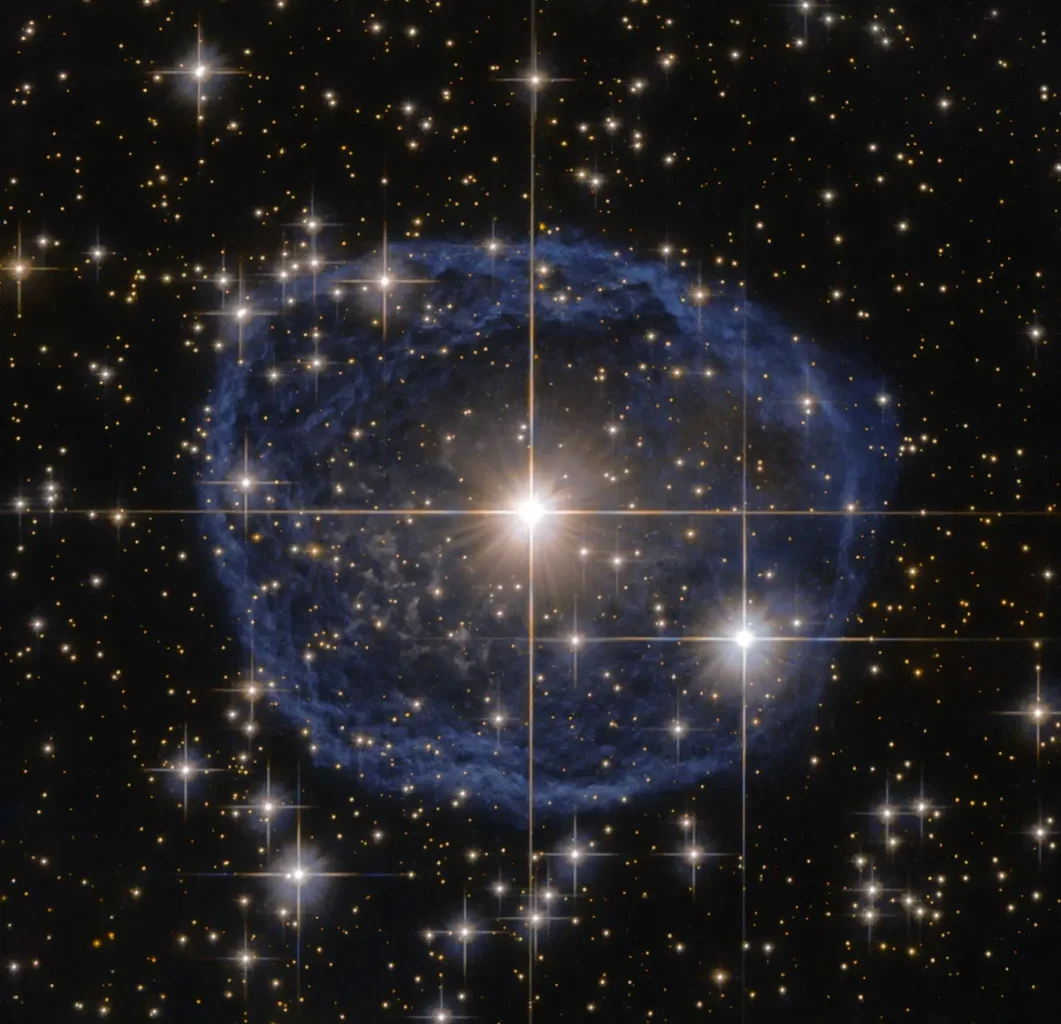
The core eventually becomes hot enough to fuse helium into carbon and oxygen. When that supply is exhausted, a Sun-like star cannot reach the temperatures needed to fuse much heavier elements in a sustained way. It sheds its outer layers, forming an expanding cloud of gas. The exposed core remains as a white dwarf.
A white dwarf is roughly Earth-sized but contains a large fraction of the former star’s mass. It no longer makes energy by ordinary fusion. It simply cools over an immense span of time. Curiosmos has covered the expanding remnant of a dead star; that kind of structure is a visible record of material released before the final remnant settled down.
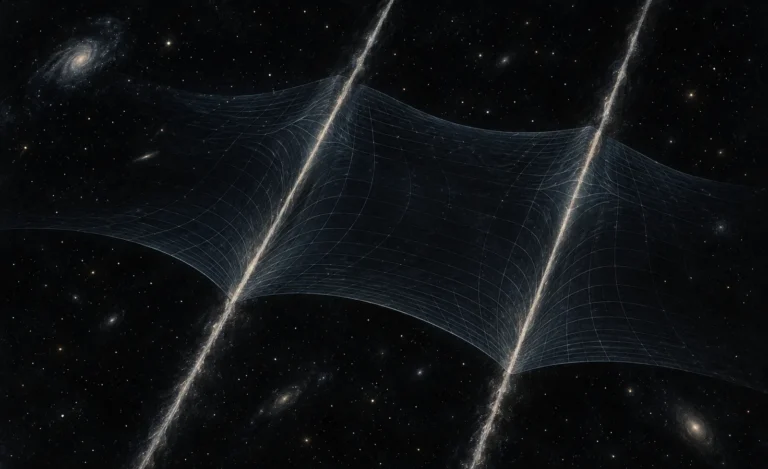
The same sequence can end very differently for a massive star. NASA’s Chandra reporting on a black-hole jet shows the kind of compact object that can remain after a much heavier star has exhausted its fuel and collapsed.
Why massive stars end more violently
A star with many times the Sun’s mass can continue through a chain of nuclear reactions. It fuses hydrogen into helium, helium into carbon and oxygen, and eventually heavier elements. The sequence becomes less efficient as the nuclei get heavier.
Iron is the turning point. Fusing iron does not provide the energy needed to support the star. Once an iron core grows beyond what pressure can hold up, gravity wins in a matter of seconds. The core collapses, the outer layers rebound or are blasted away, and the star becomes a supernova.
The explosion spreads elements forged inside the star and during the blast. Oxygen, silicon, calcium and iron can be carried into space, where future stars, planets and rocky worlds may form from the enriched material.
Neutron star or black hole?
The collapsed core’s fate depends on its remaining mass and the physics of matter under extreme pressure. If the core is compact enough to be supported by neutron matter, it becomes a neutron star: a city-sized object with an extraordinary density and powerful magnetic field.
If the core is heavier still, no known pressure can stop the collapse. The result is a black hole, a region whose gravity prevents light from escaping once it passes the event horizon. The original star is gone, but its gravitational influence remains.
Stellar endings feed new beginnings
Stars are not sealed furnaces that disappear without a trace. Their winds and explosions return material to interstellar space. New clouds inherit that material, and some of it becomes the raw material for planets and life.
The bright nebulae seen by telescopes are therefore part of a cycle. An aging star is changing its surroundings, while the next generation of stars may already be forming nearby. The ending of one star can be the opening scene for another.