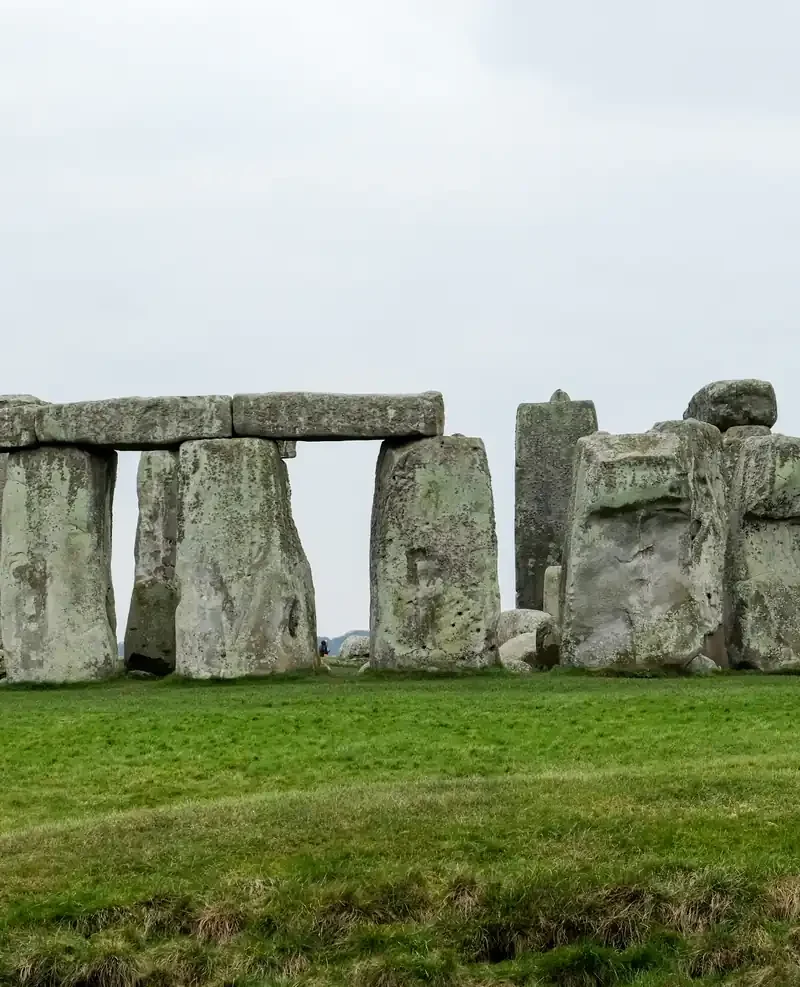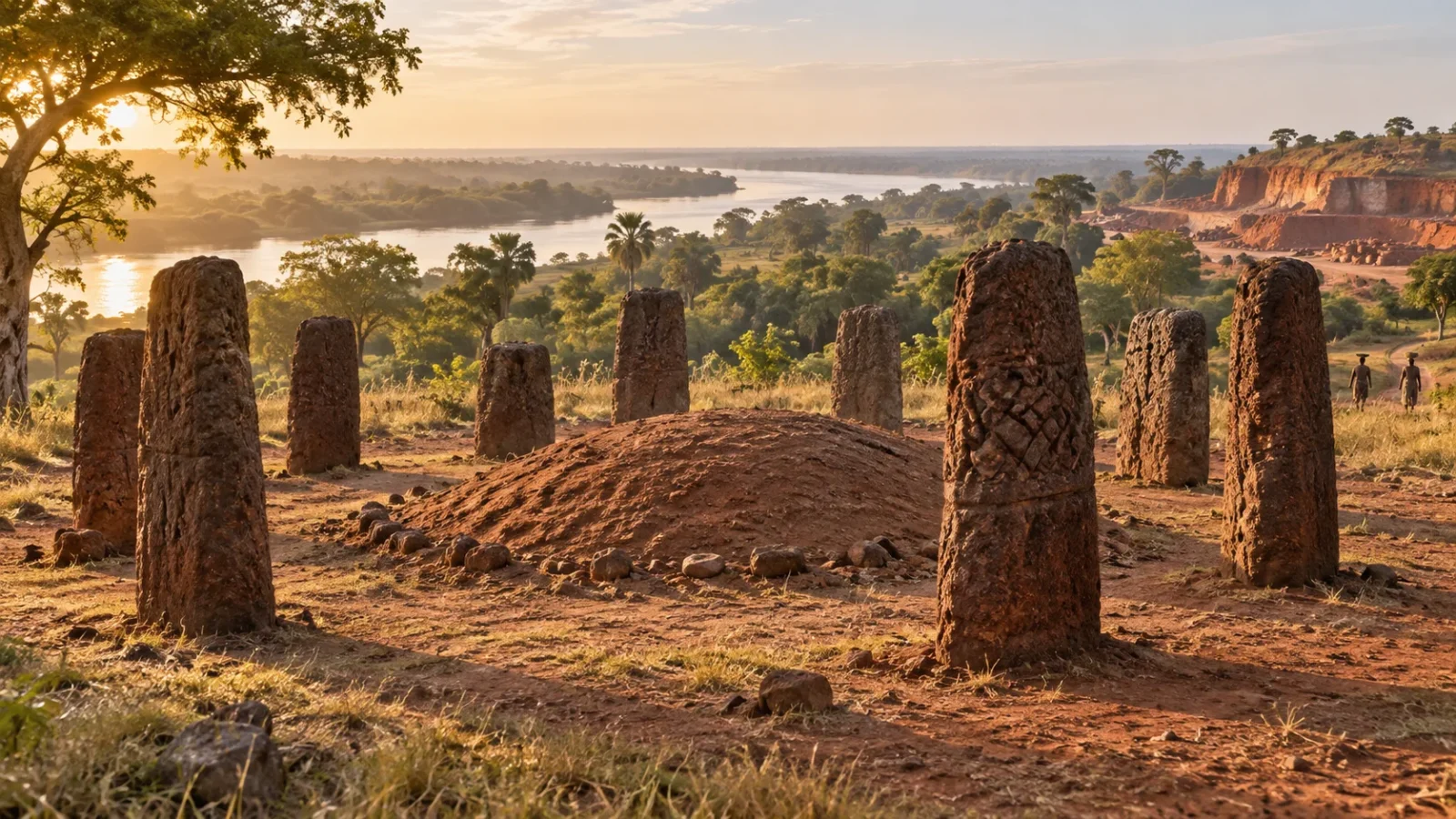
Along the Gambia River, circles of carefully shaped stone rise from the laterite ground. They are sometimes compared with Stonehenge, but the comparison misses the scale of the landscape: more than 1,000 circles and related burial mounds are spread across parts of Senegal and The Gambia.
The monuments were built over many centuries. Excavations point to a funerary tradition, while quarries and repeated layouts reveal the work behind them. The people who raised the stones left no written history, so archaeologists reconstruct their communities from graves, objects and the landscape itself.
Four protected groups, a much larger region
The UNESCO World Heritage property includes four dense groups: Sine Ngayene and Wanar in Senegal, and Wassu and Kerbatch in The Gambia. Together they contain 93 stone circles and many associated tumuli. They form part of a much wider band of monuments, roughly 100 kilometres wide and 350 kilometres long along the river and nearby borderlands.
Keep exploring
Continue with Curiosmos
That distinction helps make sense of the numbers. The “more than 1,000” figure describes the broader archaeological landscape; the UNESCO listing protects a selected group of its most representative sites.
Laterite pillars, moved by hand
Most of the pillars were shaped from laterite, the iron-rich stone common in the region. UNESCO describes cylindrical and polygonal forms averaging around two metres high; some may weigh as much as seven tonnes. A typical circle holds eight to fourteen stones around a small central space.
The pillars were quarried, shaped and carried to their final positions. At Sine Ngayene, researchers have traced a quarry about a kilometre from the main complex. That evidence brings the construction process into view: people had to select stone, work it and move it through the same landscape where their dead were buried.
The repeated shapes suggest skilled production and shared conventions. They do not, by themselves, identify a single ruler or state that organized every site. Different communities could use a familiar form over generations.
Graves beneath the circles
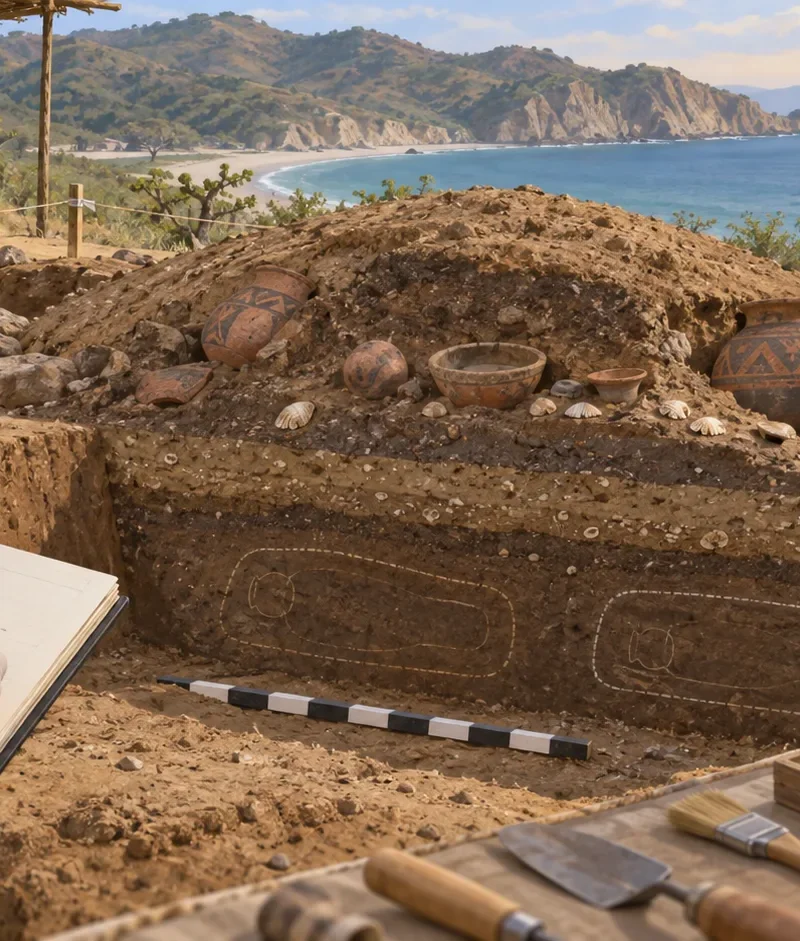
Burials provide the clearest evidence for the monuments’ funerary setting. Excavations have recovered human remains, pottery, iron objects and ornaments from tumuli and nearby contexts. The layout and age of the monuments vary, but graves recur across the landscape.
Work at Wanar has traced how a burial ground became a monumental place. Researchers excavated stone circles and tombs dating to the twelfth and thirteenth centuries. In some parts of the site, the sequence suggests graves were made before the standing stones. The pillars may have marked and gathered an older funerary landscape rather than appearing as isolated sculptures.
A tradition spanning centuries
The dates stretch across a long period. UNESCO reports excavated material from some monuments between about the third century BC and the sixteenth century AD. Burials at Wassu include dates from roughly AD 927 to 1305; other groups have their own sequences.
There was no single construction moment. The circles belong to a tradition that changed over time, as communities returned to the same landscape and used a recognisable form in new ways.
Were the circles observatories?
Stone circles naturally draw the eye to the horizon, and some may have offered useful views of the sky. But a suggested alignment with a sunrise does not establish that a site was built as an observatory. The burials, mounds and quarry evidence give archaeologists firmer ground for understanding the complexes.
People who buried their dead could also have watched the sun and stars. The evidence for funerary use does not rule out other meanings; it simply gives those interpretations a starting point rooted in what has been excavated.
The people behind the stones
The circles do not tell us the names of their builders or how they described their communities. Archaeologists can trace standardised pillars, quarry routes, repeated layouts and objects placed with the dead. Those patterns show planning, skilled work and a practice that lasted across many generations.
The monuments broaden the history of megalithic building. Monumental stone traditions were not confined to Europe or the Mediterranean, and these West African sites are best understood in their own setting rather than as an African version of a European monument.
Questions remain about who used particular circles, how customs changed as Islam spread through the region, and how river routes shaped the choice of place. Excavation, dating and landscape survey can help answer them. For now, the long line of circles records communities returning to a landscape where stone, memory and burial met.
Curiosmos has also surveyed ancient stone sites around the world. The Senegambian circles deserve attention on their own terms: as a West African tradition with a long history and much still to learn.