What is the oldest city in the world? Jericho is often given that title, but an archaeological settlement can be older than the city that later grew on the same ground. Byblos, Damascus, Erbil and other living cities have their own long histories, while places such as Uruk and Tell Brak show how early urban life took shape. The answer changes with the question.
This guide looks at ten of the strongest cases. They are numbered for clarity, not ranked from oldest to youngest: the dates refer to different kinds of evidence, from a first settlement to an organised city or a long-lived urban tradition.
How to read the dates
Archaeologists work with three related but different clocks. The first marks the earliest known settlement at a site. The second asks when the settlement had the scale, institutions and economic complexity of a city. The third concerns continuous habitation: whether people kept living in the same place through the centuries. A prehistoric layer beside a modern city does not automatically date the modern city to that layer.
Keep exploring
Continue with Curiosmos
That distinction makes the question more interesting, not less. What happens when an oasis settlement grows into a fortified town, or when an early city is eventually left behind? The ten places below show how these histories overlap without becoming one simple league table.
1. Jericho / Tell es-Sultan: among the earliest permanent settlements
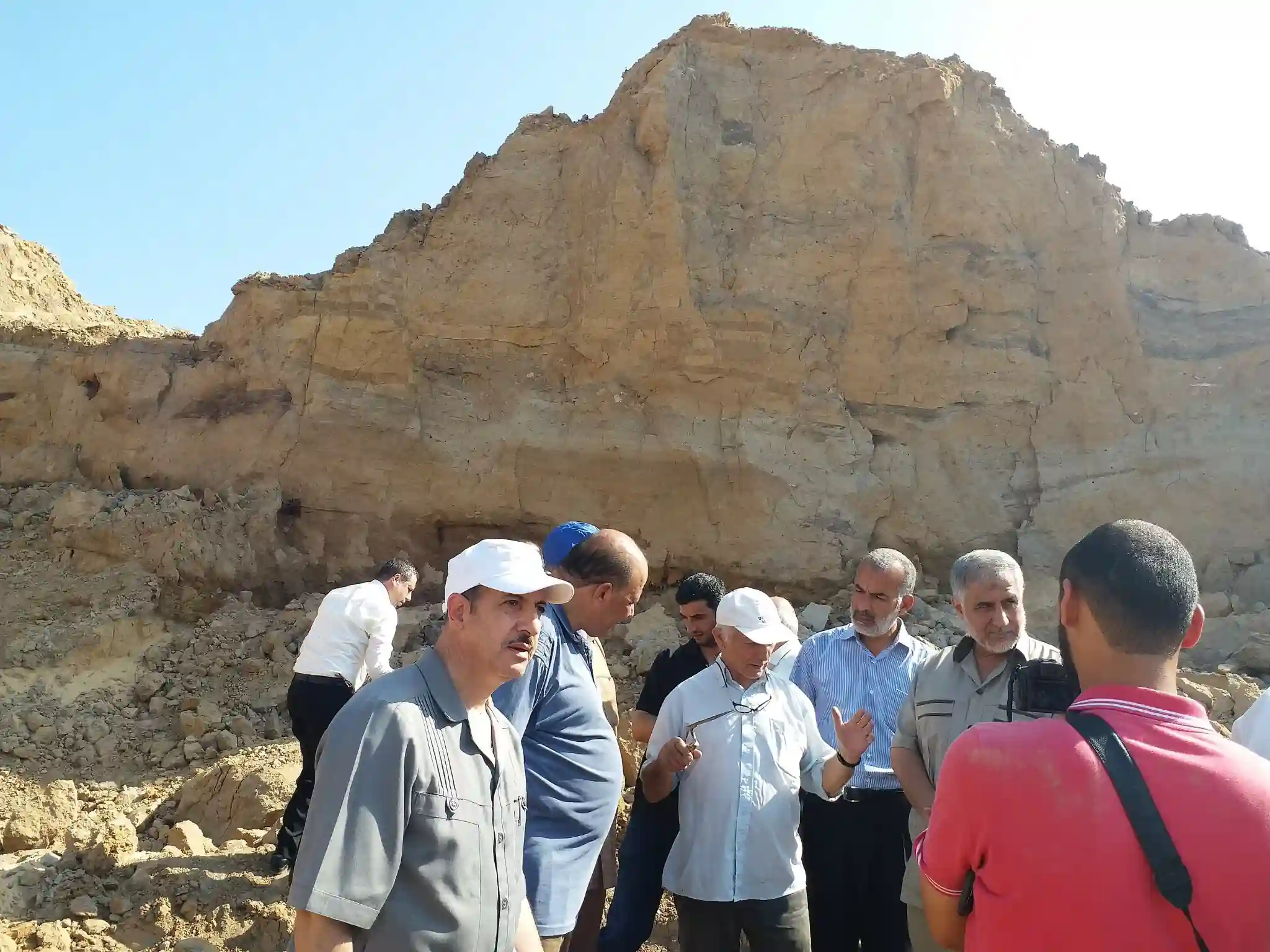
Northwest of modern Jericho, Tell es-Sultan preserves archaeological deposits reaching back to about 10,500 BCE. UNESCO describes a substantial permanent settlement by the ninth to eighth millennium BCE, including a wall, ditch and tower. Later layers record Early Bronze Age planning and a Middle Bronze Age Canaanite city-state.
That makes Jericho one of the strongest answers if “oldest” means an exceptionally early permanent settlement. It does not mean that the Neolithic settlement and every later city phase form one uninterrupted urban history. The remarkable story is the transformation of a lived-in oasis into a place with increasingly complex forms of community and authority.
2. Damascus: very old habitation nearby, a later city origin
Damascus has one of the clearest examples of why the location of evidence matters. UNESCO notes that excavations at Tell Ramad, on the outskirts, found occupation dating to about 8,000–10,000 BCE. The same UNESCO account places the origins of the city itself in the third millennium BCE.
Those are two different claims: prehistoric life in the surrounding region, and the later emergence of Damascus as a city. Its position between routes linking the Mediterranean, Arabia and inland Asia helped it remain a major centre through Aramaean, Hellenistic, Roman, Byzantine and Islamic periods. Which date sounds most impressive depends on whether we mean the wider landscape or the city.
3. Byblos: a long coastal history that kept building
In modern Lebanon, Byblos offers one of the strongest cases for a very long-lived town. UNESCO describes a history of construction beginning with a fishing community about 8,000 years ago, followed by Bronze Age temples, Persian fortifications, a Roman road, Byzantine churches, a Crusader citadel and later medieval and Ottoman buildings.
Byblos also became a major Phoenician port linking the Levant with Egypt and the wider Mediterranean. Its layers are not just a list of rulers: they show a place repeatedly rebuilt while retaining its importance as a coastal centre. That is why Byblos often appears in discussions of the oldest continuously inhabited cities, even though its earliest community and its later urban form are not the same thing.
4. Tell Brak: an early city emerges around 3,800 BCE
Tell Brak in northeastern Syria began as a settlement long before it reached city scale. The University of Cambridge excavation project reports occupation by at least 6,000 BCE and argues that the site’s size, monumental buildings, authorities and economic complexity show it was a city by about 3,800 BCE.
Tell Brak is a useful counterpoint to lists focused only on famous living cities. Its evidence captures urban life forming in northern Mesopotamia, alongside or even slightly before the better-known southern centres. A city did not need to begin with a single ruler’s grand plan: at Brak, the expanding settlement, workshops, institutions and surrounding neighbourhoods reveal a more gradual growth.
5. Susa: urban life across many millennia
Susa, in southwestern Iran, is an archaeological city rather than a modern city whose continuous occupation can be followed to the present. UNESCO traces a succession of urban settlements there from the late fifth millennium BCE to the thirteenth century CE. Susa became an Elamite capital and later an important Achaemenid centre, with palaces, administrative buildings and residential quarters in its archaeological layers.
Its story shows how one strategic place can serve different worlds over time. The city did not remain unchanged; its importance was renewed through new political, religious and economic roles. Susa belongs in the oldest-city conversation because the urban sequence itself is unusually long.
6. Athens: early inhabitants, then a long pause at one excavated site
The Acropolis Museum dates the first inhabitants in the area of its excavation to the Late Neolithic period, about 3,500–3,100 BCE. It also reports a long period of abandonment at that particular site after 3,100 BCE, with life returning in the Middle Bronze Age.
This is not proof that every part of ancient Athens was empty. It is a reminder to read the scale of an archaeological claim: a neighbourhood excavation can reveal local occupation and change, but it cannot by itself establish uninterrupted life across an entire modern city. Athens’ antiquity is real; the timeline depends on which place and which evidence we are following.
7. Uruk: when a settlement becomes a true city
Uruk in southern Mesopotamia gives us a striking marker for urban scale. The Metropolitan Museum of Art describes it as the largest settlement in southern Mesopotamia by about 3,200 BCE, with monumental mud-brick buildings and extraordinary works of art. It was a city in a recognisable sense: a large population gathered around temples, specialised work and systems for managing goods.
Uruk matters because “the oldest city” is not only a contest about the first people at a site. It is also a question about what changed when settlements began to concentrate people, labour, institutions and exchange on a new scale. Uruk stands near the centre of that story.
8. Ashur: an early Mesopotamian city and Assyrian capital
UNESCO dates the city of Ashur in northern Iraq to the third millennium BCE. In the first half of that millennium, substantial cultic buildings show that it had already become an organised urban system. Centuries later, Ashur served as the first capital of the Assyrian Empire and as a religious centre associated with the god of the same name.
Ashur’s history also includes breaks and returns: Babylonian forces destroyed the city, and it was revived under Parthian rule in the first and second centuries CE. Its ruins let archaeologists follow a city’s political and religious life across major changes, rather than treating its age as a single uninterrupted number.
9. Erbil: a citadel built from generations of occupation
The Citadel of Erbil rises on a mound formed by repeated building. UNESCO notes more than thirty metres of archaeological deposits reaching back to the early beginnings of urbanisation in Mesopotamia, while historical records identify ancient Arbela as an important Assyrian political and religious centre. NASA’s Earth Observatory has called it a possible oldest continuously occupied settlement.
The key word is “possible”: the mound’s long occupation is clear, but there is no exact founding date that settles every version of the claim. Erbil’s citadel is a living archaeological landscape, with each generation building over earlier lives rather than leaving a clean break between one city and the next.
10. Aleppo: a crossroads whose urban story spans empires
UNESCO places Aleppo at the crossroads of several trade routes from the second millennium BCE. Hittite, Assyrian, Akkadian, Greek, Roman, Umayyad, Ayyubid, Mamluk and Ottoman periods all left marks on the city’s built fabric.
Aleppo’s antiquity is not the age of a single surviving building. It is the persistence of a strategic urban centre through repeated rebuilding, conflict and political change. Its story belongs beside places with older settlement layers because it helps answer a different version of the same question: how long can a city remain a crossroads while everything around it changes?
So, which city is the oldest?
If the question is about the earliest permanent settlement, Jericho’s Tell es-Sultan is one of the leading answers. If it is about early urban life, Tell Brak and Uruk show how city-scale communities emerged in Mesopotamia. If we mean a long-lived city people still inhabit, Byblos and Damascus are strong contenders, but their earliest archaeological dates do not measure the same thing.
There is no single ranking that can make all ten dates comparable. The more revealing question is what each place’s oldest layer can tell us about people gathering around water, trade, worship, safety and memory. For another look at how later communities built over earlier ones, see our guide to cities built on top of older cities.
Sources
UNESCO: Ancient Jericho / Tell es-Sultan
UNESCO: Ancient City of Damascus
UNESCO: Byblos
Tell Brak Project, University of Cambridge: Occupational History
UNESCO: Susa
Acropolis Museum: First Inhabitants
The Metropolitan Museum of Art: Uruk, the First City
UNESCO: Ashur
UNESCO: Erbil Citadel
NASA Earth Observatory: History on a Hill
UNESCO: Ancient City of Aleppo