Oak Island has always had two histories. One is the physical history of shafts, boreholes, flooded workings and years of digging on a small island in Mahone Bay, Nova Scotia. The other is the story told about it: buried treasure, engineered traps, strange artifacts and a secret that grows larger every time a new search begins.
Oak Island has a long record of exploration, engineering work and local memory. It also has claims repeated so often that they can sound better documented than they are. The surviving record gives the clearest way through the story.
The familiar origin story needs a closer look
The standard account places the discovery of the Money Pit in 1795, after a young man noticed a depression in the ground and signs of previous digging. Later retellings describe platforms of timber, strange markings and an apparently deliberate system of obstacles beneath the soil.
Those details are central to the legend, but they are not all supported by the same kind of evidence. A historical account can be early, firsthand, copied from another source, published to raise money, or written decades after the event it describes. Those distinctions matter on Oak Island more than almost anywhere else.
The earliest written accounts available in the island’s research collections come from the nineteenth century, long after the alleged 1795 discovery. They include an 1862 newspaper account, a county history published in 1870 and an 1893 company share offering. They are valuable because they show how the story was being told at the time. They are not interchangeable with an excavation notebook written at the first moment of discovery.
Why the ground is so difficult to read
Oak Island has not been excavated once and left untouched. It has been worked repeatedly by different groups using different methods. Shafts have been sunk, widened, flooded, pumped, abandoned, re-entered and drilled around. Modern searches inherit a landscape altered by earlier searches as much as by anything that might have been present before them.
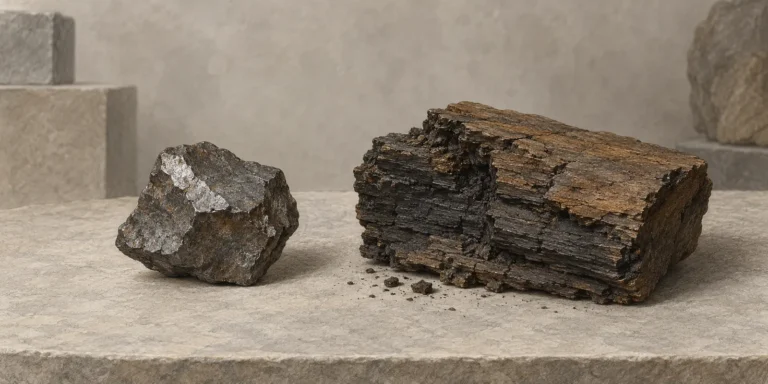
For archaeology, this is a serious handicap. An object is most informative when its location, depth, surrounding material and chain of custody are recorded. Wood from a drill sample may matter, but it first has to be separated from a later shaft, platform or search operation. After centuries of digging, an object does not automatically identify who put it there or when.
Technical material on the site deserves more attention than the most dramatic theory. The preserved geotechnical and archaeological reviews from the twentieth and early twenty-first centuries record boreholes, ground conditions and the practical difficulties of investigating an area repeatedly affected by groundwater and previous work. They show why simple answers have been so hard to reach.
What searchers have reported
Over the years, searchers have reported timber, coconut fibre, stone features, metal fragments and other materials that they believe point to a deliberate construction. Some claims concern Smith’s Cove and seawater intrusion; others concern the main Money Pit area or later boreholes. Each is part of Oak Island’s documentary history.
Before a find is treated as evidence of a buried cache, several questions need answers. Where exactly was it recovered? Was the layer undisturbed? Is there a dated report, photograph, sample record or laboratory result? Could later search activity explain it? Has another team examined the same evidence?
Curiosity does not need to wait for perfect certainty. It does need a distinction between an unresolved clue and a proven answer. The sources below let readers follow the search without treating every repeated detail as archaeology.
Theories are part of the legend, not proof of it
Pirates, the Knights Templar, Francis Bacon, military treasure and hidden manuscripts have all been proposed as answers to Oak Island. The range of possibilities is one reason the story travels so well: nearly any lost object can be placed at the bottom of the pit.
Yet a theory becomes stronger only when it explains evidence better than its alternatives and can be connected to a documented historical chain. A name attached to a legend is not a provenance. The fact that a treasure story has accumulated many possible owners tells us more about its cultural power than about who, if anyone, deposited something on the island.
Readers interested in the broader history of lost-wealth legends can also explore Curiosmos’s guide to famous missing treasures in history. Oak Island belongs in that conversation, but its evidence should be judged on its own record rather than by association with other mysteries.
The limit of the evidence
The available historical and technical sources do not establish a verified treasure cache, a confirmed depositor or a complete original design for the Money Pit. They do establish something more modest and more interesting: generations of people have invested money, engineering effort and imagination in a site whose older narratives are difficult to separate from the effects of later digging and retelling.
An authenticated object with a clear excavation context, independently documented dating and a credible link to a specific historical event would change the discussion. Until then, the evidence is fragmented, the ground is disturbed and the biggest claims remain hypotheses.
Why Oak Island still matters
Oak Island endures because it is not only a puzzle about buried treasure. It is a story about how history is made in public. Newspaper accounts, company promotions, engineering reports, books, television and online research have all changed the shape of the legend. The island shows how a mystery can become larger over time even while the original evidence becomes harder to recover.
That is what keeps Oak Island interesting: a famous legend being tested against documents, geology and the stubborn limits of the evidence.
Sources
- Nova Scotia Historical Review (1996): discussion of the Oak Island Money Pit in Nova Scotia historical writing
- Oak Island Mystery / Chester Municipal Heritage Society: nineteenth-century historical accounts
- Les MacPhie: Geotechnical and Archaeological Conditions at the Money Pit, 1967–2005
- Les MacPhie research files and technical report index