The outline of a Neolithic monument can disappear long before the site stops carrying information. At Sizewell on the Suffolk coast, archaeologists found a large rectangular enclosure whose ditches had faded into the soil. They used excavation and a technique called optically stimulated luminescence to work out when the earth was moved.
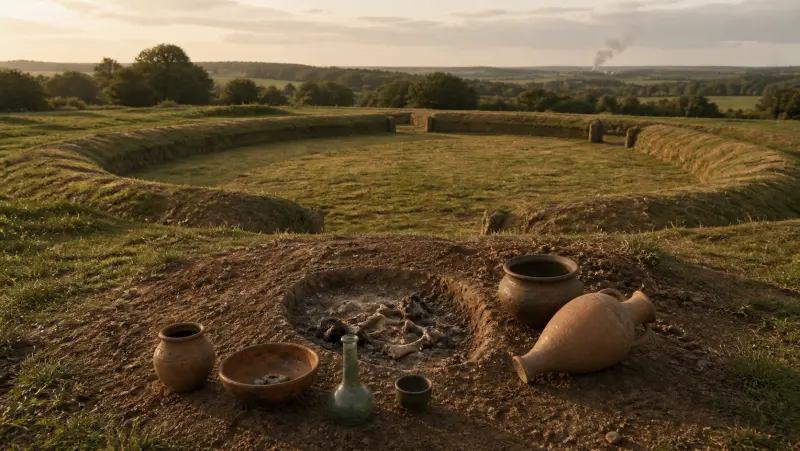
The enclosure measures roughly 50 by 20 metres. It was built by communities in the Early to Middle Neolithic, around 3800 BC, when farming societies were reshaping parts of Britain’s landscape. The feature was not a burial mound. It was an open space marked by banks and ditches, probably used for gatherings or ceremonies.
A monument with very little left to see
Rain, erosion, farming, and acidic soil had softened the edges of the ditches. Excavators had to follow subtle differences in colour, texture, and compactness rather than a clear stone structure. At the northern ends, erosion had removed so much material that hand excavation alone could not establish the full plan.
Keep exploring
Continue with Curiosmos
Internal postholes helped the team decide that the centre had remained open. That evidence favoured a long enclosure over a long barrow, which would have been covered by a substantial burial mound.
Dating the grains, not the monument itself
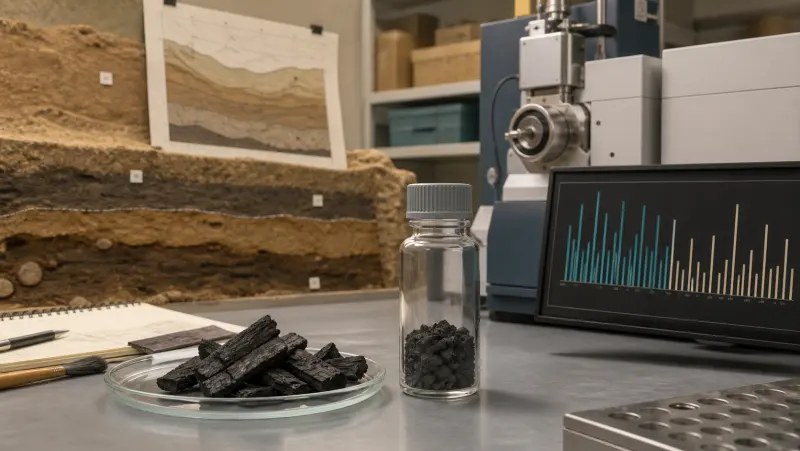
The team collected sediment in light-proof tubes. In the laboratory, specialists measured the luminescence released from mineral grains when they were stimulated. The signal records when those grains were last exposed to sunlight.
When people dug a ditch, they moved sediment and buried grains that had been reset by daylight. The clock began again underground. Measuring the stored signal later provides an estimate of when the ditch was cut and when new layers accumulated inside it.
The results placed the enclosure’s construction in the Neolithic. Upper fills continued to build up into the Beaker period or Early Bronze Age, showing that people interacted with the earthwork long after its first construction.
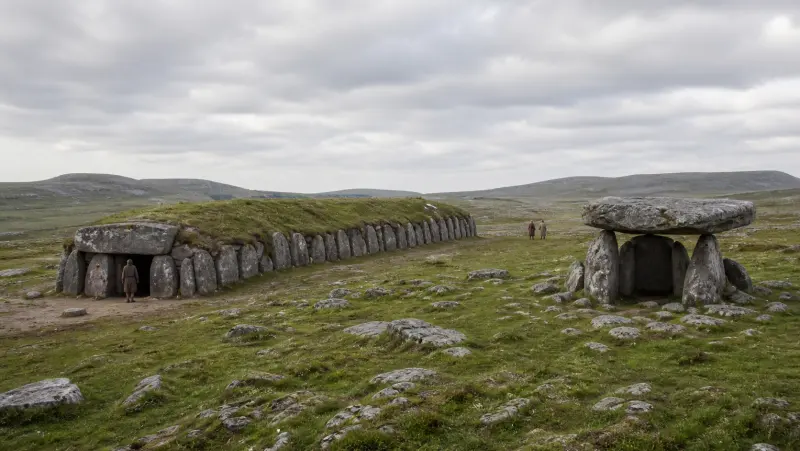
The same combination of excavation and scientific dating matters at other prehistoric sites. Curiosmos recently covered the rare pairing of a portal tomb and court tomb in Galway, where the monuments are being examined as places of burial, ritual, and communal identity rather than as isolated stones.
The small finds are part of the story
The ditches produced a modest collection: some pottery and 31 worked flints. None was distinctive enough to provide a precise date by itself. That is common at open prehistoric features and explains why the dating method was important.
An absence of spectacular objects does not make a site empty. The shape of the enclosure, its position in the landscape, the postholes, the sediment, and the later layers all contribute evidence about how the place was used.
Sizewell’s monument also shows the overlap between old landscapes and modern infrastructure. The excavation took place ahead of the new Sizewell C nuclear power station project. A construction survey has therefore revealed a place that was already organising human activity more than five thousand years ago.
The discovery also helps correct a common picture of the Neolithic as a period defined only by houses, fields, and individual burials. An open enclosure required labour, planning, and agreement about where people should gather. Its banks may have marked a boundary, directed movement, or framed ceremonies that left few objects behind.
Because the earthwork was almost invisible, it might have been missed without careful sampling. The case is a reminder that archaeological visibility is not the same as historical importance. A monument can be physically faint and still record years of collective work.
The excavation also illustrates why archaeology is increasingly collaborative. Field archaeologists identified the earthwork and its postholes, geoarchaeologists handled the sediment, and specialists interpreted the OSL signal. No single technique supplied the whole story. The conclusion emerged from several kinds of evidence that agreed about the monument’s age and form.
That approach is especially important when a site has been altered by later activity. The presence of Beaker-period and Early Bronze Age material does not erase the earlier monument. It shows that the same place remained available for new uses after the first builders were gone.