The first permanent foothold on the Moon will not begin with a crew stepping out of a lander and planting a flag beside a finished habitat. It will begin with cargo arriving early, systems being tested in a place that does not forgive mistakes, and machines proving they can survive lunar dust, extreme temperature swings and long communications gaps.
NASA’s latest update on its Moon-base cargo landers and technology demonstrations makes that future more concrete. The agency is not presenting a single finished base design. It is assembling a chain of missions that must work together: landers that carry large payloads, relay satellites that keep far-side missions in contact with Earth, navigation experiments, surface power and equipment that can operate before astronauts can repair it.
That is the less cinematic part of lunar exploration. It may also be the part that decides whether a Moon base becomes real.
Keep exploring
Continue with Curiosmos
Before people, cargo
NASA’s Artemis programme is built around the idea of sustained lunar exploration, not a brief repeat of Apollo. That means more than reaching the surface. A crew needs a reliable way to land, communicate, navigate, generate power, move equipment, handle dust and return safely.
Much of that work must be done by cargo missions. NASA’s Commercial Lunar Payload Services programme has already turned the Moon into a destination for smaller robotic deliveries. The next phase is meant to push beyond compact instruments and demonstration payloads toward heavier hardware.
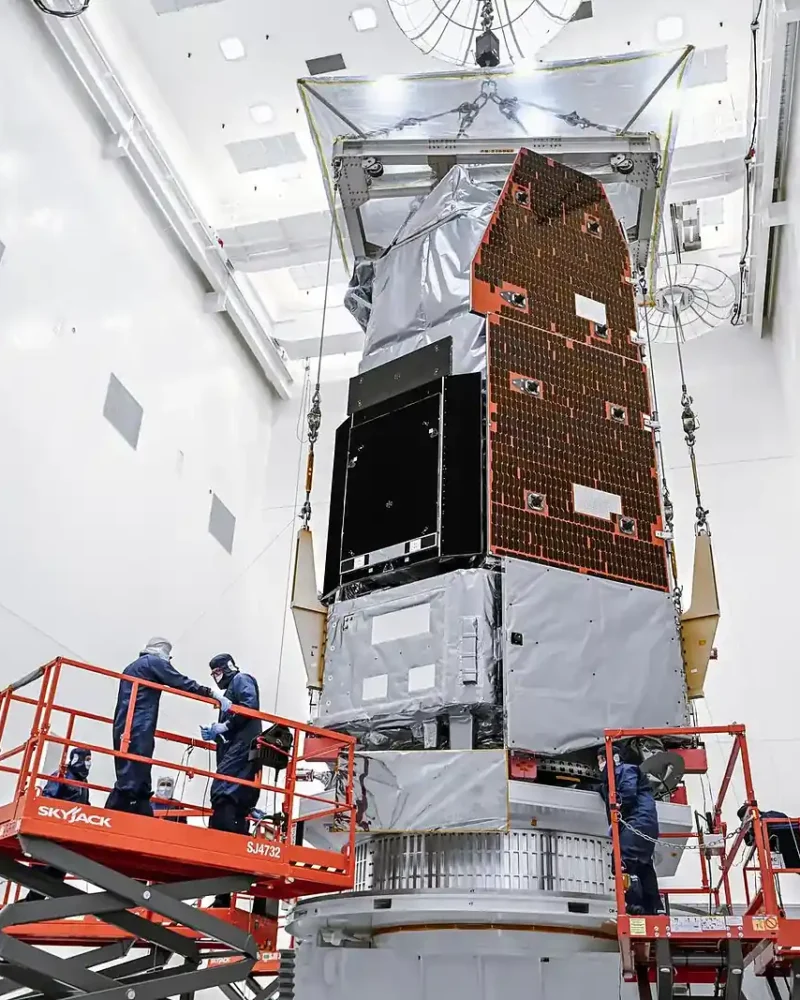
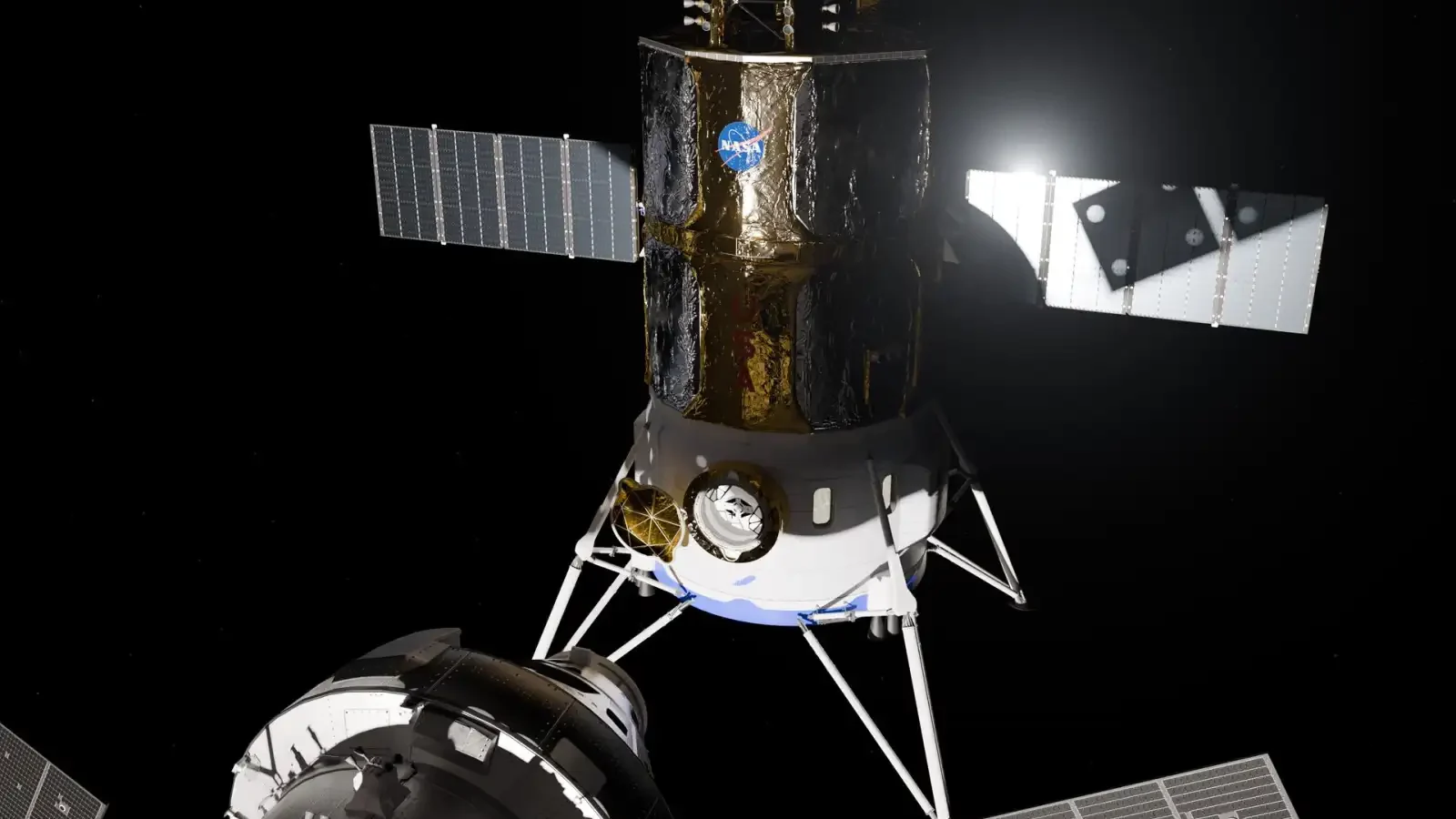
In its update, NASA highlighted Blue Origin’s Blue Moon Mark 1 lander, now moving through integrated testing before its planned Endurance delivery mission. NASA describes it as a new class of commercial lander intended to bring large payloads to the surface. Its structure, propulsion elements and avionics are assembled; the next tests include payload integration, communications and cryogenic propellant loading. Those vehicles are not a base by themselves. They are the trucks that would make one possible.
The distinction matters. A lunar habitat cannot be treated as one object dropped into place. It would arrive in pieces: power units, communications hardware, mobility systems, science instruments, spare parts and equipment for working with the regolith. Each item has to fit the mass, volume and landing constraints of a mission that travels roughly 384,000 kilometres and then descends to an uneven surface.
The far side needs a voice back to Earth
The Moon’s far side is not permanently dark, but it is permanently hidden from direct radio contact with Earth. A lander operating there needs a relay.
NASA’s update points to two ways that infrastructure is beginning to take shape. Firefly Aerospace’s Blue Ghost Mission 2 pairs a lander with the Elytra orbital spacecraft, allowing payloads to operate both in lunar orbit and on the far side. Intuitive Machines’ IM-3 mission includes Altus-1, the company’s first lunar data-relay satellite. The point is straightforward: a far-side science mission cannot simply call home whenever it wants. It needs a spacecraft in the right orbit to carry signals around the Moon.
That same infrastructure could matter to any future base operating away from a direct line of sight to Earth. Communications are not an add-on. They shape where equipment can work, how often it can be supervised and what happens when something goes wrong.
Navigation is another missing piece
On Earth, modern navigation is so ordinary that it disappears into the background. A phone knows where it is because a constellation of satellites and ground systems already exists. The Moon has no equivalent network.
NASA is beginning to test ways of extending GPS- and Galileo-style signals into lunar space. That work is still experimental, but it points toward a future in which a lander, rover or habitat can determine its position more easily and more accurately.
This is not merely convenient. Precision navigation matters when landers are descending near hazardous terrain, when cargo has to meet crews at a planned site, and when multiple vehicles share a crowded area of the lunar south pole. The more activity there is, the less acceptable it becomes to navigate by rough estimates and radio calls alone.
Curiosmos recently looked at NASA’s tiny NavCube3 receiver, one of the tests helping move this problem from theory toward hardware.
A base must survive the environment it lands in
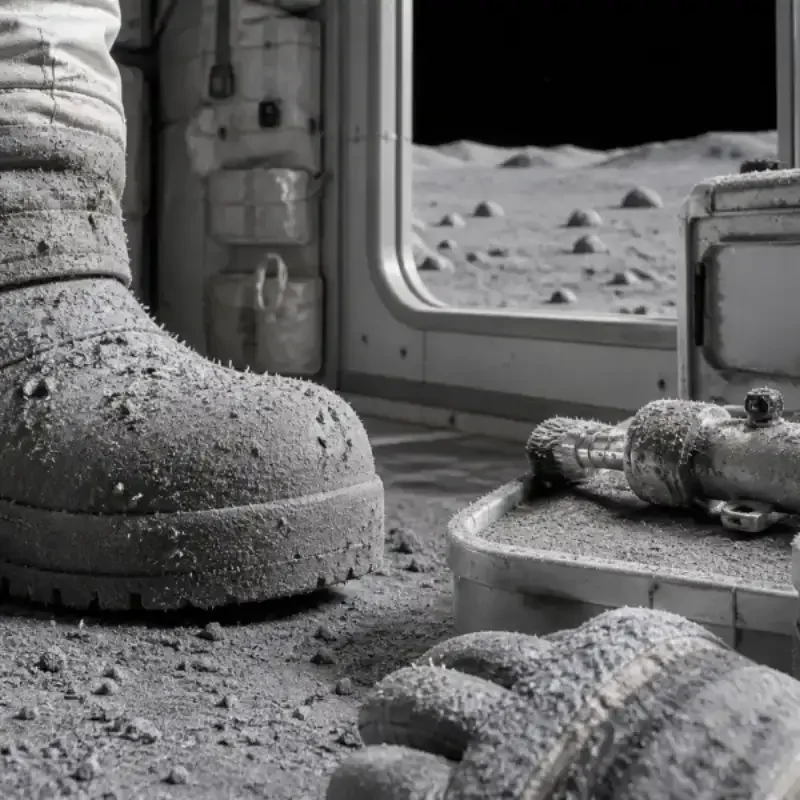
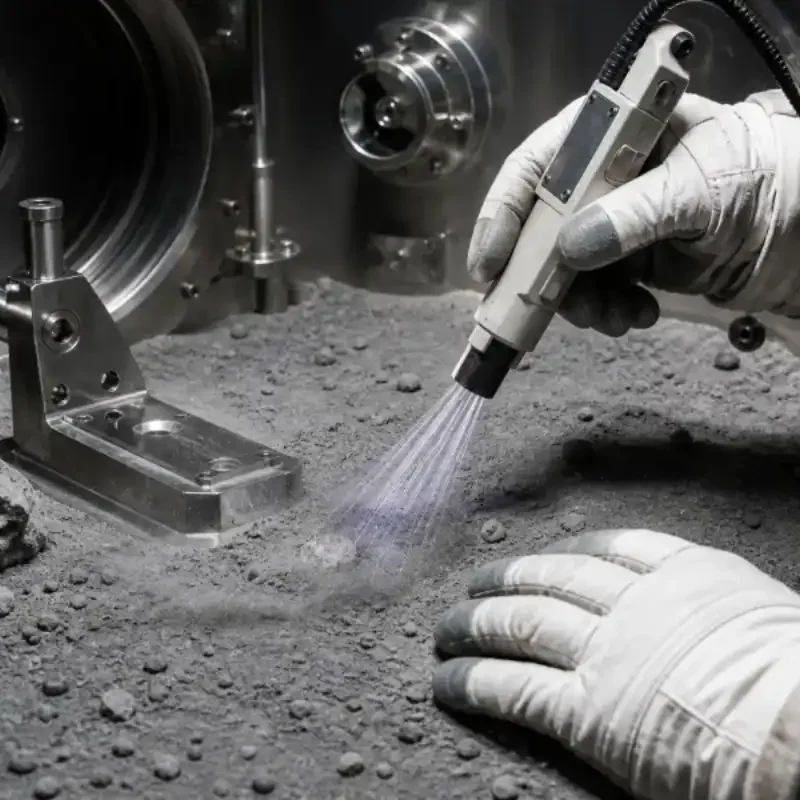
The Moon is a hard place for machinery. Lunar dust is sharp, electrostatically charged and easily carried into seals, joints and instruments. Temperatures can swing dramatically between sunlight and shadow. There is no breathable air, no nearby workshop and no quick rescue.
That means early cargo missions are as much about failure as success. They reveal whether a mechanism still moves after months in the dust, whether a battery lasts through the lunar night, whether a radiator sheds heat properly, and whether a rover can traverse ground that looked manageable from orbit.
NASA’s planning therefore includes technology demonstrations as well as delivery missions. That can sound bureaucratic, but a demonstration is often where a future base either becomes plausible or discovers a problem on a scale model rather than with a crew at risk.
The dust problem alone is serious enough to shape suits, seals, solar panels and habitation systems. Our explainer on why Moon dust is one of the hardest problems for Artemis shows why a landscape that looks calm in photographs can be punishing in practice.
The Moon base is a process, not a launch date
There will be no single morning when the Moon suddenly has a base. First there will be a useful landing site. Then cargo that remains functional. Then power and communications that last. Then crews able to use that infrastructure, and missions that leave behind systems the next crew can trust.
That is why the cargo programme deserves attention now. It is the early, unglamorous architecture of a lunar presence. The success of Artemis will not depend only on spectacular launches or a single landing. It will depend on whether hundreds of practical details work together after the cameras have moved on.
For a related look at the same logic on another world, see how robots may need to build the first Mars outpost before people arrive. Mars poses different challenges, but the principle is similar: human exploration begins long before humans arrive.