The first people to reach Mars may arrive at a place that looks less like a frontier camp and more like a work site that has been running for years without them. Cargo landers would already be on the ground. Power units would be producing electricity. Communications equipment would be talking to orbiters and Earth. Robots would have surveyed the ground, shifted loose soil away from landing areas and checked whether the machines meant to keep people alive can survive a Martian winter.
That is what the distance and the environment demand. A crew cannot simply fly there, unpack a habitat and call home if a pump jams or dust buries a solar panel. Mars is cold, dusty and exposed to radiation. Commands from Earth take minutes to arrive, and a reply takes minutes more. Machines would have to reach the site first, make it usable and give mission planners a reason to trust it.
Mars is already a planet of robots
For now, Mars has no permanent human residents. It is inhabited by orbiters, landers and rovers: machines that photograph terrain, sample rock, listen to the weather and send their findings across interplanetary space. They have shown that Mars is not a blank red desert. Its surface holds dangerous dust, sharp temperature swings, buried ice in some regions and terrain that can turn a short drive into a complicated engineering problem.
That long robotic reconnaissance is part of the preparation for human exploration. Before anyone chooses a landing zone for a crew, mission planners need to understand the local ground, weather, radiation and water prospects. The information collected by missions such as Perseverance and Curiosity will matter as much as a future crew vehicle. A site that looks flat in an orbital image may still hide loose soil, steep slopes or rocks capable of damaging a heavy lander.
Curiosity’s recent discovery of a broad honeycomb landscape is one example of the terrain engineers would need to understand before they build anything there. On Mars, geology is not background scenery. It decides where a heavy vehicle can land, where wheels can travel and where equipment can be anchored.
The journey begins with cargo, not astronauts
A crewed landing would be only one element in a chain of missions. The heaviest and least forgiving equipment should go first: power hardware, food stores, habitation modules, communications gear, surface vehicles and spare parts. Each cargo delivery would have to land close enough to the others to form a usable outpost, yet far enough away that one failed landing could not destroy the entire site.
That is a difficult landing problem. Mars has a thin atmosphere, which makes it hard to slow large incoming spacecraft with parachutes alone. The systems that guide a rover to a safe patch of ground have been important steps, but a crew lander and its supplies would weigh far more. Future missions need to land several large payloads accurately, identify a bad landing area during descent and get each vehicle down without scattering wreckage or dust over equipment already on the surface.
Once the cargo is down, robots would unpack a great deal of it. They could drive instruments away from a lander, place power units at a safe distance, inspect solar arrays, connect cables and report whether seals and mechanisms survived the trip. A human crew should not be committed until the essentials have been tested through real Martian days and nights. A habitat that merely arrived intact is not yet a habitat people can trust.
First comes a landing site, not a house
The first construction job would be basic but vital: preparing a place where later spacecraft can land without throwing dust and debris across everything nearby. Rocket exhaust hits Martian soil with extraordinary force. On Earth, a launchpad is major infrastructure. On Mars, there will be no concrete plant, road crew or crane waiting at the site.
Robotic excavators could grade ground, move regolith and build berms around landing areas. They may eventually sinter or bind local material into tougher surfaces, though that remains a technology challenge rather than a finished Mars capability. NASA is developing related excavation, construction and autonomous-operation technologies first for the Moon, where the same questions of dust, power, machinery and remote work can be tested much closer to home.
A cleared landing zone would make it easier to deliver the heavy things no early crew could bring in one trip: spare parts, food stores, habitats, radiation shielding, communication hardware and perhaps the machinery needed to process local resources. Mars exploration will be a sequence of cargo missions and systems checks before it becomes a crewed expedition.
Power has to be working before anyone opens a hatch
A Mars habitat needs reliable power before a crew arrives. Electricity runs heating, air circulation, water processing, computing, communications and scientific equipment. Solar arrays are an obvious option, but Mars dust settles on them and global dust storms can reduce the sunlight available for long periods. Nuclear power systems, batteries and carefully designed power networks are all part of the discussion because a habitat cannot afford a long blackout.
Robots would be the first caretakers of that system. They could deploy solar arrays, inspect cables, clear dust where possible and watch for faults. They would also need enough local intelligence to act when Earth cannot intervene quickly. A mission controller in Houston cannot steer a vehicle around every rock or respond to every alarm in real time when the signal delay can stretch into tens of minutes for a round trip.
There will be no all-knowing computer running Mars by itself. A rover or construction machine simply needs enough onboard judgment to recognise a hazard, stop safely, choose a route or finish a tightly defined task without waiting for a human to approve every movement. ESA’s robotic-operation work has focused on this practical problem: direct control becomes impractical when the delay is built into the distance between Earth and Mars.
What artificial intelligence would actually do
The most valuable AI work on Mars may be the work nobody notices. It can help machines interpret camera views, compare a fresh image with a map, detect a slipping wheel, identify a damaged cable or decide that a route is no longer safe. It can also sort through engineering data from a fleet of machines and flag the few problems that need a human decision.
This is a long way from an all-purpose robot builder. Mars hardware has to cope with thin air, abrasive dust, radiation, limited power and components that cannot be replaced with an overnight delivery. A machine that is unsure of the ground ahead should stop, record what it sees and ask for help. On Mars, careful software is more useful than software that tries to be clever.
Human crews would still be central. They would repair equipment, make judgments in unfamiliar conditions and do scientific work that rewards experience and improvisation. The point is to give them a site that is already powered, mapped and supplied, so their first days on Mars are spent learning the planet rather than dealing with an avoidable survival emergency.
The first month on Mars would be about checking everything twice
Landing would not be followed by a leisurely walk across the landscape. The crew’s first priority would be to confirm that the place works as advertised. They would inspect the lander, check the habitat atmosphere, verify power reserves, test radios and examine the equipment exposed during the journey. A problem that seems minor on Earth can become serious when the nearest replacement part is millions of kilometres away.
Robots would remain part of this first-month routine. A small rover could make repeated checks around the habitat perimeter, photograph dust buildup, carry tools or sample local ground. A larger machine could move cargo or help prepare an area for a later delivery. The most useful systems may be deliberately ordinary: reliable carts, manipulators, cameras, weather stations and repair tools that keep working after the more glamorous landing footage has ended.
The crew would also be learning the site as a place to live. How does the dust behave around doors and radiators? Which route stays firm under a rover’s wheels? How quickly does temperature change after sunset? Does a communications antenna have a blind direction? These are the kinds of local facts that make an outpost safer, and they cannot all be answered by simulations made on Earth.
Can Mars provide its own air, water and fuel?
Bringing every litre of water and every molecule of oxygen from Earth would make a human mission much heavier and more expensive. That is why Mars planners are interested in using local materials, an approach known as in-situ resource utilisation. The Martian atmosphere is mostly carbon dioxide, and Perseverance carried MOXIE, a small experiment designed to show that oxygen could be extracted from it.
MOXIE was a demonstration, not a life-support plant. It did not solve the wider problem of making and storing enough oxygen for a crew or for a return rocket. But it showed why robotic precursor missions matter. A larger future system could be delivered and tested before astronauts leave Earth. If it cannot operate dependably, the crew mission should wait. If it does work, it reduces the amount that has to be launched from home.
Water is equally important. Orbiters and landers have supplied evidence for ice in several parts of Mars, but locating accessible ice, extracting it and processing it safely are separate tasks. Robots could survey promising terrain, test drilling equipment and measure whether a resource site is practical. A good map is not the same thing as a working well.
Where would people live?
The first habitat may arrive mostly built on Earth, then receive extra protection from Mars itself. Regolith piled over a structure can add shielding from radiation and help smooth out temperature changes. That creates another early role for autonomous construction machines: moving large quantities of soil while keeping clear of fragile pressure vessels, cables and instruments.
Some researchers have also studied caves and lava tubes as possible shelters, but a cave would only solve part of the problem. It would still need power, airlocks, communications, safe routes, emergency systems and a way to move people and equipment. The likeliest early base is small and functional, with backup power, duplicate communications and spare parts for every system the crew depends on.
Radiation, dust and repairs will shape everyday life
Mars has a much thinner atmosphere than Earth and no global magnetic field to provide the same broad protection from charged particles in space. That does not make a surface mission impossible, but it makes shelter, monitoring and mission timing central to the design. Astronauts would spend much of their time inside protected modules, and any long stay would need a plan for solar storms as well as the steady background radiation of interplanetary space.
Dust will be a daily problem. It is fine, widespread and abrasive. It can coat solar panels, work into joints and follow astronauts inside after a walk. No one knows every maintenance issue a first crew will meet because no one has lived there. The base will need spare components, accessible critical systems and robots that can handle repetitive inspections while the crew works on jobs only people can do.
Repair will be a form of exploration. The first people on Mars may spend as much time diagnosing a valve or adapting a tool as they do collecting a rock sample. That is why mission plans increasingly treat human and robotic capabilities together. A person may be better at judging an unfamiliar failure, while a robot can hold a panel, bring equipment across uneven ground or keep watch during an outside repair.
The first humans will arrive late in the process
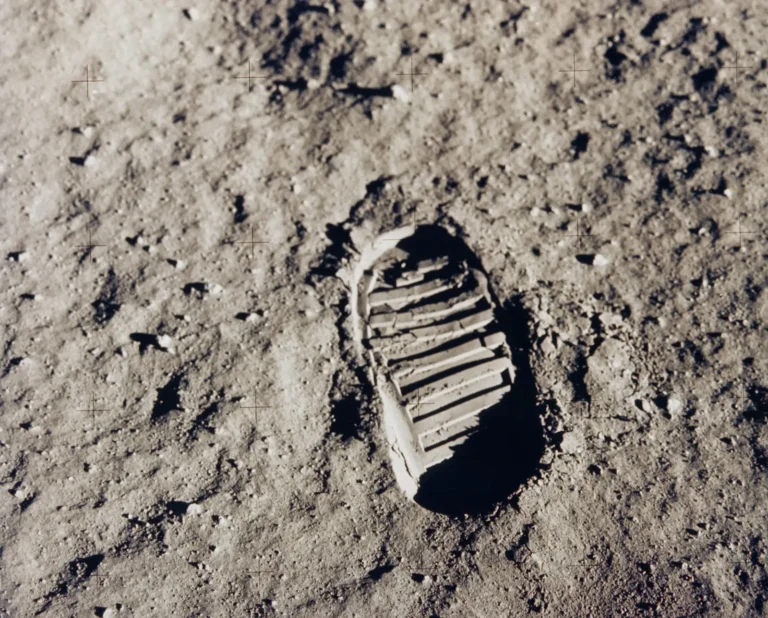
That may sound strange because the human landing is the headline everyone remembers. Yet it is likely to be the moment a much longer robotic campaign finally becomes visible. Before a bootprint appears in the dust, machines will have spent years reducing the risks: testing a landing site, checking weather, carrying cargo, making oxygen, scouting routes and proving that the outpost can keep running through a bad week.
The Mars program is still a developing architecture, not a calendar with a guaranteed first-landing date. NASA’s current planning documents describe the capabilities that would be needed for an eventual human campaign, while missions on the Moon are expected to help test the infrastructure and autonomy required farther away. The route will change as technology, budgets and international partnerships change.
The sequence, however, is easy to picture. Robots arrive first. They survey the site, prepare the ground, unload cargo, build up power and test the systems a crew will rely on. By the time people arrive, those machines will already have done years of hard, repetitive work. The hardware now being tested for Mars aircraft, including new communications antennas, belongs to the same effort: learning how to work on another world before asking people to live there.
Sources and further reading: NASA: Moon to Mars Architecture; NASA: Mars Exploration; NASA/JPL: Mars 2020 technologies for human exploration; ESA: METERON; NASA: Lunar Surface Technology.