Deep inside a cave near Valencia, archaeologists have documented at least 120 Latin inscriptions from the Roman period. Five of them refer to a previously unknown goddess addressed as Domina—“the Lady”—giving researchers an unusual glimpse into the ritual lives of people who visited the cave nearly 2,000 years ago.
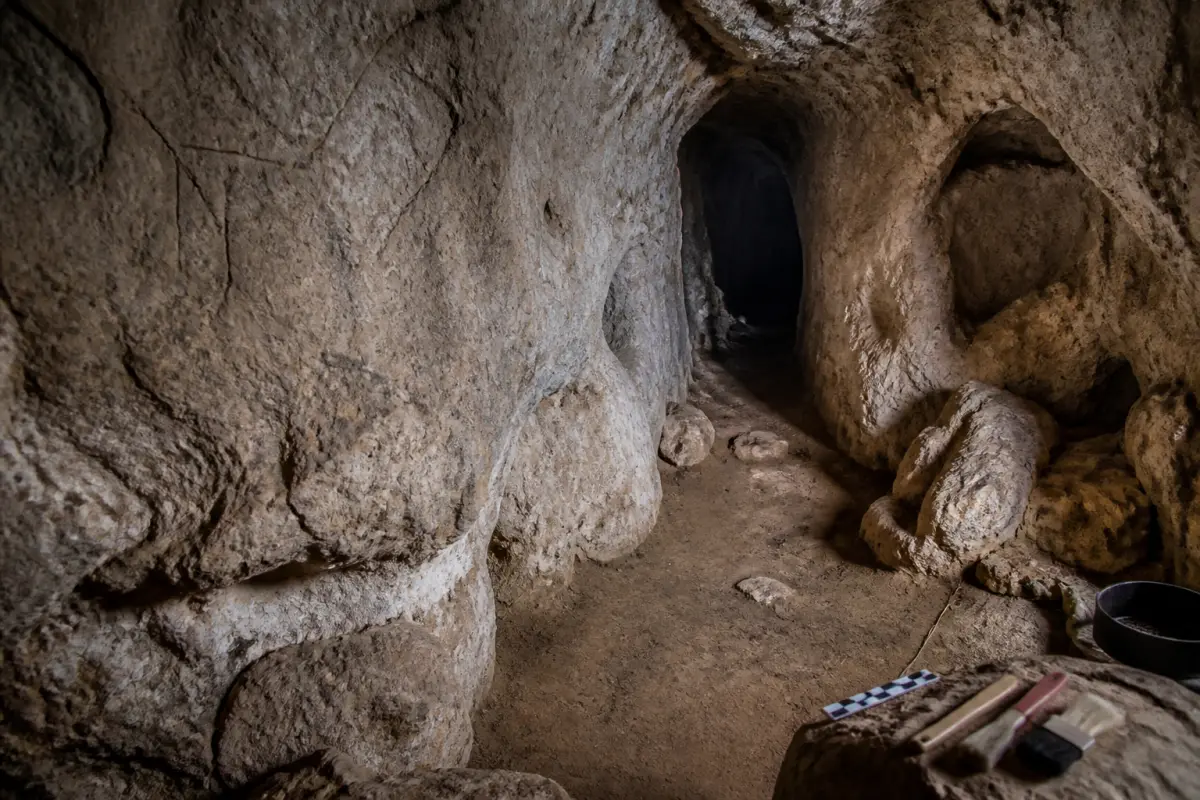
The site is Cova de les Dones, or the Cave of the Women, near the town of Millares in eastern Spain. The cave has a much older history, including prehistoric activity, but the newest work focuses on a deep chamber used as a Roman sanctuary. Most of the inscriptions are dated to the first and second centuries AD. Before the latest excavation campaign, only about 15 Roman inscriptions had been documented there.
The number is striking, but the location matters just as much. The texts are concentrated in a defined chamber rather than spread randomly through the cave. That pattern, together with the associated archaeological material, is why the excavation team interprets the space as an organised place of worship rather than a passage where visitors simply scratched their names.
The inscriptions also change the picture of who took part in the rituals. The researchers say the evidence points to women playing an active role in the cult, whether as worshippers, petitioners or people making dedications. That does not mean the cave was necessarily closed to men. It means the surviving evidence makes women unusually visible in a religious setting where their names and concerns were written into the rock.
The goddess herself is harder to identify. Domina is a reverential title, not a complete biography. The researchers have suggested that the figure may have had a connection with water or the cave’s landscape, but the surviving texts are not enough to connect her securely to a better-known Roman deity. One of the attractions of the discovery is precisely that it preserves a local religious tradition that did not leave a clear literary record.
That is a familiar problem in Roman archaeology. Written sources tend to preserve the beliefs and institutions that mattered to educated authors, officials and later historians. A cave wall can preserve something different: a person’s name, a request, a promise or a brief dedication made in a place where the visitor expected the deity to hear it. Read together, hundreds of small marks can reveal a community that no surviving book describes.
Cova de les Dones shows how an ancient site can belong to several periods at once. The same cave was used and revisited across very different parts of human history. Archaeologists therefore have to separate the prehistoric traces from the Roman sanctuary without treating the later inscriptions as evidence for everything that happened there before.
The current results do not identify Domina beyond doubt, and they do not prove that every visitor shared the same ritual purpose. They do establish something firmer: Roman worship at Cova de les Dones was organised, persistent and closely connected to the people who entered the deepest part of the cave. The next stage is to read the inscriptions together with the cave’s layout and finds, rather than treating each text as an isolated curiosity.
For more on how inscriptions and objects are interpreted in place, read our report on Roman writing tablets from ancient Belgium and the investigation into the inscription pointing to Egypt’s lost city of Mesen.
Sources and further reading
Featured image: Curiosmos illustration based on the Cova de les Dones excavation and published archaeological reporting.