When a bright fireball flashes across the sky, the visible streak is only one part of the event. A new analysis of 75 meteorite falls describes seven linked stages between the object’s first encounter with Earth’s atmosphere and the moment a fragment is found on the ground.
The model gives scientists a more precise way to connect a recovered meteorite with the light and sound recorded during its fall. That connection matters because a stone in a laboratory can reveal the chemistry of an asteroid, while cameras and infrasound stations record what happened to it in the atmosphere.
Seven changes in a few seconds
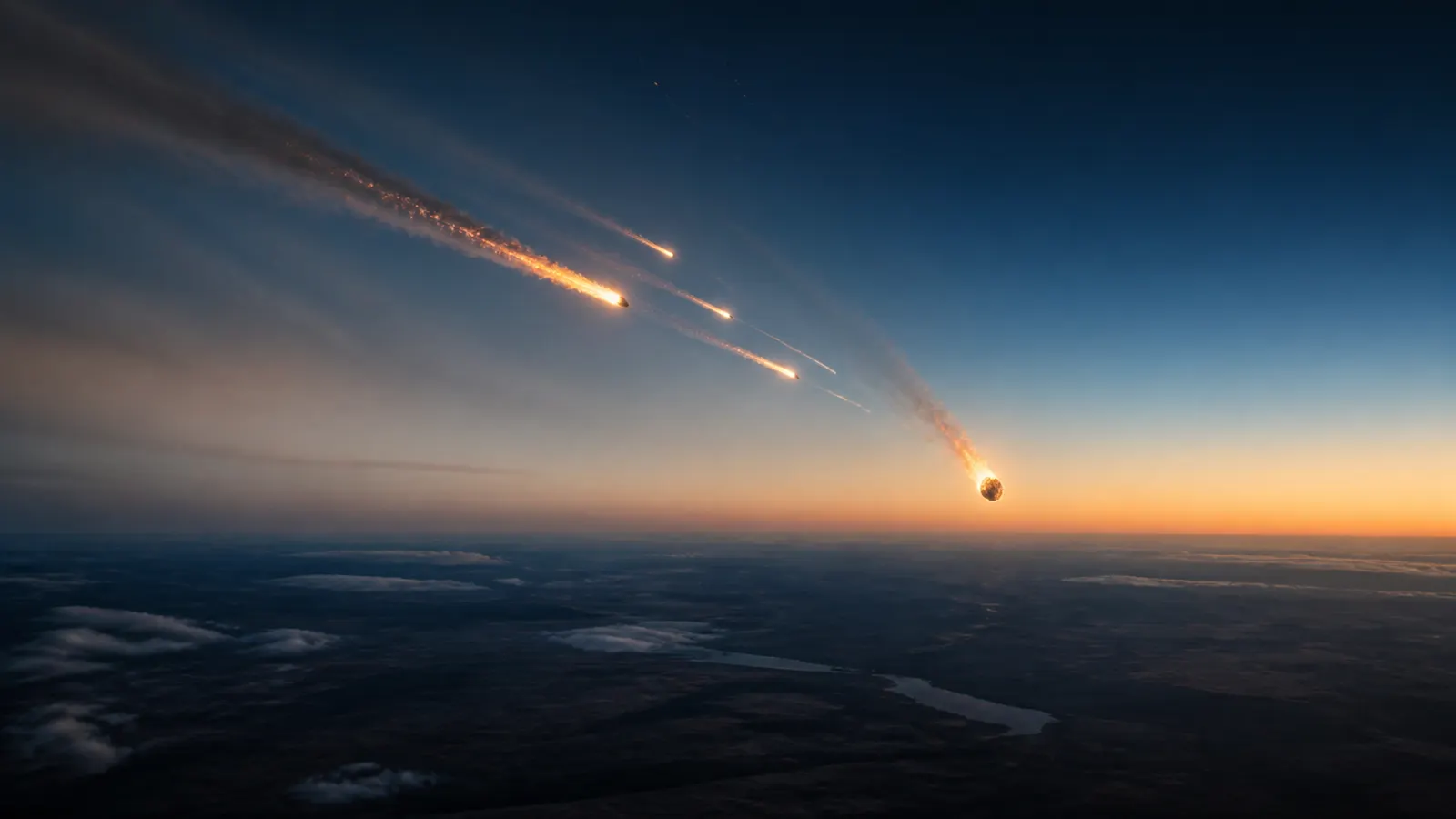
The sequence begins as a meteoroid—an asteroid fragment or cometary piece—hits the upper atmosphere at high speed. Compression heats the air in front of it, and the surface starts to melt. The glowing trail is the meteor, while the surviving object is still the meteoroid until it reaches the lower atmosphere or the ground.
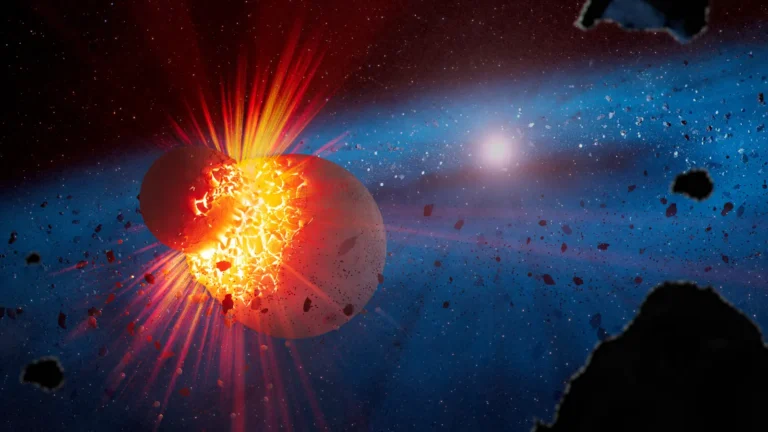
As heating continues, the body can shed molten material and split along cracks. Fragmentation increases the surface area exposed to the flow of air, often producing a sudden flare and a series of separate luminous pieces. Some fragments are slowed sharply, while others continue on different paths.
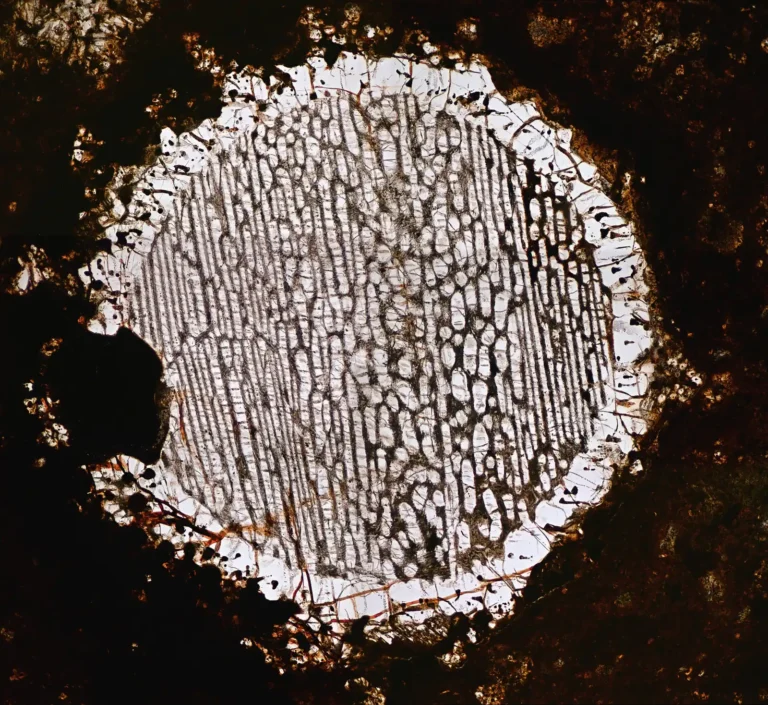
The study identifies melting, fragmentation, the development of a fusion crust, and the concentration of pieces into a narrow strewn field among the stages that link the sky event to the find. A fusion crust forms when the last thin layer of rock melts and cools during the final part of the fall. It is one of the clues that helps distinguish a fresh meteorite from an ordinary terrestrial stone.
The final stages occur after the light has gone out. Small fragments lose most of their remaining speed and fall in what scientists call dark flight. Wind can spread them sideways, and the exact shape of the strewn field depends on the object’s breakup height, mass, and the atmosphere that day.
Why older falls are difficult to reconstruct
Researchers do not usually observe every stage directly. A fireball may be captured by several cameras, while the meteorites are recovered weeks or years later. Other falls have a reliable orbit but no complete collection of stones. By comparing documented events, the new model gives those incomplete records a common framework.
The work also explains why a single meteorite cannot always be treated as a perfect sample of the original body. Early fragments may be lost high in the atmosphere, and heavier pieces can land far from the main cluster. Weathering changes the surface after landing, while human searches often favour the most obvious stones.
Reconstructing the fall is therefore part of the science, not a decorative detail. The trajectory can point back to an orbit around the Sun, and the orbit can suggest whether the parent object came from the asteroid belt or a cometary population. Combining that path with laboratory chemistry helps researchers connect a small rock on Earth to a much larger history in the Solar System.
The seven-stage picture also has a practical use. Better predictions of where fragments land can improve recovery after a witnessed fall, especially when a camera network records the incoming path. A larger, well-documented collection makes it easier to compare meteorites with samples returned by spacecraft and with asteroids observed from Earth.
Curiosmos previously explained the difference between a meteoroid, meteor, and meteorite. The new study adds the missing middle: the chain of physical changes that turns an object in space into a specimen in a laboratory drawer.